- Views: 3K
- Replies: 5
The year 2026 is poised to become a definitive turning point in the roadmap for India’s defence modernisation.
A host of long-awaited acquisition programmes and strategic capability initiatives are expected to either secure formal government clearances or advance to the crucial contract-signing phase this year.
Collectively, these impending decisions will shape the operational posture of the Indian Air Force (IAF), Navy, and air-defence wings well into the 2040s.
Furthermore, they will establish the trajectory for indigenous manufacturing and vital global strategic partnerships.
1. MRFA Programme for 114 Fighter Jets Nears a Breakthrough
The Multi-Role Fighter Aircraft (MRFA) project, designed to acquire 114 fighter jets for the Indian Air Force, is widely anticipated to witness significant progress in 2026.Following an extended period of evaluation and procedural pauses, the programme is now reaching a maturity level where vendor selection and commercial negotiations could be concluded.
The Ministry of Defence is reportedly expediting this acquisition to address the IAF’s dwindling squadron numbers and to guarantee both numerical and qualitative parity with regional adversaries.
2. Medium Transport Aircraft (MTA) Programme Gains Definition
The Medium Transport Aircraft (MTA) initiative is likely to receive a formal thrust this year, with a clearly defined fleet size and operational mandate.The IAF intends for the MTA to serve as a common replacement platform for its ageing Antonov An-32 and Ilyushin Il-76 transport fleets.
The issuance of a concrete Request for Proposal (RFP) and the subsequent shortlisting of a vendor in 2026—with contenders such as the Lockheed Martin C-130J, Embraer C-390, and Airbus A400M likely in the fray—would signify a major restructuring of the nation’s strategic airlift capabilities.
3. Project 75I Conventional Submarines Move Toward CCS Approval
After facing multiple resets and delays, Project 75I is finally expected to progress toward Cabinet Committee on Security (CCS) clearance.This programme aims to acquire six next-generation conventional submarines equipped with Air Independent Propulsion (AIP) systems.
The Indian Navy views Project 75I as essential to counter the expanding naval footprint of China in the Indian Ocean Region and to stabilise underwater force levels as older vessels are decommissioned.
Negotiations with key contenders, particularly regarding German and Spanish designs, have been a focal point leading up to this stage.
4. CCS Clearance for TEDBF Strengthens Naval Aviation Roadmap
The Twin Engine Deck Based Fighter (TEDBF) programme is projected to secure CCS approval in 2026.Specifically designed for operations from India’s aircraft carriers, the TEDBF is slated to eventually replace the MiG-29K fleet and serve as the backbone of future carrier air wings.
Granting this clearance would release full-scale development funding, thereby firmly anchoring India’s ambitions for indigenous naval aviation.
5. AMCA Jet Engine Development Partnership Finalised
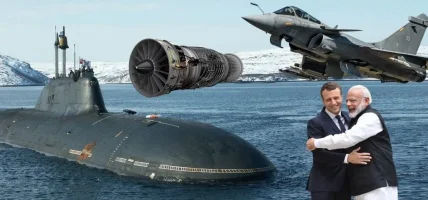
One of the most strategically pivotal clearances expected this year concerns the engine programme for the Advanced Medium Combat Aircraft (AMCA).India is likely to finalise the framework for a foreign partnership—with France’s Safran emerging as a lead partner—to co-develop a high-thrust engine in the 110–130 kN class.
This decision is critical, as it will determine India’s ability to achieve long-term technological autonomy in fifth-generation fighter propulsion.
6. Additional S-400 Deliveries and Possible Expansion of Orders
The induction of S-400 Triumf air defence regiments is set to continue through 2026, with the final units expected to complete the comprehensive air defence shield.Concurrently, discussions are underway regarding a potential expansion of orders beyond the original contract.
Evolving threat assessments and operational lessons from recent global conflicts could drive a decision to further reinforce India’s long-range air and missile defence capabilities.
7. MALE Drone Acquisition Programme Moves to Contract Stage
India’s long-delayed indigenous Medium Altitude Long Endurance (MALE) drone programme is expected to see tangible advancement in 2026.While the acquisition of US-made MQ-9B drones has progressed, the focus now shifts to the indigenous TAPAS or Archer-NG platforms to enhance persistent situational awareness across land and sea domains.
Finalising contracts for these indigenous systems would represent a significant leap in domestic unmanned capabilities for Intelligence, Surveillance, and Reconnaissance (ISR) and strike roles.
8. Nuclear-Powered Attack Submarines Under Project-77
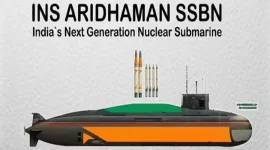
Project-77, India’s indigenous programme for nuclear-powered attack submarines (SSNs), is widely expected to receive further political and financial approvals in 2026.These SSNs are indispensable for tasks such as escorting aircraft carriers, tracking hostile submarines, and maintaining undersea dominance.
Securing these approvals would signal India’s resolute intent to construct a balanced and credible blue-water navy capable of long-range projection.
9. QRSAM Contract to Strengthen Tactical Air Defence
The long-awaited contract for the Quick Reaction Surface-to-Air Missile (QRSAM) is another programme likely to reach fruition this year.Developed to shield mobile armoured formations from aerial attacks, the QRSAM will significantly bolster the Indian Army’s capacity to neutralise drones, helicopters, and low-flying aircraft during high-tempo operations.
Bharat Electronics Limited (BEL) anticipates substantial orders for this system within the current timeframe.
10. Akash-NG Contract Anchors Next-Generation Air Defence
The Akash-NG (New Generation) programme, which represents the latest evolution in India’s indigenous air defence ecosystem, is also expected to secure a major manufacturing contract in 2026.Following successful user trials in late 2025, the system’s improved range, accuracy, and response time will complement existing air defence layers and reinforce the nation’s drive toward self-reliance in missile technology.
Taken together, these ten programmes underscore why 2026 is viewed as a watershed year for Indian defence planning. The decisions made during this period will not only address immediate capability gaps but will also fundamentally shape the force structure, industrial partnerships, and strategic autonomy of the nation for decades to come.