- Views: 6K
- Replies: 2
The Ministry of Defence (MoD) has issued a strict directive to the Gas Turbine Research Establishment (GTRE), mandating the final certification of the indigenous Dry Kaveri engine by 2026.
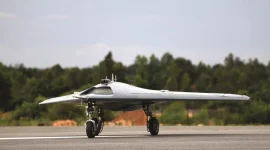
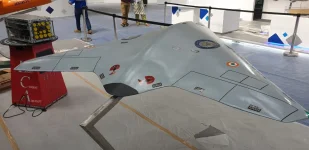
This deadline represents a critical juncture for India's ambitious Ghatak Unmanned Combat Aerial Vehicle (UCAV) programme, signalling a firm policy shift towards synchronising propulsion readiness with airframe development to prevent the delays that have historically plagued national aerospace projects.
Synchronising Power and Platform
The 2026 certification target is not merely a technical milestone but a prerequisite for securing the Cabinet Committee on Security (CCS) approval for the Ghatak’s full-scale engineering and manufacturing phase.By enforcing this timeline, the MoD aims to ensure that the indigenous powerplant is fully mature before the stealth drone reaches the integration stage.
This approach addresses a long-standing challenge in Indian defence procurement, where the lack of a flight-ready domestic engine has often forced reliance on foreign alternatives, subjecting strategic programmes to external export controls and supply chain vulnerabilities.
The Dry Kaveri Advantage
At the heart of this initiative is the Dry Kaveri turbofan, a non-afterburning derivative of the original Kaveri engine initially developed for the Tejas fighter jet. Engineered to generate approximately 49 kN of thrust, this "dry" variant is specifically optimised for the Ghatak UCAV.Unlike fighter jet engines that use afterburners for supersonic bursts—creating significant heat and noise—the Dry Kaveri operates without this feature.
This design choice is crucial for a stealth platform, as it significantly reduces the aircraft's infrared (thermal) signature, making it harder for enemy sensors to detect. The engine will enable the 13-tonne flying-wing drone to cruise at high-subsonic speeds while maintaining deep-penetration stealth capabilities.
Critical Trials in Russia
To meet the 2026 deadline, the GTRE is preparing for a rigorous testing campaign.A key phase involves high-altitude trials in Russia, where the engine will be mounted on an Ilyushin Il-76 flying testbed.
These trials are essential to validate the engine’s performance, restart capabilities, and stability in the thin air and freezing temperatures of high-altitude flight—conditions the Ghatak will face during operational sorties.
Ghatak Programme Milestones
The certification of the engine will unlock the next stages of the Ghatak programme. According to current projections:- Late 2029 – Early 2030: Rollout of the first full-scale Ghatak prototype.
- 2030 – Early 2031: Maiden flight of the prototype.
The data gathered from SWiFT has been instrumental in refining the control laws and aerodynamic configuration for the larger Ghatak platform.
Building a Domestic Ecosystem
Beyond the immediate requirements of the drone, the Dry Kaveri project is acting as a catalyst for India’s broader aerospace ecosystem. The MoD is actively fostering collaboration between the DRDO and private industry majors.Companies such as Godrej Aerospace and Larsen & Toubro (L&T) are deeply involved in the manufacturing of engine modules, materials, and precision components.
This public-private partnership is designed to transition India from a development-centric model to one capable of sustaining large-scale production.
A fully certified, indigenous engine will grant India the strategic autonomy to upgrade the Ghatak’s mission systems, airframe, and flight envelope without seeking external permissions, effectively securing the nation’s future in autonomous air combat.