India is on the brink of a significant breakthrough in its aerospace propulsion capabilities.
The Gas Turbine Research Establishment (GTRE), a premier laboratory under the Defence Research and Development Organisation (DRDO), is finalising the construction of a state-of-the-art 130 kilonewton (kN) Twin Engine Test Bed (TETB) in Rajanukunte, near Bengaluru.
Initiated in late 2023, the testing hub is expected to become fully operational within the next year.
This facility will be the cornerstone for evaluating powerful turbofan engines, driving forward several of the nation's home-grown aerospace projects.
Built to support engines that produce up to 130 kN of thrust, the new infrastructure sits firmly in the heavy-duty category required for modern fighter jets.
This immense capacity means the DRDO can seamlessly test both current derivatives of the Kaveri engine and future next-generation powerplants.
Crucially, it will serve as the testing ground for the ambitious 120 kN class engine intended for the Advanced Medium Combat Aircraft (AMCA) Mk2, a project poised to elevate India's stealth fighter capabilities.
One of the most remarkable features of the Rajanukunte site is its twin-cell design. Instead of testing a single engine at a time, scientists can run parallel evaluations in two independent testing bays.
For instance, while one engine undergoes rigorous endurance trials, another can be tested for throttle responsiveness or electronic control validation.
This simultaneous testing model drastically reduces the time required for engine certification and speeds up overall production, an essential advantage as India works to modernise its defence forces.
Furthermore, the test bed is designed to accommodate advanced technologies like Thrust Vectored Nozzles (TVN), giving engineers a complete picture of modern engine dynamics.
To ensure these engines are combat-ready, the facility can artificially recreate a wide variety of real-world flight conditions.
By carefully manipulating airflow, intake pressure, and extreme temperatures, engineers can test how an engine performs anywhere from thin, freezing, high-altitude air to dense, low-altitude environments.
Additionally, the test bed will play a vital role in perfecting Full Authority Digital Engine Control (FADEC) systems—the electronic "brains" that manage engine performance in real-time to guarantee flight safety and maximum fuel efficiency.
Currently, GTRE has earmarked three primary engine initiatives for the new test bed.
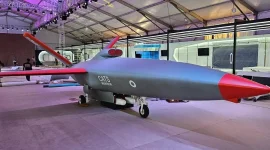
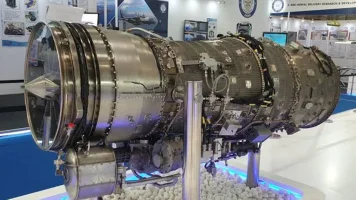
The first is the Kaveri Derivative Engine (KDE), a non-afterburning variant generating roughly 46 to 50 kN of dry thrust. This engine is slated to power the Ghatak, India’s stealthy Unmanned Combat Aerial Vehicle (UCAV).
Recent ground tests have already focused on the KDE's ability to handle sudden throttle changes without stalling, which is a critical necessity for sharp aerial manoeuvres.
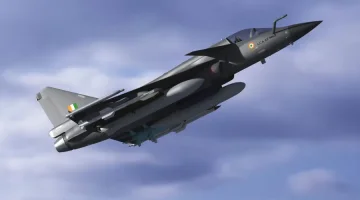
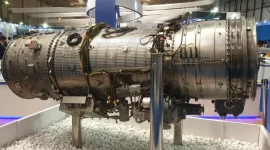
Alongside the drone engine, development is moving forward on the Kaveri 2.0 project. This upgraded variant aims to produce around 80 kN of thrust using an afterburner. If successful, it could eventually replace the foreign engines currently powering platforms like the Tejas Mk1A fighter jet.
The new twin test bed will allow engineers to thoroughly evaluate this engine's afterburner modules, heat management systems, and overall thrust performance under intense stress.
The most complex and strategic project tied to the facility is the Advanced High Thrust Class Engine (AHTCE), targeted at the 110–120 kN range specifically for the AMCA programme.
Fifth-generation fighters require engines made from highly specialised materials that can survive extreme temperatures and structural stress.
The advanced sensors and data collection systems built into the new Rajanukunte test bed will capture precise thermal and performance metrics, allowing scientists to refine and perfect the engine design over time.
Ultimately, the completion of this testing hub is a monumental step toward self-reliance in aerospace technology.
By creating a world-class testing environment at home, India will no longer need to depend heavily on foreign facilities to prove its military engines.
This not only protects highly sensitive defence secrets but also paves the way for India to become a fully independent manufacturer of cutting-edge jet engines in the coming decades.