- Views: 2K
- Replies: 3
In a significant development for India’s aerospace ambitions, the Sukhoi Design Bureau has confirmed that Hindustan Aeronautics Limited (HAL) already possesses nearly half of the industrial infrastructure necessary to manufacture the fifth-generation Su-57 fighter jet.
This technical validation strengthens the proposal for a potential "Make in India" production line, suggesting that domestic manufacturing could commence without the need for building facilities entirely from scratch.
Technical Assessment Validates HAL’s Readiness
According to defence sources privy to the matter, Sukhoi and other Russian defence majors submitted a comprehensive technical report to HAL roughly two months ago.This document followed an extensive on-site audit of India’s current aviation manufacturing capabilities. The evaluation specifically noted that a large proportion of the heavy engineering, fabrication, and systems integration facilities required for the Su-57 are already active within HAL’s ecosystem.
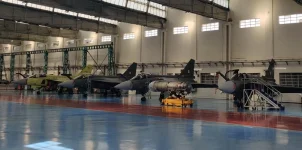
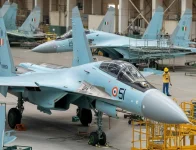
Open-source reports indicate that the assessment focused heavily on HAL’s Nashik division, which has spent decades assembling the Su-30MKI, as well as the engine division in Koraput and the avionics facility in Kasaragod.
Russian engineers concluded that the tooling, flight-test infrastructure, and assembly lines developed for the Su-30MKI and Tejas programmes constitute approximately 50 per cent of the physical foundation needed for a fifth-generation stealth fighter.
Lowering the Barrier for Fifth-Generation Entry
This finding fundamentally alters the economic and logistical calculations for any potential acquisition.Rather than establishing a new industrial base—a process that would cost billions and take years—India would need to direct investment primarily towards specific stealth technologies.
The report outlines that upgrades would be required mostly for fabricating radar-absorbent materials, processing advanced composites, and integrating internal weapons bays and next-generation avionics.
By leveraging existing facilities, the entry barrier for the Su-57 programme is significantly reduced. Industry analysts suggest that this "brownfield" approach (upgrading existing facilities) could save substantial time and capital compared to a "greenfield" project, making the case for a technology transfer deal more financially viable.
Bridging the Capability Gap
The evaluation comes at a critical juncture for the Indian Air Force (IAF), which is grappling with a depleted fighter strength.With the squadron count hovering near 30—well below the sanctioned strength of 42—and legacy jets retiring, the IAF faces an urgent need for force replenishment.
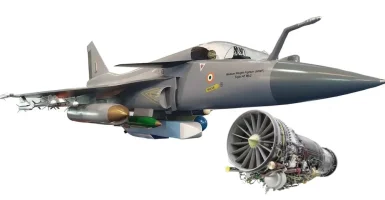
While indigenous projects like the Tejas Mk1A and the Advanced Medium Combat Aircraft (AMCA) are moving forward, the AMCA is not expected to enter mass production until the mid-2030s.
Strategic experts view the Su-57 proposal as a possible interim solution to counter regional threats, specifically the expanding fleet of J-20 stealth fighters operated by China.
A locally manufactured Su-57 could theoretically provide an immediate fifth-generation capability to the IAF, serving as a high-tech stopgap while India matures its indigenous AMCA technologies.
Due Diligence, Not a Final Decision
Despite the positive technical assessment, officials have clarified that this report is part of an exploratory feasibility study and does not constitute a final procurement decision.The document serves as a technical baseline to help the government estimate costs, capacity, and timelines.
Any decision to move forward will depend on a complex interplay of factors, including the IAF's operational preferences, budget availability, and the geopolitical implications of a major defence deal with Russia.
For HAL, however, the report is a testament to the maturity of its manufacturing base, proving that decades of licensed production have created a robust foundation capable of handling advanced aerospace platforms.