In a major boost to India's aerospace capabilities, Hindustan Aeronautics Limited (HAL) and US-based GE Aerospace have agreed to significantly shorten the timeline for establishing domestic production of the F414-GE-INS6 jet engine.
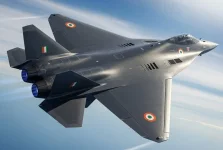
Initially projected to take three years, the setup phase has been reduced to just two. This expedited schedule is aimed at ensuring timely powerplant deliveries for the upcoming Light Combat Aircraft (LCA) Tejas Mk2 and the initial two squadrons of India’s fifth-generation Advanced Medium Combat Aircraft (AMCA) Mk1.
Currently in the final stages of commercial negotiations, this historic agreement is anticipated to be officially signed by December 2026.
Valued at an estimated $1 billion for an initial batch of roughly 99 engines, the contract will empower HAL to achieve an unprecedented 80 percent indigenous manufacturing rate.
This represents a monumental leap for India's domestic defence sector, effectively dismantling past technology denial regimes and expanding the nation's self-reliance.
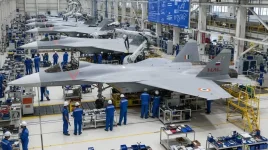
Preparations are already underway in Bengaluru, where HAL has begun laying the groundwork for a dedicated manufacturing site.
Under the newly compressed timeline, this facility is projected to be fully operational by the end of 2028, paving the way for series production to begin shortly after.
To ensure steady progress and guarantee that ongoing fighter development schedules are not disrupted, HAL and GE have structured the technology transfer program into two distinct phases.
The first phase will cover the initial two to three years following the contract's signing. During this period, HAL will target a 40 to 50 percent localization rate by assembling engines from Completely Knocked Down (CKD) and Semi-Knocked Down (SKD) kits provided by GE.
Concurrently, HAL will establish specialized assembly lines, set up advanced testing infrastructure, and initiate the domestic manufacturing of less complex components, such as Polymer Matrix Composite bypass ducts and basic airframe integration parts.
As the Tejas Mk2 transitions into full-rate production around 2030-31, the collaboration will enter its second phase, aiming for the pivotal 80 percent indigenization mark.
This stage is highly significant because it includes the transfer of both the "know-how" and "know-why" for 11 highly sensitive, critical technologies that the United States had previously restricted.
The high-end, hot-section technologies slated for transfer are substantial. They include advanced friction welding, the precision machining of thin-walled titanium casings, specialized thermal barrier and anti-corrosion coatings, complex machining for single-crystal turbine blades, and laser drilling techniques for combustor components.
While achieving the 80 percent localization target remains a strict prerequisite for the Tejas Mk2's series production, a few highly complex core metallurgical processes will remain exclusive to GE.
In the early years of production, HAL will likely continue to rely on imported forgings and specialized smelting for these proprietary "black box" elements rather than processing the raw materials entirely within India.
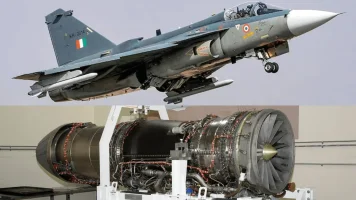
Featuring a Full Authority Digital Engine Control (FADEC) system, the F414 engine delivers 98 kN of thrust with an afterburner.
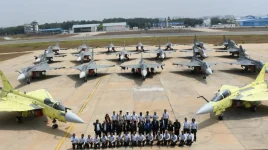
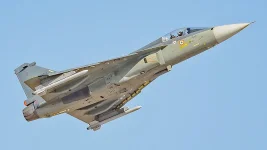
This power output is essential for meeting the Tejas Mk2's rigorous demands, which include greater agility, extended combat range, and a heavier weapons payload compared to the current Tejas Mk1A.
Furthermore, the F414 will act as a vital stopgap powerplant for the AMCA Mk1 until India's domestic defence establishment successfully develops its own 110–120 kN jet engine.