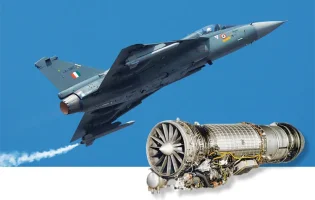
Hindustan Aeronautics Limited (HAL) has invoked penalty clauses against the American aerospace firm General Electric (GE) due to ongoing delays in delivering F404 engines for the Tejas Mk1A fighter jet.
Payments to GE are now being released only after subtracting agreed-upon fines for each delayed unit.
This strict enforcement highlights HAL's commitment to protecting its interests amid severe global supply chain challenges that have slowed down the delivery of aircraft to the Indian Air Force.
The initial 2021 deal, valued at $716 million, covered the purchase of 99 F404-IN20 engines to power 83 Tejas Mk1A jets.
HAL stated that these financial penalties, legally known as liquidated damages, are being assessed for every single engine that misses its delivery deadline, exactly as outlined in the original agreement.
Consequently, all future compensation to the US-based manufacturer is being adjusted to reflect these penalties.
Although the working relationship between the two aerospace giants continues, HAL's actions demonstrate a firm approach to recovering the financial losses caused by these continuous schedule setbacks.
Regarding future deliveries, HAL has shared an updated timeline predicting the arrival of 20 new GE F404 engines between June and December of 2026.
This planned increase in shipments during the latter half of the year is essential to speed up the manufacturing of the much-delayed Tejas Mk1A fighters.
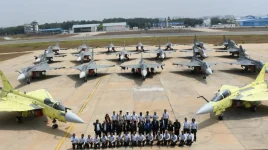
Currently, around 20 airframes have already been built by HAL and are reportedly ready, waiting only for their powerplants before they can begin testing and join the active fleet.
Despite this long-term optimism, HAL acknowledges a short-term hurdle: no new engines are projected to arrive over the next two months. This pause creates a temporary but significant roadblock in the manufacturing process.
Without a steady, uninterrupted supply of engines or alternative backup plans, the immediate production and rollout schedules for the upcoming fighter jets will inevitably be pushed back further.
The sixth engine from the original 99-engine order, which was expected much earlier, was recently handed over to HAL in the United States and is navigating freight transport to India. Officials note that ongoing logistical challenges could still delay its physical arrival at the assembly line.
To date, GE has only delivered six engines out of the entire 2021 order, serving as a stark reminder of the persistent weaknesses within global aerospace supply networks, even as companies like GE strive to resolve internal manufacturing bottlenecks.
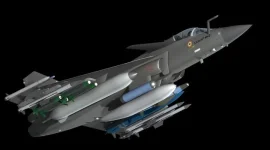
The GE F404-IN20 engine serves as the heart of the Tejas Mk1A, and the inability to secure these engines on time remains the primary reason for the fighter program's current delays.
By enforcing financial penalties and securing a clearer delivery schedule from GE, HAL is taking concrete steps to manage the crisis.
As the Indian Air Force prepares to review the entire Tejas Mk1A program in May 2026, these measures provide a necessary framework for how critical operational and contractual issues are being handled to support India's wider defence capabilities.