Despite facing initial delays in delivering the first batch of Tejas Mk1A fighter jets, Hindustan Aeronautics Limited (HAL) has expressed strong confidence that the Indian Air Force (IAF) will eventually expand its procurement beyond the currently planned 180 units.
This potential increase is driven by the urgent need to maintain combat squadron strength as the IAF retires its ageing fleets of MiG-21s and Jaguars over the coming decade.
A Growing Requirement Beyond 180 Jets
The IAF has already committed to a substantial fleet of the indigenous fighter.A contract for 83 Tejas Mk1A aircraft was signed in February 2021, and the Defence Acquisition Council (DAC) approved the procurement of an additional 97 units in late 2025. This brings the total contracted figure to 180 aircraft.
However, HAL management anticipates that operational pressures and fleet planning realities will necessitate further orders to keep production lines active until 2032.
While the IAF has not officially confirmed plans to exceed a fleet of 220 Tejas fighters, sources indicate that the option remains open. HAL officials believe that as the production ecosystem stabilizes, the Mk1A will become the most viable option to sustain adequate force levels during a critical transition period.
The Retirement Crisis: Plugging the Gap
The primary driver for potential additional orders is the rapid retirement of legacy platforms, which threatens to deplete the IAF’s combat strength. The IAF currently operates approximately 31 fighter squadrons, well below the sanctioned strength of 42 required to tackle a two-front threat scenario.- MiG-21 Bison: The remaining squadrons of the iconic MiG-21 are scheduled to be phased out by 2025, creating an immediate deficit.
- SEPECAT Jaguar: The Jaguar deep-penetration strike fleet is approaching the end of its service life. Retirements are expected to accelerate from 2030 onwards, with the entire fleet sunsetting by 2035 due to airframe fatigue and a shortage of spares.
- Mirage-2000 & MiG-29: The phasing out of the Mirage-2000 and MiG-29UPG fleets in the following decade will further widen the capability gap if replacement aircraft are not inducted in sufficient numbers.
Bridging the Gap to Tejas Mk2
The IAF views the Tejas Mk2—a heavier, more capable 17.5-ton fighter—as the designated replacement for the Mirage-2000 and MiG-29. However, the Mk2 programme is still in the developmental stage. Prototypes are expected to emerge around 2026–27, with serial production unlikely to commence before 2032. This timeline leaves a significant vulnerability window of nearly a decade.The Tejas Mk1A is increasingly seen as the interim solution to bridge this gap. With its production ecosystem expected to be fully stabilized by late 2027, the Mk1A offers a scalable and immediate option to arrest the fall in squadron numbers while the Mk2 matures.
Operational Confidence and Production Stability
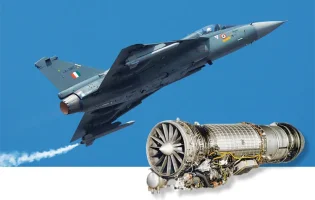
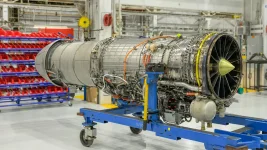
HAL’s optimism regarding future orders is underpinned by several strategic factors:- Stabilised Supply Chain: Despite current delays caused by the slow supply of GE F404 engines, the production line is stabilizing. HAL aims to ramp up production capacity to 24 aircraft per year across its Bengaluru and Nashik facilities.
- Enhanced Capabilities: The Mk1A is seeing incremental integration of advanced weaponry, including the Astra beyond-visual-range missile and the ASRAAM. As the platform matures, its operational utility within the IAF’s combat doctrine is expected to grow.
- Cost Efficiency: Compared to foreign alternatives, the indigenous Mk1A offers a predictable cost curve and immunity from external sanctions or support denials, making it a financially sustainable choice for bulk procurement.
Conclusion
As the Indian Air Force navigates one of its most challenging modernisation periods, the Tejas Mk1A appears poised to play a larger role than initially improved.With the inevitable retirement of the Jaguar and MiG-21 fleets and the long developmental path for the Mk2, extending the Mk1A production run may prove to be a strategic necessity for India's national defence.