- Views: 1K
- Replies: 3
Hindustan Aeronautics Limited (HAL) has commenced a targeted initiative to enhance the combat survivability of the Indian Air Force's (IAF) Su-30MKI fighter fleet.
To achieve this, HAL is applying domestically developed Radar Absorbent Material (RAM) to specific sections of the aircraft.
This strategic move is designed to minimize the jet's Radar Cross Section (RCS), making it significantly harder for adversarial radar systems to detect and track the aircraft in hostile airspace.
While the Su-30MKI remains one of the most formidable and heavily armed 4.5-generation fighters in the Asian region, its sheer physical dimensions naturally create a substantial radar signature.
Factors such as the aircraft's large size, the geometry of its air inlets, exposed engine compressor blades, and the necessity to carry weapons externally all contribute to its high visibility on enemy radar screens.
By incorporating indigenous stealth and camouflage countermeasures, India aims to ensure these legacy platforms remain viable and protected during modern aerial conflicts.
Recent technical documents and photographs reveal that Indian scientists have successfully executed system-level demonstrations of this newly developed Radar Absorbent Paint (RAP).
The application has heavily focused on high-reflection zones, particularly the interior of the engine air intake ducts and the surrounding fuselage structures.
Because jet intakes act like massive reflectors for incoming radar waves, treating these specific areas is critical for reducing the aircraft's frontal radar echoes.
The locally manufactured RAP has proven highly effective during testing. Official technical reports note that the coated structures achieved a “significant reduction in radar signatures over a multi-octave frequency range.”
In practical terms, this means the coating absorbs a wide spectrum of radar frequencies rather than just one specific band.
This broadband absorption is a crucial asset for evading modern airborne early warning and control (AWACS) aircraft, ground-based anti-aircraft fire control radars, and the active seekers of incoming missiles.
Traditionally in India, such advanced stealth material research is spearheaded by the Defence Research and Development Organisation (DRDO), with facilities like the Defence Laboratory in Jodhpur playing a pivotal role in RAM development.
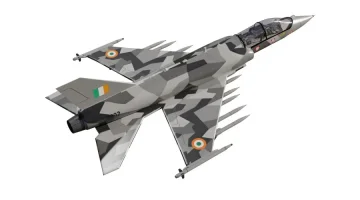
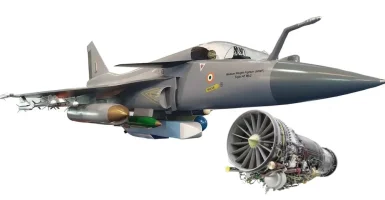
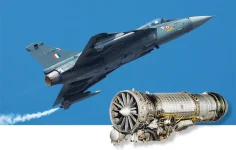
The technology has confidently moved past laboratory testing into active airborne trials. Visual evidence has emerged showing a Tejas Light Combat Aircraft carrying a RAP-treated payload during test flights, confirming operational testing is underway.
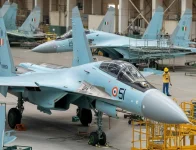
Furthermore, additional imagery points to ongoing evaluations actively measuring the RCS of the Su-30MKI platform itself, confirming that comprehensive signature management studies are progressing on the heavy fighter.
Defence experts assert that even a modest decrease in the frontal radar signature of the Su-30MKI will yield immense tactical benefits.
A smaller RCS forces enemy radars to get much closer before detecting the jet, thereby compressing the time hostile forces have to achieve a missile lock.
This delay is vital for surviving engagements with advanced, long-range air defence networks, such as the Chinese HQ-9B or the Russian-origin S-400-class missile systems positioned across contested borders.
True fifth-generation fighters achieve stealth primarily through their physical shape and internal weapon bays. In contrast, enhancing the stealth of legacy fighters requires a different approach.
Modernization programs for older jets rely on the targeted use of RAM, specialized radar blockers inside engine inlets, serrated panel edges, and surface treatments on areas that strongly reflect radar waves.
This method significantly lowers the aircraft's detectability without requiring a complete and costly airframe redesign, a move that aligns perfectly with the IAF's highly anticipated "Super Sukhoi" mid-life upgrade program.
Mastering domestic RAM technology holds major strategic value for India, especially since global superpowers strictly control the export of stealth materials.
The expertise gained from formulating and applying these coatings to the Su-30MKI will serve as a foundational stepping stone for India's upcoming futuristic aviation projects.
These include the Advanced Medium Combat Aircraft (AMCA), the Ghatak stealth unmanned combat aerial vehicle (UCAV), and various low-observable cruise missile programs currently in the national pipeline.