- Views: 2K
- Replies: 4
India is on the threshold of a major leap in its maritime strategic capabilities as the Defence Research and Development Organisation (DRDO) prepares for the developmental trials of the K-5 Submarine Launched Ballistic Missile (SLBM).
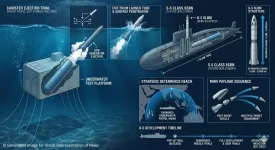
Recent open-source reports indicate that the missile has already successfully cleared crucial underwater "pop-up" ejection tests.
This upcoming weapon system is set to be a cornerstone of India’s K-series programme, significantly amplifying the survivability and striking power of the nation's nuclear triad against regional adversaries.
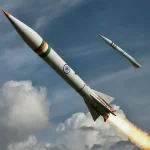
Experts indicate that the K-5 is a massive three-stage solid-fuelled missile, estimated to weigh around 20 tons with a diameter of roughly 2.4 metres.
It is engineered to achieve a formidable strike range of 5,000 to 6,000 kilometres.
Crucially, the system is designed to be equipped with Multiple Independently Targetable Re-entry Vehicles (MIRVs), a technology that permits a single missile to deliver several distinct warheads to different locations during a single flight.
The deployment of the K-5 will bring a transformative shift to India’s underwater deterrence strategy.
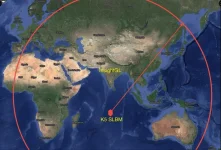
Currently, the operational K-4 missile has a range of about 3,500 kilometres, which requires Indian nuclear-powered ballistic missile submarines (SSBNs) to navigate further east towards the Strait of Malacca to theoretically hold deep strategic targets like Beijing at risk.
This forward deployment increases the risk of detection by hostile anti-submarine warfare forces.
With the K-5’s extended range, Indian submarines can now maintain a credible threat against major adversarial hubs without ever leaving the highly protected waters of the Bay of Bengal.
Indian defence planners consider the Bay of Bengal a highly secure operating environment for its SSBN fleet.
The region offers natural geographical advantages, strong layers of domestic maritime surveillance, and overwhelming local naval superiority.
Remaining in this sanctuary ensures that the submarines are shielded from foreign tracking while staying close to essential logistical support, thereby strengthening the credibility and stealth of India's second-strike capabilities.
To field these massive intercontinental-range weapons, the Indian Navy is advancing the development of its next-generation submarines.
Open-source intelligence highlights that the upcoming S5-class SSBNs, projected to displace between 13,500 and 17,000 tonnes, will feature a powerful 190 MW nuclear reactor to support the K-5 and future systems.
In the interim, expanded platforms like the stretched 7,000-tonne S4 submarine are reportedly being prepared to conduct the initial test launches.
These vessels offer far greater payload capacity and structural depth than the current Arihant-class fleet.
The integration of MIRV technology on the K-5 will present significant challenges to adversary missile defence networks.
By releasing multiple warheads from a single launch vehicle, the missile can easily saturate and overwhelm defensive shields.
Strategic analysts widely agree that MIRV-capable submarine-launched missiles are the most resilient and decisive elements of modern nuclear deterrence.
Looking to the future, the DRDO is already laying the groundwork for an even more potent system, the K-6 SLBM.
Expected to boast a strike range between 6,000 and 8,000 kilometres, the K-6 will provide India with a definitive sea-based intercontinental strike capability.
Anticipated to feature enhanced stealth, compact propulsion, and advanced MIRV capabilities, the combination of the K-6 and the future S5 submarine fleet will cement India's ability to maintain continuous, highly secure deterrence patrols capable of holding any target at risk from deep within its own maritime backyard.