- Views: 9K
- Replies: 31
In a scathing The Print column published on 10 December 2025, Admiral Arun Prakash (Retd), the former Chief of Naval Staff and a distinguished strategic thinker, has delivered a stark indictment of India’s aviation establishment.
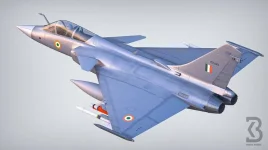
His assessment is grim: despite ambitious rhetoric surrounding the fifth-generation Advanced Medium Combat Aircraft (AMCA) and the Twin-Engine Deck-Based Fighter (TEDBF), both programmes remain effectively grounded.
The cause is not a lack of funding or desire, but a 39-year-old failure that continues to haunt the Defence Research and Development Organisation (DRDO): the inability to produce a functional indigenous jet engine.
The Kaveri Stagnation: Four Decades of Missed Deadlines
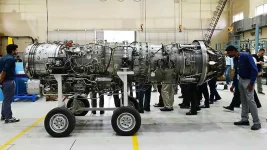
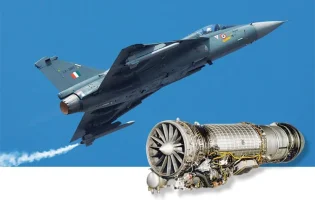
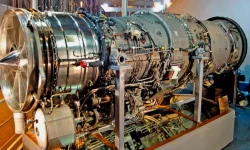
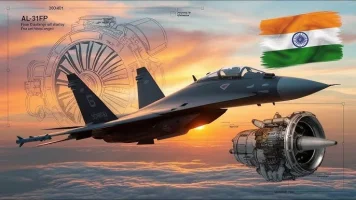
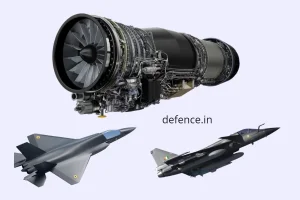
The heart of the crisis lies with the GTX-35VS Kaveri programme. Initiated by the DRDO's Gas Turbine Research Establishment (GTRE) in 1986—and formally sanctioned in 1989—the project was intended to power India’s Light Combat Aircraft (Tejas). Instead, it has become a case study in institutional inertia.Admiral Prakash points out that after nearly four decades and the expenditure of billions of rupees, the Kaveri remains unfit for combat application.
Although first bench-tested in 1996, the engine has suffered from persistent technical setbacks, including thrust deficits, overheating turbine blades, and unreliable digital control systems. Every technical failure has been met not with a solution, but with a revised timeline that quietly shifts targets into the next decade.
Consequently, the AMCA programme is now paralysed by indecision: forced to choose between waiting for an indigenous engine that may never materialise or opting for the American GE F414—precisely the sort of foreign dependency the project was designed to eliminate.
HAL: Manufacturing Without Mastery
The former Navy Chief extends his critique to Hindustan Aeronautics Limited (HAL), arguing that the organisation suffers from a deep-seated "assembler" mindset.Since the 1950s, HAL has manufactured approximately 3,000 airframes and 5,000 aero-engines. However, virtually every unit was built under licence from foreign Original Equipment Manufacturers (OEMs) in Britain, France, or Russia.
Despite 75 years of experience in licensed production and overhaul, HAL’s engine divisions have failed to internalise the critical "black arts" of jet engine design.
Complex technologies such as single-crystal turbine blades, advanced thermal coatings, and precision metallurgy—which distinguish a reliable combat engine from an experimental prototype—remain foreign concepts.
The intellectual property and design expertise stayed in Bristol, Toulouse, and Moscow, leaving Indian engineers as skilled assemblers rather than true innovators.
A Failure of Political Will
Perhaps the sharpest criticism in the column is reserved for India’s political leadership across successive governments.Admiral Prakash highlights a glaring strategic failure: while India has spent tens of billions of dollars on foreign defence acquisitions—saving Dassault with the Rafale deal, sustaining Sukhoi with massive Su-30MKI orders, and bolstering Israel’s defence sector—New Delhi has failed to leverage this buying power.
No Prime Minister or Defence Minister has successfully conditioned these mega-deals on the transfer of critical engine technology. There have been no offsets clauses mandating the sharing of "hot-section" know-how or the joint development of turbine blades.
As a result, while vast sums of money have flowed out of India, the core technologies required for independence have remained firmly abroad.
The Chinese Mirror: Persistence Pays Off
The column draws an inevitable and unflattering comparison with China.In the 1950s, Beijing’s aviation sector was, like India’s, entirely dependent on Soviet technology. However, following the Sino-Soviet split in 1960, China embarked on a ruthless campaign of guochanhua (indigenisation).
While early Chinese copies were crude and accident-prone, the state persisted.
By the 1980s, the Chinese leadership prioritised aero-engine development with the WS-10 programme, which was derived from the core of the civilian CFM56 engine.
Despite decades of failures, China did not abandon the project. The WS-10 Taihang eventually entered service in 2009.
Today, advanced variants like the WS-10C and WS-15 power the People's Liberation Army Air Force’s (PLAAF) entire fleet of fourth and fifth-generation fighters.
The column further notes reports that updated engines are now powering prototypes of China's next-generation J-36 and J-50 stealth fighters.
Conclusion: No Shortcuts to Power
Admiral Prakash concludes with a sobering reality check: no nation has ever achieved the status of a true aerospace power without mastering the design and production of both airframes and engines. The US, Russia, Britain, France, and China paid for this capability in "blood, treasure, and time."India’s desire for the prestige of a fifth-generation fighter, without enduring the painful process of developing its heart, is described as a fundamental strategic error.
Until the government summons the political will to force technology transfers and funds the GTRE with the same ruthlessness China applied to the WS-10, the Admiral warns that the AMCA and TEDBF are destined to remain "PowerPoint warriors"—impressive on screen, but absent from the skies.