India's pursuit of self-sufficiency in cutting-edge military hardware is being hampered by antiquated buying methods and inadequate pay for technical experts.
Speaking at prominent events such as the India Today Conclave, retired Lieutenant General Raj Shukla strongly criticised the current state of India's defence manufacturing framework.
He emphasised that strictly following the Lowest Bidder (L1) procurement rule is actively threatening crucial national initiatives.
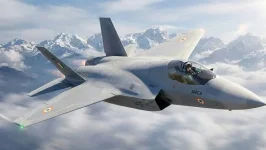
The most notable casualty of this policy, he warned, is the Advanced Medium Combat Aircraft (AMCA) project, which is set to be the country's first domestically produced fifth-generation stealth fighter.
The L1 system, which mandates awarding government contracts to the cheapest supplier, has frequently drawn fire for sacrificing quality and long-term effectiveness in favour of short-term savings.
Lt Gen Shukla did not mince his words, labelling this financial model a "disease" that India must urgently cure. He cautioned that an obsession with cutting immediate costs directly conflicts with the strategic goal of developing advanced weapon systems.
Such high-tech platforms, he noted, require exceptional skill, meticulous research, and flawless manufacturing—elements that cannot be secured on a tight budget.
His primary worry centres on the AMCA, a landmark 25-tonne, twin-engine stealth fighter being developed by the Aeronautical Development Agency (ADA) under the Defence Research and Development Organisation (DRDO).
This single-seat jet is intended to provide the Indian Air Force with state-of-the-art combat capabilities and decrease reliance on imported arms.
While the aircraft's design phase is complete and the first prototype is targeted for rollout between 2028 and 2029, Lt Gen Shukla cast doubt on the project's practical execution.
He highlighted a glaring issue: recent recruitment drives for engineers to work on this highly complex 5th-generation platform offered starting salaries of merely ₹65,000 per month.
This meagre compensation stands in sharp contrast to the financial rewards available in the private technology sector. Specialists in emerging fields such as quantum computing and advanced material sciences frequently command multi-crore salary packages from startups and private firms.
Lt Gen Shukla pointed out the sheer impracticality of demanding revolutionary engineering for a stealth fighter jet while offering wages that are a fraction of the industry standard.
He argued that this massive pay disparity highlights a fundamental flaw in how India values talent within its strategic defence sector, warning that it will inevitably compromise the project's schedule, build quality, and overall technological superiority.
The veteran officer's critique brings to light the delicate balancing act between saving money and achieving true military self-reliance.
The Cabinet Committee on Security has already cleared a substantial ₹15,000 crore budget for the AMCA's prototype development phase. However, funding alone will not guarantee success; a transition toward prioritising capability and talent retention over rock-bottom prices is essential.
Fortunately, there are signs of a structural shift in the established order. In early 2026, it was reported that state-run aerospace giant Hindustan Aeronautics Limited (HAL) was excluded from the shortlist to build the AMCA prototypes.
Instead, private sector heavyweights including Tata Advanced Systems, Larsen & Toubro, and Bharat Forge have advanced in the bidding process, marking a historic step towards deeper private industry integration in India's defence ecosystem.