- Views: 3K
- Replies: 12
In a significant move to bolster its long-range precision strike capabilities, the Indian Air Force (IAF) is evaluating the acquisition and subsequent domestic manufacturing of Israel’s ROCKS air-launched quasi-ballistic missile.
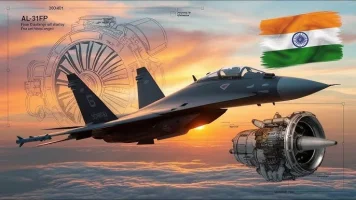
This development follows a highly successful test firing of the advanced weapon from a frontline Sukhoi Su-30MKI fighter jet.
Successful Test in the Andamans
The initiative gained momentum after the IAF successfully test-fired the missile, known within Indian service as the Crystal Maze-2, in April 2024.Conducted in the Andaman and Nicobar Islands under the supervision of the Strategic Forces Command, the test validated the missile's operational effectiveness.
Crucially, it demonstrated a "stand-off" capability, allowing the launch aircraft to accurately hit targets deep within hostile territory from distances exceeding 250 kilometres, keeping the pilots and jets safely outside the reach of enemy air-defence systems.
Advanced Strike Capabilities
Developed by Israel's Rafael Advanced Defence Systems, the ROCKS missile is designed to strike heavily fortified strategic targets with pinpoint accuracy. It leverages technologies from earlier combat-proven systems to navigate complex battlefields.Key features of the missile include:
- Range and Speed: The missile boasts an operational range of 250 to 300 kilometres and performs a supersonic dive during its final approach to evade and survive modern air-defence networks.
- Guidance Systems: It relies on an inertial navigation system (INS) and GPS for mid-course flight, seamlessly switching to advanced electro-optical and anti-radiation seekers for terminal guidance. This ensures pinpoint accuracy even in GPS-denied environments—a critical advantage in modern electronic warfare.
- Warhead Options: The weapon carries a 500-kilogram payload that can be configured for deep penetration to destroy underground bunkers, or as a blast-fragmentation unit to eliminate surface infrastructure like radar installations and airbases.
Boosting Domestic Defence Production
To properly equip its strike fleet, the IAF is reportedly planning an initial order of roughly 200 missiles.Procuring the weapon in these numbers is viewed as economically viable to justify establishing a local assembly and manufacturing line.
Preliminary discussions have already taken place with an Indian private-sector defence firm to secure a Transfer of Technology (ToT) agreement with the Israeli manufacturer.
If the deal is finalized, the ROCKS would become the second Israeli air-launched strike missile slated for domestic production in India, following ongoing discussions regarding the Rampage missile.
Strategic Implications
The potential acquisition and indigenous production of the Crystal Maze-2 align closely with the nation's broader push toward self-reliance in military manufacturing.It acts as a next-generation upgrade to the older AGM-142 Popeye (Crystal Maze 1) missiles that have served the IAF for years.
Beyond satisfying the immediate tactical requirements of the Indian Air Force, establishing a local manufacturing hub for the ROCKS missile could position the country as a future supplier.
Under mutual industrial cooperation agreements, locally produced units could eventually be exported to friendly allied nations or even supplied back to Israel, significantly expanding India's footprint in the global aerospace sector.