- Views: 37
- Replies: 1
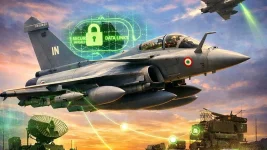
Following extensive evaluations of nine different fighter jets, the Indian Air Force (IAF) has selected the French-made Dassault Rafale as its definitive choice for the Multi-Role Fighter Aircraft (MRFA) programme.
Recent approvals from the Defence Acquisition Council (DAC) have cleared the path for this ₹3.25 lakh crore ($36 billion) deal to acquire 114 aircraft.
This move highlights the military's urgent need for fast deployment and consistent operational readiness, especially as the IAF's active fighter squadrons have recently dropped to an all-time low of 29 against a sanctioned strength of 42.
The preference for this specific fighter is deeply rooted in the successful integration of the 36 Rafales already serving in the IAF.
These jets have consistently maintained excellent serviceability rates and currently form the backbone of India's long-range strike capabilities.
With the recent temporary grounding of the indigenous Tejas Mk1 fleet for technical scrutiny and the final retirement of legacy Soviet-era MiG-21s, relying on an already trusted platform has become a practical necessity for the defence forces.
The Rafale's exceptional performance during the May 2025 India-Pakistan conflict, known as Operation Sindoor, cemented its status as the leading contender.
During the four-day standoff, which involved some of the longest beyond-visual-range air battles in history, the aircraft successfully executed deep precision strikes on terror camps using SCALP cruise missiles and HAMMER glide bombs.
Its ability to survive intense electronic jamming and establish air superiority over rival platforms confirmed its effectiveness in modern, high-threat combat scenarios.
Another major advantage is the existing support framework.
The IAF already possesses the necessary training protocols, logistics chains, and technical expertise required to operate the Rafale.
Key airbases at Ambala and Hasimara are fully upgraded with reinforced infrastructure, specialized repair hubs, and secure storage facilities designed specifically for its advanced weaponry.
This pre-existing foundation drastically cuts down the time and financial investment usually needed to introduce a large fleet of new jets.
Strategically, expanding an existing fleet offers unmatched benefits in uniformity.
Procuring 114 more Rafales enables the military to streamline pilot training, maintenance tools, spare parts inventories, and flight simulators.
Avoiding the introduction of an entirely different aircraft type from another manufacturer prevents logistical bottlenecks and substantially reduces the overall lifecycle costs for the defence budget.
The jet's proven compatibility with potent weapon systems further solidifies its position.
The Rafale is already authorized to deploy top-tier armaments such as the Meteor beyond-visual-range air-to-air missiles, MICA combat missiles, and heavy-duty precision bombs.
The future integration of indigenous Indian weapons, like the Astra and Rudram missiles, ensures that the aircraft will remain a versatile and lethal asset for decades to come.
The deal is also driven by Dassault Aviation's commitment to large-scale local manufacturing.
Under the current proposal, 18 jets will be delivered in fly-away condition by 2030, while the remaining 96 will be built in India.
With potential final assembly lines being discussed for Nagpur and Hyderabad in partnership with Indian companies, the agreement strongly supports the government's 'Make in India' and Atmanirbhar Bharat initiatives, promising to bring vital aerospace technologies into the domestic defence sector.
Although the initial MRFA competition assessed formidable aircraft from the United States, Russia, and other European nations, none could match the immediate advantages offered by the French jet.
The Rafale ultimately secured the contract through a blend of real-world combat success, established logistical integration, and delivery certainty.
The urgency of this acquisition is magnified by a rapidly changing regional security landscape, highlighted by China's aggressive expansion of its J-20 stealth fighter fleet and ongoing tensions along the borders.
Under immense pressure to quickly restore its combat numbers without compromising on quality, the IAF viewed investing in a tested, fully supported system as a much safer strategy than gambling on a completely new and unintegrated platform.
With the DAC having recently granted the Acceptance of Necessity (AoN), the proposal now awaits the final signature from the Cabinet Committee on Security.
Once formalized, the expanded Rafale fleet will serve as the primary strike force of the IAF for the next thirty years, effectively holding the line until India's indigenous fifth-generation Advanced Medium Combat Aircraft (AMCA) is ready for active service.
Ultimately, the MRFA procurement represents more than a simple hardware upgrade for the military.
It is a strategic expansion of a weapon system that has explicitly proved its worth under fire, melds perfectly with current operations, and can be swiftly scaled to meet the nation's growing air power requirements.
The choice of the Rafale is a direct result of tangible combat experience and tactical necessity, ensuring India's skies remain secure.