- Views: 1K
- Replies: 1
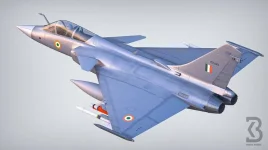
The Twin Engine Deck Based Fighter (TEDBF) stands out as perhaps the most complex engineering endeavour among India's indigenous combat aircraft projects, which also include the Tejas Mk2 and the Advanced Medium Combat Aircraft (AMCA).
While most public discussions highlight its twin General Electric F414 engines, advanced phased array radars, and stealth features, the actual core challenge lies in building an airframe that can survive the punishing physical demands of operating from an aircraft carrier.
Scheduled for an anticipated prototype rollout by 2028 and induction by 2032, mastering this structural resilience is essential for the future of Indian naval aviation.
The Brutal Physics of Naval Aviation
Warplanes deployed on aircraft carriers face structural pressures that land-based jets never encounter. Each time a naval fighter is launched or recovered, the intense mechanical stress gradually wears down the airframe.Consequently, the Aeronautical Development Agency (ADA) is leading India's defence manufacturing sector to rapidly adopt cutting-edge methods for tracking metal fatigue, embedding diagnostic sensors directly into the aircraft, and developing robust structural reinforcements designed specifically for naval environments.
Standard land-based jets, such as the Tejas Mk2, are built to handle a landing sink rate of about 3 metres per second. In stark contrast, carrier-based planes must repeatedly withstand harsh landings with sink rates between 7 and 8 metres per second.
This higher descent speed generates massive kinetic energy upon impact. This shock is transferred forcefully into the aircraft's landing gear, the central spine of the fuselage, the areas where the wings meet the body, and the tail-hook used for braking.
Reinforcing the Airframe
To handle these violent touchdowns on solid steel flight decks, the landing gear becomes one of the most heavily burdened components on the jet.A naval fighter needs a much thicker, heavier landing gear system with advanced shock absorbers to withstand repeated impacts.
Furthermore, engineers face the tricky task of making these heavy-duty structures compact enough to navigate the tight spaces on a carrier deck and fit inside the aircraft's internal bays.
The braking process on a carrier deck creates another set of immense physical forces. When the 26-tonne TEDBF touches down at approximately 250 km/h and snags an arrestor wire, it is violently pulled to a complete halt within a mere 90 metres.
The sheer pulling force exerted on the tail-hook and the lower belly of the aircraft is tremendous. If the internal spine and bottom structures of the jet are not thoroughly reinforced, the aircraft would literally tear apart after multiple carrier landings.
Takeoffs present their own structural trials, particularly for the front of the aircraft.
When launching from the ski-jump ramps of the INS Vikramaditya and INS Vikrant, or from potential future catapult systems, the front landing gear and nose section are subjected to immense, highly concentrated stress as the fighter rapidly accelerates into the air.
Smart Structures and Digital Twins
Understanding these extreme flight conditions highlights why the ADA is heavily investing in structural health monitoring systems.The agency is currently acquiring sophisticated Fiber Optic Structural Monitoring technology, which includes sensors for:
- Strain
- Pressure
- Acceleration
This internal monitoring is vital, as the harsh realities of naval flight cause rapid wear and tear within composite materials.
Throughout upcoming ground tests, drop-impact trials, and advanced wind tunnel testing currently being conducted by National Aerospace Laboratories (NAL), these built-in sensors will measure exactly how stress travels through the plane's frame.
This allows engineers to detect microscopic bending, long-term fatigue, and the earliest signs of cracking instantly, rather than waiting for scheduled maintenance checks.
The data gathered from these embedded sensors also feeds directly into the ADA's "digital twin" initiative.
By sending live information to a virtual replica of the fighter, engineers can accurately predict how the actual aircraft will age and degrade during its decades of service at sea, allowing for smarter, predictive maintenance.
Material Breakthroughs and Private Industry
To physically strengthen the aircraft, the Defence Research and Development Organisation (DRDO) and Mishra Dhatu Nigam Limited (MIDHANI) achieved a critical material breakthrough with a new aerospace-grade steel called MDN100.Formalised through a Memorandum of Understanding at Aero India 2025, this joint venture aims to produce an extremely tough, high-strength steel tailored for high-stress aviation components.
Because naval fighters require massive structural strength without exceeding weight limits, MDN100 offers the perfect balance of durability, lightweight design, and excellent shaping capabilities.
This new Indian-made steel is expected to be a game-changer for manufacturing the jet's most severely stressed parts.
The tail-hook arm, landing gear joints, and internal fuselage reinforcements will likely be built using MDN100 to ensure they can survive the punishing physics of carrier operations.
Simultaneously, the ADA is expanding its manufacturing base by bringing private defence companies into the TEDBF ecosystem.
Following recent invitations, private firms are being asked to build major sections of the aircraft, including the wings and various fuselage segments.
This approach does more than simply share the workload; it compels India's private sector to build advanced testing equipment and fatigue-checking facilities.
By the time the final prototypes are ready for production, the domestic aerospace industry will possess the world-class testing infrastructure necessary to certify heavily armoured, naval-grade combat aircraft.