- Views: 2K
- Replies: 1
In a strategic push to enhance its deep-strike capabilities, the Indian Air Force (IAF) is reportedly urging European missile manufacturer MBDA to adapt the SCALP-EG air-launched cruise missile (ALCM) for its Russian-origin fighter fleet.
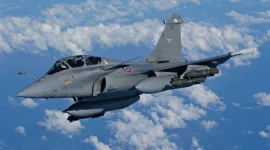
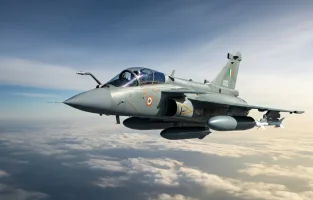
Currently exclusive to the French-made Dassault Rafale within the IAF inventory, the subsonic stealth missile is now being considered for integration onto the Su-30MKI and MiG-29, as well as the forthcoming indigenous Tejas Mk2.
This initiative comes as the IAF seeks to diversify its standoff weapon options following successful operational deployments and the missile’s proven combat record in the Ukraine conflict.
Validating the Stealth Capability
The renewed urgency for wider fleet integration stems from the operational validation of the SCALP-EG during "Operation Sindoor" in May 2025.During this campaign, which was launched in response to escalated border tensions, IAF Rafale jets reportedly utilised the missile to strike hostile infrastructure with high precision.
Sources indicate that a coordinated salvo of ten missiles was fired against Pakistan Air Force (PAF) assets, including a hardened UAV hangar at a forward airbase.
The operation demonstrated the SCALP-EG’s ability to penetrate dense air defence networks using its low-observable profile and terrain-following navigation, achieving a hit rate estimated at over 90 per cent.
While the mission was a tactical success, it highlighted a strategic limitation: with only 36 Rafale aircraft in service, the IAF’s ability to launch such precision strikes is constrained by fleet availability.
The Ukraine Precedent
To bridge this gap, IAF planners are citing the successful integration of the SCALP-EG (known as Storm Shadow in the UK) onto the Ukrainian Air Force’s Soviet-era Su-24 Fencer bombers.Following the supply of these missiles to Kyiv in 2023, MBDA engineers rapidly modified the Su-24’s hardpoints and release mechanisms, enabling the vintage bombers to conduct long-range strikes against Russian logistics and command hubs.
Indian officials have reportedly leveraged this precedent in discussions with MBDA, arguing that if the missile could be jury-rigged for the Su-24 within weeks during wartime, a formal integration for India’s more advanced Su-30MKI should be technically feasible.
The Su-30MKI, which forms the backbone of the IAF with over 260 units, would significantly multiply India’s strategic reach if equipped with the 560 km-range weapon.
Technical and Geopolitical Hurdles
Despite the IAF’s interest, the proposal faces significant hurdles. Integrating a complex Western missile with the Russian avionics of the Su-30MKI and MiG-29 requires extensive modifications to fire-control software and databus protocols.MBDA has reportedly expressed reluctance, citing commercial viability and the technical challenges of harmonising French and Russian systems.
Furthermore, geopolitical sensitivities complicate the transfer of such sensitive technology for use on Russian platforms.
Concerns regarding export controls and the potential for technology leakage to Russian entities via maintenance supply chains remain a sticking point for French authorities, despite the strong Indo-French defence partnership.
Future-Proofing with Tejas Mk2
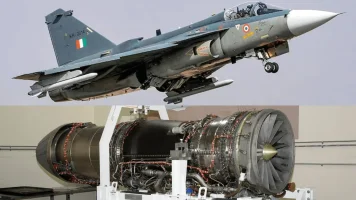
While the path for Russian platforms remains complex, the integration of SCALP-EG onto the indigenous Tejas Mk2 appears more promising.The 4.5-generation fighter, scheduled for induction by 2028–29, is designed with Western engines and open-architecture avionics that facilitate easier integration of NATO-standard weaponry.
With the indigenous Nirbhay subsonic cruise missile programme facing delays, the IAF views the SCALP-EG as a critical interim solution for its medium-weight fighters.
Preliminary studies suggest that the Tejas Mk2’s modular pylons and General Electric F414 engines are well-suited for the weapon.
A successful integration would grant the Tejas Mk2 a standoff lethality comparable to heavier heavy-weight fighters, allowing the IAF to reserve its limited Rafale fleet for high-priority nuclear or strategic deterrence missions.
Strategic Imperative
The push for SCALP-EG expansion underscores a broader shift in Indian defence planning: a move towards interoperability between diverse weapon systems and platforms.As the IAF contends with delayed indigenous programmes and a volatile security environment, the ability to deploy proven standoff munitions across its mixed fleet of Russian and Western aircraft has become a priority for maintaining credible deterrence in the region.