- Views: 2K
- Replies: 1
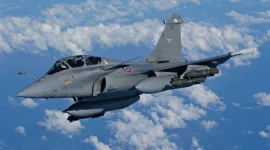
The Indian Air Force (IAF) is currently deliberating a significant move to equip its upgraded Mirage-2000 fighter fleet with the indigenously developed Astra Mk1 beyond-visual-range air-to-air missile (BVRAAM).
This decision aims to address an emerging capability gap while the force awaits the delivery of next-generation missiles from international partners.
At present, the Mirage-2000 aircraft are armed with the older MICA-IR/RF missiles, which have an engagement range of approximately 80 kilometres.
Defence sources suggest this range is becoming inadequate when compared to the longer-range missile systems currently fielded by regional adversaries.
According to defence officials, the European missile manufacturer MBDA is developing a next-generation variant, the MICA NG (New Generation), which boasts an impressive range of 150-160 kilometres.
It has been confirmed that this advanced missile will be fully compatible with India’s upgraded Mirage-2000-5 aircraft.
However, supply timelines indicate that deliveries are unlikely to commence before late 2028 or 2029. Furthermore, the complete operational clearance for these systems could take an additional three to four years, owing to the rigorous testing and integration protocols required.
The IAF’s upgraded Mirage-2000 fleet is equipped with the advanced Thales RDY-2 all-weather synthetic aperture radar. This radar system represents a significant leap over the earlier Thomson-CSF RDM variants, offering robust multi-mode capabilities.
The RDY-2 can effectively detect fighter-sized targets with a radar cross-section of 5 square metres at distances of 120 to 140 kilometres, making it highly suitable for long-range engagements.
Should the proposal be approved, integrating the Astra Mk1—which is already in service with the Su-30MKI and Tejas fighters—would necessitate technical collaboration with the French firm Thales.
This partnership would be essential to establish a seamless data link between the indigenous missile and the aircraft's RDY-2 radar, ensuring the missile’s "fire-and-forget" capability functions optimally.
The Astra Mk1, with its certified range of over 100 kilometres, would allow the Mirage fleet to fully utilise its radar's detection capabilities much sooner than the foreign alternatives would allow.
With the timeline for the MICA NG extending well into the early 2030s for full combat readiness, the home-grown Astra missile presents a timely and cost-effective interim solution.
By pairing the RDY-2’s solid detection range with the Astra Mk1, the IAF could significantly extend the reach and lethality of the Mirage-2000 fleet.
This move would not only reduce dependence on delayed foreign upgrades but also reinforce the "Atmanirbhar Bharat" initiative in the critical sector of complex avionics integration.