- Views: 9K
- Replies: 56
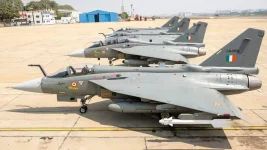
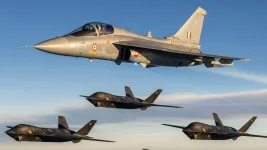
A significant standoff has emerged between Hindustan Aeronautics Limited (HAL) and the Indian Air Force (IAF) regarding the delivery timeline of the new Tejas Mk1A fighter jets.
While the state-owned manufacturer is pushing for an early handover of the aircraft in their current state, the Air Force has refused to induct the jets until they fully meet all operational quality standards.
According to recent reports, high-level discussions are underway to resolve the impasse.
Sources indicate that HAL has requested the IAF to accept the aircraft now, with a promise to complete pending integration work and updates in subsequent phases. HAL has reportedly declared that five Tejas Mk1A jets are physically ready for delivery.
However, the Air Force has maintained a strict position: acceptance is conditional on the aircraft satisfying the Air Staff Quality Requirements (ASQR), the rigid technical benchmarks that define combat readiness.
Integration Challenges and "Category A" Deficiencies
The disagreement centres on the complexity of modern fighter jet systems. Pending tasks have been categorised by internal teams into minor, major, and unacceptable deficiencies.The Air Force is reportedly unwilling to compromise on "major" issues that affect the aircraft's core fighting capabilities.
The primary hurdle lies in systems integration. Modern aerial warfare requires that the aircraft’s radar does not operate in a silo but communicates seamlessly with the mission computer, electronic warfare (EW) suite, and flight control systems.
Open-source data suggests the Tejas Mk1A programme involves integrating advanced Active Electronically Scanned Array (AESA) radars and new electronic warfare jammers.
Ensuring these sensors work in perfect synchronisation to provide the pilot with coherent data fusion is critical for survival in high-threat environments.
While weapons release trials—such as firing Beyond Visual Range (BVR) missiles—have been conducted, the IAF insists that successful firing alone does not constitute full mission readiness.
Certification and Delivery Process
Once HAL completes the outstanding integration work, the aircraft must undergo formal certification. Following this, the IAF will conduct its own acceptance trials to validate safety margins and performance under operational conditions.Air Force sources suggest that if HAL can demonstrate that all quality parameters have been met, these acceptance trials could be commenced immediately and would likely take approximately one month to complete.
External reports indicate that the IAF is planning a comprehensive review of the programme around May 2026 to assess the maturity of the platform before committing to a final delivery schedule.
Strategic Importance and Collaboration
Despite the friction over timelines, both HAL and the IAF agree on the strategic necessity of the Tejas Mk1A.With the IAF’s fighter squadron strength currently hovering around 30—well below the sanctioned strength of 42—the induction of the 83 ordered Mk1A jets is vital to replace retiring legacy fleets like the MiG-21.
To expedite the process, the programme has adopted a collaborative approach.
Air Force test pilots are currently embedded within the HAL development ecosystem, working alongside engineers to troubleshoot software glitches and refine integration pathways in real-time.
This joint effort highlights the complex nature of developing 4.5-generation fighter aircraft, where manufacturing momentum must be carefully balanced against the uncompromising discipline of flight safety and operational efficacy.
For the IAF, the objective remains clear: the Tejas Mk1A must be fully mission-capable from the moment it enters service, rather than a work-in-progress.