IAF Stands Firm on Full Quality Compliance Before Accepting New Tejas Mk1A Jets as HAL Urges Early Handover

IAF Stands Firm on Full Quality Compliance Before Accepting New Tejas Mk1A Jets as HAL Urges Early Handover


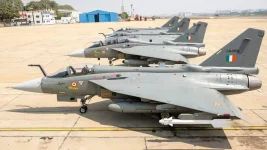
A significant standoff has emerged between Hindustan Aeronautics Limited (HAL) and the Indian Air Force (IAF) regarding the delivery timeline of the new Tejas Mk1A fighter jets.

While the state-owned manufacturer is pushing for an early handover of the aircraft in their current state, the Air Force has refused to induct the jets until they fully meet all operational quality standards.

According to recent reports, high-level discussions are underway to resolve the impasse.

Sources indicate that HAL has requested the IAF to accept the aircraft now, with a promise to complete pending integration work and updates in subsequent phases. HAL has reportedly declared that five Tejas Mk1A jets are physically ready for delivery.

However, the Air Force has maintained a strict position: acceptance is conditional on the aircraft satisfying the Air Staff Quality Requirements (ASQR), the rigid technical benchmarks that define combat readiness.

Integration Challenges and "Category A" Deficiencies​

The disagreement centres on the complexity of modern fighter jet systems. Pending tasks have been categorised by internal teams into minor, major, and unacceptable deficiencies.

The Air Force is reportedly unwilling to compromise on "major" issues that affect the aircraft's core fighting capabilities.

The primary hurdle lies in systems integration. Modern aerial warfare requires that the aircraft’s radar does not operate in a silo but communicates seamlessly with the mission computer, electronic warfare (EW) suite, and flight control systems.

Open-source data suggests the Tejas Mk1A programme involves integrating advanced Active Electronically Scanned Array (AESA) radars and new electronic warfare jammers.

Ensuring these sensors work in perfect synchronisation to provide the pilot with coherent data fusion is critical for survival in high-threat environments.

While weapons release trials—such as firing Beyond Visual Range (BVR) missiles—have been conducted, the IAF insists that successful firing alone does not constitute full mission readiness.

Certification and Delivery Process​

Once HAL completes the outstanding integration work, the aircraft must undergo formal certification. Following this, the IAF will conduct its own acceptance trials to validate safety margins and performance under operational conditions.

Air Force sources suggest that if HAL can demonstrate that all quality parameters have been met, these acceptance trials could be commenced immediately and would likely take approximately one month to complete.

External reports indicate that the IAF is planning a comprehensive review of the programme around May 2026 to assess the maturity of the platform before committing to a final delivery schedule.

Strategic Importance and Collaboration​

Despite the friction over timelines, both HAL and the IAF agree on the strategic necessity of the Tejas Mk1A.

With the IAF’s fighter squadron strength currently hovering around 30—well below the sanctioned strength of 42—the induction of the 83 ordered Mk1A jets is vital to replace retiring legacy fleets like the MiG-21.

To expedite the process, the programme has adopted a collaborative approach.

Air Force test pilots are currently embedded within the HAL development ecosystem, working alongside engineers to troubleshoot software glitches and refine integration pathways in real-time.

This joint effort highlights the complex nature of developing 4.5-generation fighter aircraft, where manufacturing momentum must be carefully balanced against the uncompromising discipline of flight safety and operational efficacy.

For the IAF, the objective remains clear: the Tejas Mk1A must be fully mission-capable from the moment it enters service, rather than a work-in-progress.
 
Before going to other issues, I appreciate your change of mind about not accusing HAL. That's nice.
Then, just because I regard both Army and IAF as highly competent forces that we are proud of them doesn't preclude my right to point out their harsh treatment of indigenous developers. Nor does it negate my right to defend HAL against undeserving criticism heaped by the crowd. My disclaimer shows it - I fully stand by it. My point is that all might have contributed to the inordinate delay in inducting the Tejas. I refrain from pointing out more examples here that are deviations from our debate. It's a seperate topic for discussion.
I don't agree to your demanding any apology to both IAF and Army.
I believe that it's they who have to apologize to the affected parties, such as DRDO, HAL, CVRDE, etc. It's OK too that we both differ on that and with disagreement let us end our discussion here!🙂
DRDO, HAL and CVRDE dont deserve any apology, they are govt orgs that overpromise and under deliver. Atleast CVRDE has demonstrated some competency in that regard. DRDO and HAL truly don't deserve to, because they are nothing more whipping boys for the naked borderline treasonous incompetence of the Ministry of Defense.
Indian ministries are the source of all that is wrong with the Central govt.
In a truly functional country strategic assets would be placed directly under the highest executive authority not hidden away under the skirt of a slimy impotent risk averse bureaucrats(can't blame them entirely the regulatory cuckery of the Indian state restricts everybody from acting on necessities).

The Chinese learned this and transferred all their States Industrial Assets into SASAC which answers to the State Council(Our equivalent would theoretically be Council of Ministers or PMO would suffice).
It's not like we don't know this, DAE answers to the PMO, DOS answers to the PMO, DOS's Chairman also acts as the head of ISRO, meaning smoothened operations and these organizations have easy access to the most powerful decision maker in the country to straighten out the obstructions they face, this isn't rocket science, but these fkers refuse to learn and let go of their procedural cuckery in the name of "antincorruption" fk off(sorry, not directed at you).
 
What you just acknowledged points to a deeper flaw with India's industrial development model in general and Defence Industrial Complex in particular. Ita fundamentally a headless chicken because it's been fashioned to ape the ideological construct of western liberal democracies, so failure is inevitable.
In a capital intensive industry like the one HAL is engaged in, vertical integration, capital infusions and high research to production interactions and competition is necessary.
I mean China who didn't even have SOEs up until like 30-40 years ago took our model, improved it then perfected it and built their entire industrial system on top of it. Yet our clownish politicians, ministerial bureaucratic morons, self promoting military leaders and ostrich brained SOE heads can't distinguish between the trees and the forest and keep championing their narrow interests.
The problem in the HAL is the top management. The lackadaisical attitude flows down from there. Being a monopoly at least for now, contributes further, with IAF as a captive customer. In the fifties, HAL used to be headed by an IAF officer. If you check out history, you would find HAL performed much better then, both in terms of quality and adhering to schedules. Once the the beaurocracy got in, things have gone down hill. Breaks now stretch from anything about 30 minutes before schedule to 30 minutes after schedule. Chitchat and socializing takes up nearly an hour before start. These are facts personally observed in four different divisions.

All because, IAF has zero say and doesn't even have the right to impose any penalty. That is the prerogative of the ministry of defence, also the boss of HAL. Not for nothing that the IAF chief publicly castigated HAL during the last aero-india.

I did not want to disclose these hime truths about HAL, but my hand was forced.

Hopefully, now that others like TATA, Mahindra, L&T etc are getting into aerospace in India, HAL would hopefully pull its finger out of its derriere and get its act together. Otherwise, that day is not far, when it meets the same fate as Ordinance Factory Board.
 

Forum statistics

Threads
6,413
Messages
63,070
Members
4,984
Latest member
mpbhulekh
Back
Top