The Indian Air Force (IAF) is currently evaluating the acquisition of the Israeli SKY SHIELD electronic attack pod.
This strategic move is intended to significantly strengthen India’s tactical advantage in highly monitored and restricted airspaces.
As regional adversaries deploy increasingly sophisticated and interconnected air-defence grids, the capability to neutralize enemy radar systems has become a top priority for national security.
A Comprehensive Electronic Warfare Solution
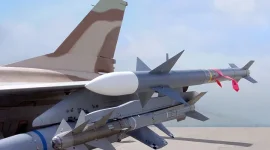
The SKY SHIELD is a self-contained, versatile system designed for both offensive electronic attacks and escort jamming.Packaged in a streamlined pod, it is already certified for use on modern fighter jets.
The system is engineered to provide an "off-the-shelf" solution for Suppression of Enemy Air Defence (SEAD) operations.
Beyond its offensive role, it offers critical protection for friendly aircraft during deep-strike missions, ensuring they remain undetected while penetrating hostile territory.
In contemporary aerial warfare, victory is often determined by control over the electromagnetic spectrum rather than just raw speed.
Today's defensive networks utilize a combination of long-range surveillance, precision fire-control radars, and multi-layered missile batteries.
To overcome these obstacles, aircraft must do more than just hide; they must actively disrupt the enemy's ability to track and engage targets.
Advanced Technology and Automation
At the core of the SKY SHIELD are high-efficiency Active Electronically Scanned Array (AESA) jammers.These are powered by Gallium Nitride (GaN) amplifiers, which provide superior power density and heat management.
This technology allows the pod to remain compact while delivering a high-energy, agile electronic output—a crucial factor for fighter jets where weight and power efficiency are vital.
The system also features a high level of autonomy to manage the complexities of modern electronic combat:
- Automated Threat Detection: The pod identifies hostile signals and prioritizes them for the pilot.
- Precision Jamming: It uses focused beams to suppress multiple surveillance and fire-control radars simultaneously, rather than relying on less effective "noise" jamming.
- Tailored Countermeasures: It automatically selects the most effective electronic warfare technique for specific radar types.
Strategic Context and Regional Security
This consideration comes amid a broader deepening of Indo-Israeli military ties.In early 2026, India moved to finalise a series of major defence agreements with Israel, potentially valued between $8 billion and $10 billion.
These discussions have gained urgency following regional conflicts in 2025 that highlighted the critical role of advanced electronic warfare and missile defence.
Integrating the SKY SHIELD onto frontline IAF fighters like the Sukhoi Su-30MKI or the HAL Tejas would provide immediate operational flexibility.
Since the system is podded, it can be attached or removed based on specific mission needs, avoiding the need for permanent and costly internal modifications.
Furthermore, this acquisition could serve as a vital "capability bridge" while India continues to develop its own domestic electronic warfare suites under the Atmanirbhar Bharat initiative.