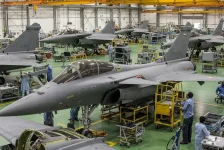
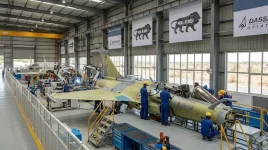
In a significant move to bolster its combat capabilities, India is reportedly nearing a historic agreement with France to procure 114 Rafale F4 fighter jets.
According to defence officials, this acquisition could eventually expand, pushing the Indian Air Force’s (IAF) total Rafale inventory to nearly 200 aircraft.
This strategic expansion aligns with the IAF’s latest proposal to increase its sanctioned strength from 42 to 50 squadrons to effectively manage a simultaneous two-front conflict.
Rafale: The New Backbone of Indian Air Power
While the immediate discussion focuses on the 114 Multirole Fighter Aircraft (MRFA) deal, long-term planners envisage the Rafale becoming the central pillar of India's air defence.Currently, the IAF operates 36 Rafale jets, while the Indian Navy has placed orders for 26 Rafale M fighters, bringing the confirmed combined fleet to 62 aircraft.
The anticipated contract for 114 Rafale F4 jets would lift this figure to 176. However, sources suggest that an additional tranche of approximately 50 jets may be considered in the future.
This follow-on order would ensure the IAF can sustain a 50-squadron force structure despite upcoming retirements, effectively making India one of the largest operators of the Rafale globally.
Recent reports from January 2026 indicate that the Defence Procurement Board (DPB) has already cleared the proposal for the 114 jets, marking a critical step before final Cabinet approval.
Preparing for a Two-Front War
The drive for a larger fleet is rooted in the IAF’s evolving threat perception, which now prioritizes readiness for simultaneous operations along the western border with Pakistan and the northern border with China.To meet this challenge, the IAF is actively reviewing a proposal to raise its authorised strength to 50 squadrons.
With each squadron typically comprising 18 aircraft, this new structure would necessitate a frontline force of roughly 900 combat jets, excluding training and reserve units.
As legacy aircraft retire, the Rafale is being positioned as the primary platform to maintain this combat mass.
Retiring the Legacy Fleet
The IAF is currently entering a massive transition phase involving the phased retirement of its older aircraft.- Jaguar Fleet: The deep-strike Jaguar fleet is slated for phased retirement, with a complete withdrawal expected by 2035.
- MiG-29UPG: These fighters are scheduled to exit service in the late 2030s.
- Mirage 2000: The versatile Mirage 2000 fleet will likely be retired shortly after, between 2038 and 2040.
Their departure will create a significant capability void that must be filled by new-generation platforms like the Rafale and the indigenous Tejas Mk2.
Future Fleet Mix: Rafale, Tejas, and AMCA
By the late 2030s, the IAF’s medium-weight fighter segment will likely be defined by a mix of Rafale and Tejas Mk2 aircraft.- Tejas Mk2: Production is targeted to begin around 2033, with the majority of inductions happening post-2035. While current projections estimate an order of 120 jets, this number could rise based on operational needs.
- Rafale F4: Deliveries are expected to commence from 2030. By 2035, the IAF is projected to have approximately 80 new Rafales in service, potentially reaching the 200-mark by 2040 if further orders are approved.
The indigenous Advanced Medium Combat Aircraft (AMCA), India’s fifth-generation stealth fighter, will eventually replace the oldest Su-30MKIs.
The AMCA Mk1 is expected to enter service around 2033–2034, but significant numbers will only be available after 2035.
Consequently, the Rafale and Tejas Mk2 will bear the primary operational burden for the next two decades.
Strategic Anchor for the Future
What started as an emergency purchase of 36 jets has evolved into a long-term strategic partnership.In an era defined by network-centric warfare and advanced air defence systems, the IAF is placing its trust in the Rafale’s superior survivability, sensor fusion, and long-range strike capabilities.
If the deal progresses as indicated, the Rafale will not just be a stopgap solution but the anchor of India’s air dominance strategy for decades to come.