India’s drive to achieve deeper self-reliance in combat aviation is accelerating rapidly. Hindustan Aeronautics Limited (HAL) is poised to accept the initial batch of the indigenous Uttam Active Electronically Scanned Array (AESA) radar.
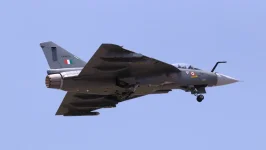
These units are designated for integration into the second tranche of Tejas Mk1A fighters and trainers, a significant order placed by the Indian Air Force (IAF) last year.
This progression constitutes a watershed moment for the nation’s aerospace sector, as the Tejas Mk1A fleet begins its transition from imported sensor technology to an advanced, domestic solution that ensures enhanced operational capability and strategic autonomy.
In the previous year, HAL Chairman C.B. Ananthakrishnan (and subsequently D.K. Sunil) indicated that the second order of 97 Tejas Mk1A aircraft comprises 68 single-seat fighters and 29 twin-seat trainers.
The delivery timeline for these jets is projected to span from the 2027-28 fiscal year through to 2033-34. This schedule creates a sustained production pipeline that dovetails with the Indian Air Force’s broader objectives for fleet modernisation.
The decision to equip this specific batch with the Uttam AESA radar signifies far more than a simple substitution of components. It marks a generational advancement in terms of sensor authority, resilience against electronic warfare, and freedom of operation.
Unlike imported systems, which often come with "end-user" restrictions, the indigenous suite offers the IAF complete control over its mission-critical data and source codes.
According to defence sources, a major production contract with a Hyderabad-based firm—widely believed to be Astra Microwave Products Ltd, a key partner in the radar’s development—is expected to be finalised by mid-year. This contract will cover the manufacture of nearly 97 radar units plus additional reserves.
The finalisation of this deal is contingent upon the completion of final design validations and certifications, a timeline that synchronises perfectly with HAL’s manufacturing roadmap for the second Mk1A batch.
Currently, the initial tranche of Tejas Mk1A aircraft is being fitted with the ELM-2052 AESA radar. This system is manufactured by HAL under a Transfer of Technology (ToT) arrangement with Israel’s ELTA Systems.
While the ELM-2052 is a formidable radar with a proven combat record, the indigenous Uttam is engineered to exceed these standards in specific domains.
Developed by the Defence Research and Development Organisation (DRDO), the Uttam radar is reported to incorporate approximately 912 Gallium Arsenide (GaAs) transmit-receive modules (TRMs).
This high density of modules significantly amplifies the radar's detection range, tracking accuracy, and ability to engage multiple targets simultaneously.
A higher volume of TRMs generally results in superior beam agility and robust performance in the face of enemy jamming.
For the Indian Air Force, this translates to dominant situational awareness even in highly contested airspace, alongside improved aircraft survivability.
Furthermore, newer variants of the radar are exploring Gallium Nitride (GaN) technology, which offers even greater power efficiency and thermal performance.
Beyond raw performance statistics, the transition to the Uttam system mitigates long-term reliance on foreign Original Equipment Manufacturers (OEMs) for maintenance and mid-life upgrades.
The radar’s software-defined architecture ensures that future capability enhancements can be implemented swiftly and flexibly, entirely within India’s sovereign control.
The imminent production agreement with the Hyderabad-based industry partner heralds the maturity of India’s domestic radar manufacturing ecosystem.
Once the certification process is concluded, serial production will commence to fulfil the complete requirement for the 97-aircraft order, including spare units.
This development holds immense strategic weight. As radar systems are the linchpin of a fighter jet’s combat effectiveness, mastering AESA technology paves the way for its application across other critical platforms.
This includes unmanned aerial vehicles (UAVs), airborne early warning and control (AEW&C) systems, and future operational programs like the Advanced Medium Combat Aircraft (AMCA).
The operational deployment of the Uttam radar on the Tejas Mk1A will effectively act as a proving ground, allowing for iterative refinements before the technology is adapted for next-generation platforms.
With the delivery window for the second Mk1A batch set for 2027-28 to 2033-34, there is an adequate buffer to ensure comprehensive system validation and integration testing.
By the time these fighters are inducted, the Indian Air Force is expected to operate a mixed fleet of Mk1A variants—some utilising the imported Israeli radar and others powered by the indigenous Uttam system.
Eventually, standardising the fleet around the Uttam radar could streamline logistics, simplify the upgrade process, and significantly lower lifecycle costs.
For HAL, this shift underscores a growing confidence in India’s indigenous design capabilities.
Successfully integrating a novel radar into a production-series aircraft requires exacting standards in systems engineering, extensive flight testing, and the precise harmonisation of software with mission computers and electronic warfare suites—a challenge the Indian defence industry is now fully prepared to meet.