- Views: 2K
- Replies: 5
In a significant move towards strengthening national defence capabilities, India is preparing to equip its fleet of French-origin Rafale fighter jets with indigenous air-to-air weaponry.
Trials for the integration of the Astra Mk1 and the advanced Astra Mk2 Beyond Visual Range Air-to-Air Missiles (BVRAAM) onto the Rafale are scheduled to commence in 2028.
This initiative marks a crucial step in the Indian Air Force’s roadmap to enhance operational flexibility while promoting self-reliance in defence technology.
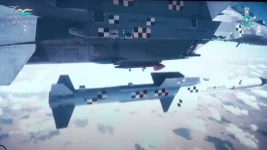
The Astra Mk1, which is already operational on the Su-30MKI and Tejas aircraft, offers a range of over 100 kilometres.
The upcoming Astra Mk2 is expected to be a major force multiplier, featuring a dual-pulse rocket motor that significantly extends its range to approximately 160 kilometres, placing it in a similar class to global competitors like the Meteor missile.
According to defence sources, the manufacturers of the aircraft and its systems, Dassault Aviation and Thales, have agreed to provide the necessary technical assistance for this programme.
Their involvement is critical for developing specific software upgrades that allow the Indian-made missiles to communicate effectively with the Rafale’s advanced RBE2 active electronically scanned array (AESA) radar and its Combat Management System.
This cooperation ensures that the aircraft can fully utilise the guidance and targeting capabilities of the Astra missiles.
Before any physical flight tests take place, the integration process will undergo a rigorous design and validation phase. Engineers will conduct extensive computer-aided simulations to analyse how the missile affects the aircraft's aerodynamics, electrical systems, and data exchange protocols.
These virtual tests are designed to identify potential technical issues early, thereby reducing risks and ensuring the project remains on schedule.
Following successful software maturity, the programme will transition to flight testing using a specifically designated Indian Rafale as a flying test bed. This phase will be conducted in a strictly sequential manner to ensure safety.
Initially, 'carriage trials' will be performed to verify that the missile can be safely mounted and carried during flight without affecting the jet's stability.
This will be followed by 'captive trials,' where the aircraft flies representative combat missions with the missile attached to gather sensor data without actually firing it.
The subsequent stage involves 'release trials,' where the missile is dropped from the aircraft under various speeds, altitudes, and manoeuvring conditions to ensure safe separation.
Once these safety parameters are validated, the final phase will involve live firing trials, which will pave the way for operational clearance.
For the Indian Air Force, successfully integrating the Astra series on the Rafale offers a strategic advantage. It reduces dependence on costly imported missiles and diversifies the supply chain.
Furthermore, this project highlights a shift in India’s defence policy, ensuring that even imported frontline platforms can operate seamlessly within a locally developed combat ecosystem.