Against the backdrop of rising geopolitical frictions in the Middle East, the Indian Army is taking significant steps to bolster its deep-strike arsenal.
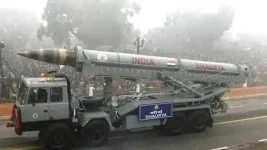
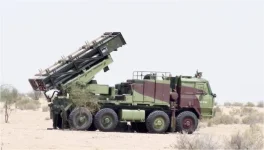
Plans are actively underway to acquire the highly advanced 800-kilometre extended-range variant of the BrahMos supersonic cruise missile.
This procurement highlights a strategic shift shaped by global conflicts and India's own recent military engagements.
Currently, the Army's inventory includes BrahMos missiles capable of hitting targets at distances of over 450 kilometres. However, defence sources confirm that the military is now aiming to integrate a newer, longer-range version.
This 800-kilometre variant—co-developed by India's Defence Research and Development Organisation (DRDO) and Russia's NPO Mashinostroyeniya—will massively widen the Army's operational reach.
It will enable forces to strike critical enemy assets far deeper into hostile territory, all while retaining the missile's signature Mach 3 speed and pinpoint accuracy.
The massive procurement plan is slated for evaluation at an imminent, high-level meeting of the Defence Acquisition Council (DAC), chaired by Defence Minister Rajnath Singh.
If approved, this would mark one of the most substantial orders for the extended-range BrahMos to date. Such a move aligns perfectly with India's strategy to strengthen its stand-off deterrence, especially in an era where long-range precision strikes dominate modern warfare.
The necessity and reliability of this weapon system were proven beyond doubt during the India-Pakistan conflict in May 2025.
Under the banner of Operation Sindoor, Indian forces heavily relied on the BrahMos platform, launching numerous strikes to dismantle multiple Pakistan Air Force bases and terror infrastructure.
The staggering success of these strikes, which reportedly incapacitated a significant portion of the adversary's air base infrastructure, has firmly cemented the military's trust in the missile as a formidable deterrent.
Furthermore, the ongoing hostilities in West Asia involving nations like Iran, Israel, and the United States have served as a vital learning curve for military planners globally.
These conflicts vividly illustrate a major shift in modern combat doctrine: the growing reliance on stand-off weapons and precision-guided munitions to maximise destruction from afar without putting manned aircraft and personnel at direct risk.
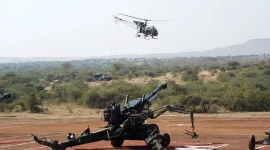
Reacting to these new-age battlefield realities, the Indian Army is rapidly reshaping its force structure.
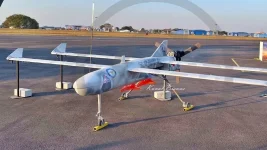
Beyond just long-range missiles, the military is simultaneously focusing on mass-producing and deploying specialised drone regiments within its artillery and infantry units.
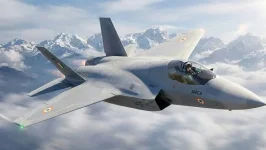
By fusing unmanned aerial systems with long-reach ballistic capabilities, India is actively building a highly networked, multi-domain strike force capable of delivering swift and devastating responses to any future threats.