A fresh diplomatic row has erupted following claims by the Chinese government that it played a decisive role in brokering peace during the India-Pakistan conflict of May 2025, known as Operation Sindoor.
While Beijing attempts to position itself as a peacemaker, Indian citizens and defence analysts have taken to social media to dismantle this narrative.
The online backlash suggests that the ceasefire was not the result of Chinese diplomacy, but rather a consequence of the catastrophic failure of Chinese-supplied weaponry used by the Pakistan military.
The Diplomatic Spat
The controversy began earlier this week when Chinese Foreign Minister Wang Yi addressed a press conference in Beijing.He asserted that President Xi Jinping’s direct intervention and mediation were responsible for de-escalating the intense four-day skirmish between the two nuclear-armed neighbours.
Wang Yi framed this as part of China’s broader strategy to act as a stabilising force in South Asian geopolitical hotspots.
The Indian government, however, issued a swift and categorical denial.
Officials in New Delhi rejected the notion of third-party involvement, maintaining that the ceasefire was achieved strictly through bilateral channels.
They reiterated that Operation Sindoor was a targeted counter-offensive to neutralise cross-border threats and that external claims of mediation were baseless attempts to gain diplomatic leverage.
"Barrels Turning into Flowers"
While the diplomatic exchanges remained formal, the response on social media has been merciless.Indian netizens have argued that Pakistan was forced to the negotiating table because its arsenal—heavily stocked with Chinese imports—began to disintegrate under combat conditions.
A wave of satirical posts and memes has gone viral, mocking the durability of Beijing’s military hardware.
One widely shared post humorously suggested that Beijing advised Islamabad to stop fighting because their artillery "gun barrels were turning into flowers."
This vivid metaphor refers to reports of metallurgic failures where artillery barrels allegedly overheated, melted, or burst open at the muzzle (resembling a blooming flower) when subjected to sustained rapid fire.
The mockery draws upon a long-standing stereotype in India regarding "Chinese maal" (Chinese goods), often synonymous with products that are affordable but lack longevity.
Social media users have flooded platforms like X (formerly Twitter) with memes comparing the battlefield performance of these weapons to cheap, unreliable consumer electronics, using Bollywood dialogues to turn technical malfunctions into cultural punchlines.
Operational Failures Exposed
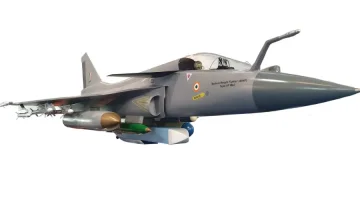
Beyond the humour, serious defence analysis supports the claims of equipment failure.During Operation Sindoor, the Pakistan Air Force and Army deployed advanced Chinese platforms, including J-10C fighter jets equipped with PL-15E air-to-air missiles and VT-4 main battle tanks.
According to post-conflict assessments and eyewitness reports, these systems faced significant reliability issues.
- Artillery Malfunctions: Reports indicate that self-propelled howitzers supplied by China suffered from barrel deformation and bursting, similar to issues previously observed in other conflicts involving Chinese exports, such as the tensions between Thailand and Cambodia.
- Aviation Struggles: While the J-10C is touted as a modern fighter, Indian defence experts noted that indigenous Indian electronic warfare systems effectively jammed and bypassed the Pakistani jets, rendering their avionics less effective.
- Tank Vulnerabilities: The VT-4 tanks reportedly suffered from mechanical breakdowns and proved vulnerable in high-intensity engagement zones.
Strategic Implications
The conflict has served as an inadvertent testbed for Chinese military technology, and the results have drawn international scrutiny.A report by the United States Congress recently highlighted that Operation Sindoor exposed critical vulnerabilities in Beijing’s hardware, questioning its reliability in genuine high-stakes warfare.
Indian defence experts have pointed out that the disparity in equipment quality turned the tide of the brief war. India’s integrated air defence network successfully thwarted drone and missile attacks of both Chinese and Turkish origin, validating New Delhi's push for indigenous defence manufacturing.
For China, the fallout is two-fold. Diplomaticaly, its attempt to claim credit for peace is being overshadowed by the ridicule of its exports. Commercially, the poor performance of its weapons could damage its reputation in the global arms market, where it competes on price but is often questioned on quality.
As the "flower barrel" memes continue to circulate, the perception of Chinese military might has taken a significant hit in the court of public opinion.