India's Nuclear Journey: A Story of Isolation to Recognition

6658694c7d64e.png


India's nuclear journey has been fraught with challenges, international isolation, and eventual recognition as a responsible nuclear power.

The inception of India's nuclear program can be traced back to the visionary physicist Homi Bhabha, who convinced Prime Minister Nehru to invest in nuclear technology despite international reservations.

This led to India's first Peaceful Nuclear Explosion (PNE) in Pokhran in 1974, a significant achievement that triggered international backlash. The IAEA, major world powers, and even some fuel suppliers distanced themselves from India due to concerns about nuclear proliferation.

By the late 1990s, growing security concerns pushed India to conduct further nuclear tests in 1998. This resulted in further isolation and exclusion from crucial nuclear groups like the Nuclear Suppliers Group (NSG) and the Comprehensive Test Ban Treaty (CTBT).

However, India responded by formulating a distinct nuclear doctrine, which emphasized "No First Use," meaning it would only retaliate with nuclear weapons if another nuclear state initiated a strike.

This doctrine, rooted in the principles of necessity and proportionality, contrasts with Pakistan's "Full Spectrum Deterrence" policy, which allows for the potential first use of nuclear weapons under certain circumstances.

While estimates suggest India and Pakistan possess roughly the same number of warheads (around 150-160), Pakistan's arsenal is primarily focused on India, whereas India's nuclear capabilities consider both Pakistan and China, which has a significantly larger arsenal estimated at over 300 warheads.

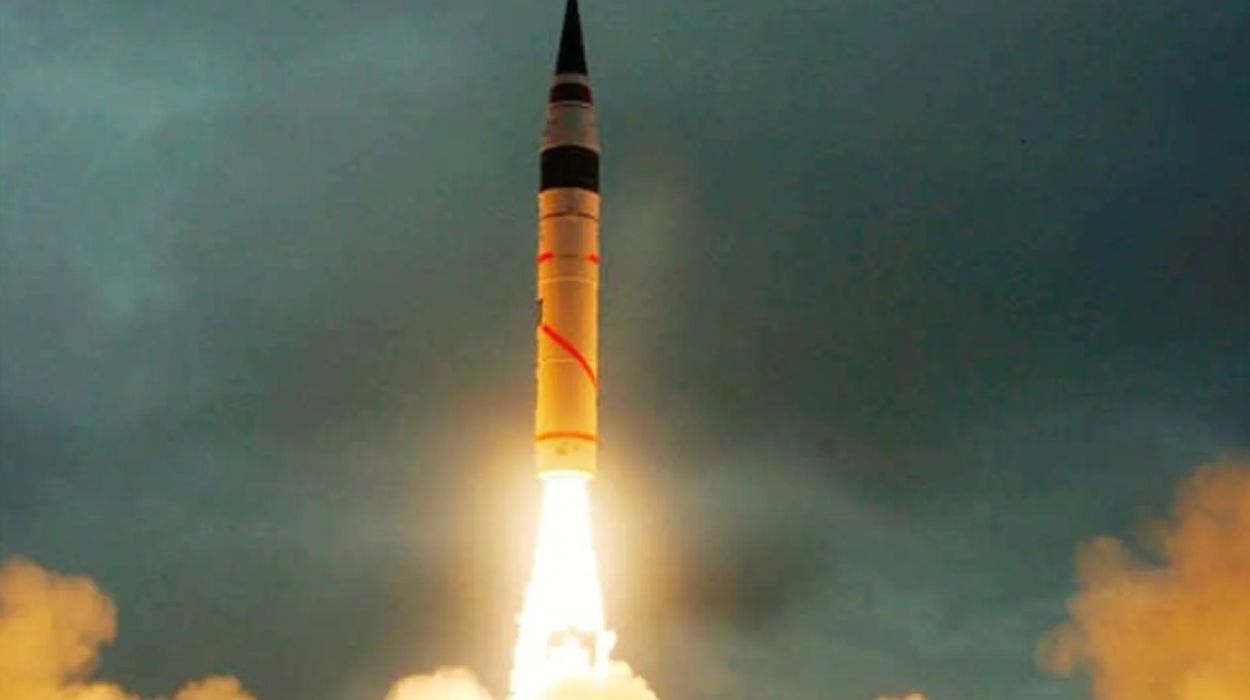
India's strength lies in its sea-based nuclear deterrent, with the nuclear-powered submarine Arihant and a planned second platform. Additionally, its larger size provides a geographical advantage in dispersing its nuclear assets.

Over time, India's persistent diplomatic efforts have helped it emerge from isolation. It is now a recognized nuclear power, gets NSG waiver, and has bilateral nuclear agreements with several countries, including all major nuclear powers except China.
 
India will not be global power until and unless we have more SSBNs with at least 5,000 KM SLBM and the hydrogen bomb. It must be proved beyond any doubt that India has hydrogen bomb.
 
Indian needs to invest in Civil Nuckear Reactors, Nuclear Waste Reprocessing, SSBNs & SSNs to insure that NSG becomes redundant without India being it's member
 
India will not be global power until and unless we have more SSBNs with at least 5,000 KM SLBM and the hydrogen bomb. It must be proved beyond any doubt that India has hydrogen bomb.
Global power is having a great economy with a large manufacturing base and a being leading power in other crucial sectors not necessarily having a massive nuclear arsenal with hydrogen bombs.There is a huge difference between Russia and US today and that has hardly to do with hydrogen bombs.
 
If India wants to become a permanent member of the UNSC and China is not agreeing to allow us because we aren’t a member of the NSG then India should just enter and not give China any excuse to deny us a place. India is never going to provide any nuclear technology or weapons to another country so joining the NSG works in our favour as our interests align with the NSG.

India also needs to design and develop even bigger nuclear weapons like thermonuclear warheads which will increase our national security as no country would want the amount of damage that a thermonuclear weapon can do.
 
If India wants to become a permanent member of the UNSC and China is not agreeing to allow us because we aren’t a member of the NSG then India should just enter and not give China any excuse to deny us a place. India is never going to provide any nuclear technology or weapons to another country so joining the NSG works in our favour as our interests align with the NSG.

India also needs to design and develop even bigger nuclear weapons like thermonuclear warheads which will increase our national security as no country would want the amount of damage that a thermonuclear weapon can do.
India can't become a member of NSG either because China isn't allowing it 🤣🤣 India has been trying for a long time now.
 
If India wants to become a permanent member of the UNSC and China is not agreeing to allow us because we aren’t a member of the NSG then India should just enter and not give China any excuse to deny us a place. India is never going to provide any nuclear technology or weapons to another country so joining the NSG works in our favour as our interests align with the NSG.

India also needs to design and develop even bigger nuclear weapons like thermonuclear warheads which will increase our national security as no country would want the amount of damage that a thermonuclear weapon can do.
You do realise that joining the NSG needs unanimous approval, right? China has been vetoing India's entry, but has shown a willingness to allow India to enter if Bhikaristan is also allowed in. Of course, in doing so, they say the technology they transferred to Bhikaristan would be grandfathered in.
 
You do realise that joining the NSG needs unanimous approval, right? China has been vetoing India's entry, but has shown a willingness to allow India to enter if Bhikaristan is also allowed in. Of course, in doing so, they say the technology they transferred to Bhikaristan would be grandfathered in.
India hasn’t and should join the non proliferation treaty as it’s just an agreement that states we would prevent the spread of nuclear weapons and technology which India was never going to do any of that anyway.

Afterwards we can have a strong chance of gaining membership in the NSG as China keeps on using our refusal to join the NPT as an excuse to deny us membership of NSG. Pakistan hasn’t joined the NPT either but if they refuse to join it then they are less likely to join the NSG. Also even if they tried to join then the west wouldn’t allow them because of their past history in selling nuclear secrets and weapons to North Korea.
 
India can't become a member of NSG either because China isn't allowing it 🤣🤣 India has been trying for a long time now.
It’s obvious they aren’t allowing us to join because they keep on using our refusal to join the NPT which is basically an agreement to stop the spread of nuclear weapons and technology which India never was anyway. Then it gives China one less excuse to deny us.
 
India hasn’t and should join the non proliferation treaty as it’s just an agreement that states we would prevent the spread of nuclear weapons and technology which India was never going to do any of that anyway.

Afterwards we can have a strong chance of gaining membership in the NSG as China keeps on using our refusal to join the NPT as an excuse to deny us membership of NSG. Pakistan hasn’t joined the NPT either but if they refuse to join it then they are less likely to join the NSG. Also even if they tried to join then the west wouldn’t allow them because of their past history in selling nuclear secrets and weapons to North Korea.
You haven't read the NPT, have you? The NPT classifies nations that had nuclear weapons till the start of 1967 or so as 'nuclear-weapon states'. Essentially, these are the P5. Every other state is called as a 'non-nuclear state'. The NPT says non-nuclear states would not develop or try to acquire nuclear weapons, and nuclear states would not try to transfer any such technology. In return, nuclear states would transfer technology for peaceful atomic purposes.

The problem with the NPT is that it never explains why exactly some nations can have nukes and others cannot, and why exactly thr 1967 date is the cut-off. Why not, say, 1975? The NPT was, and remains a pathetic attempt at creating a group of "nuclear haves" and "nuclear have-nots".

Technically speaking, India cannot and should not join the NPT since doing so would mean we would be beholden to dismantling our nuclear program.

Secondly, considering that China transferred nuclear technology to Bhikaristan after they signed the NPT, it is those idiots who are in violation. India gas never signed the NPT, and we never shall, as it should be.
 
It’s obvious they aren’t allowing us to join because they keep on using our refusal to join the NPT which is basically an agreement to stop the spread of nuclear weapons and technology which India never was anyway. Then it gives China one less excuse to deny us.
So you want us to sign NPT??????
 
You haven't read the NPT, have you? The NPT classifies nations that had nuclear weapons till the start of 1967 or so as 'nuclear-weapon states'. Essentially, these are the P5. Every other state is called as a 'non-nuclear state'. The NPT says non-nuclear states would not develop or try to acquire nuclear weapons, and nuclear states would not try to transfer any such technology. In return, nuclear states would transfer technology for peaceful atomic purposes.

The problem with the NPT is that it never explains why exactly some nations can have nukes and others cannot, and why exactly thr 1967 date is the cut-off. Why not, say, 1975? The NPT was, and remains a pathetic attempt at creating a group of "nuclear haves" and "nuclear have-nots".

Technically speaking, India cannot and should not join the NPT since doing so would mean we would be beholden to dismantling our nuclear program.

Secondly, considering that China transferred nuclear technology to Bhikaristan after they signed the NPT, it is those idiots who are in violation. India gas never signed the NPT, and we never shall, as it should be.
The treaty is very old and let’s not forget that the Republic of China/Taiwan was a member of the P5 and not the People’s Republic of China. So already the other P4 members have circumvented that dilemma and should be able to do the same for India as technically they have just given an invading party/PRC status over what belonged to another as party/Taiwan. So technically China should never of been allowed to be a NPT and NSG.
 
Signed as an official nuclear state. Not give up our weapons and nuclear power.
That's not possible. NPT only recognizes states who tested a nuke before 1 Jan 1967 as nuclear powers. So either India gives up it's nukes or doesn't sign it. You can't do both.
 
That's not possible. NPT only recognizes states who tested a nuke before 1 Jan 1967 as nuclear powers. So either India gives up it's nukes or doesn't sign it. You can't do both.
They have to change the treaty or circumvent the treaty like they did with China. It was the republic of China/ Taiwan that was part of the P5 and signature to it. But the PRC was an invasion force that expanded the territory and took over from Taiwan. So already the original member was no longer the same person or government.
 
They have to change the treaty or circumvent the treaty like they did with China. It was the republic of China/ Taiwan that was part of the P5 and signature to it. But the PRC was an invasion force that expanded the territory and took over from Taiwan. So already the original member was no longer the same person or government.
They didn't change it for China. The treaty clearly stated that anyone who had tested their bomb before the cut off date (1967) is allowed to have weapons. China, or PRC, had it. RoC had signed it as a non nuclear state. So no modifications were done. China only signed it and ratified it. Get your history in order before commenting.
 
A West Germany Army Magazine, Wehrtechnik, in June 1976, claimed that Western reports documented a 1963 underground test in the Negev. (Israel) Other reports show a test at Al-Naqab, Negev in October 1966. Israel has all the evidence, but this calculated ambiguity:-for the time being this must be our secret. The answer to that question may not be long in cominf... https://nuke.fas.org/guide/israel/nuke/farr.htm This is the only broad area of study in this field. Regards and Shabbat Shalom...
 
You haven't read the NPT, have you? The NPT classifies nations that had nuclear weapons till the start of 1967 or so as 'nuclear-weapon states'. Essentially, these are the P5. Every other state is called as a 'non-nuclear state'. The NPT says non-nuclear states would not develop or try to acquire nuclear weapons, and nuclear states would not try to transfer any such technology. In return, nuclear states would transfer technology for peaceful atomic purposes.

The problem with the NPT is that it never explains why exactly some nations can have nukes and others cannot, and why exactly thr 1967 date is the cut-off. Why not, say, 1975? The NPT was, and remains a pathetic attempt at creating a group of "nuclear haves" and "nuclear have-nots".

Technically speaking, India cannot and should not join the NPT since doing so would mean we would be beholden to dismantling our nuclear program.

Secondly, considering that China transferred nuclear technology to Bhikaristan after they signed the NPT, it is those idiots who are in violation. India gas never signed the NPT, and we never shall, as it should be.

Since China-US and SU openly transferred nuclear weapons to rogue nations like N-Korea, Iran, Syria, Lybia etc, including the crime network of Mr Abdul Kadir Khan of Pakistan to different rogue nations including Syria-Lybia-Iran etc, backed by China who snuggled M11 missiles to Pakistan from N-korea, the ex Soviet's/Russian mafias who were involved in smuggling Suitcase N-bombs to different rogue states, therefore we find this NPT has gone to rubbish bin. 👎

There is no law of handling N-weapons by 'rogue' activites of P5s, the winners of WW2, who occupied Permanent Seat in UN and formed NPT and different platforms for these criminal activities against peace seeking countries, including India 🕳️

The China helped the stated Abdul Kadir Khan's smuggling of Nukes to rogue states, at the same time the US has put nukes in Germany and Japan coverty, against norms of NPT. The Germany-Japan were losers of WW2, hence were not qualifying for a place in P5s, similar to France -UK who won WW2 🙂

This "Power Balance" of WW2 is maintained somehow someway, with emergence of India as the sixth Nuclear capable country by N tests in 1974, the Smiling Buddha. With having Cold War Alliance with Moscow, securing it's Veto favour against NATO's 10s of attempts against India in UN........

The NAM efforts, Non Aligned Movement, of India in favour of Soviet/Moscow was all against criminal acts of NATO/P5s
The Nuclear umbrella of India is now to counter not only China but mainly Pakistan, who always close terms with rogue states 👍
🇮🇳
 
Last edited:
89941439.jpg


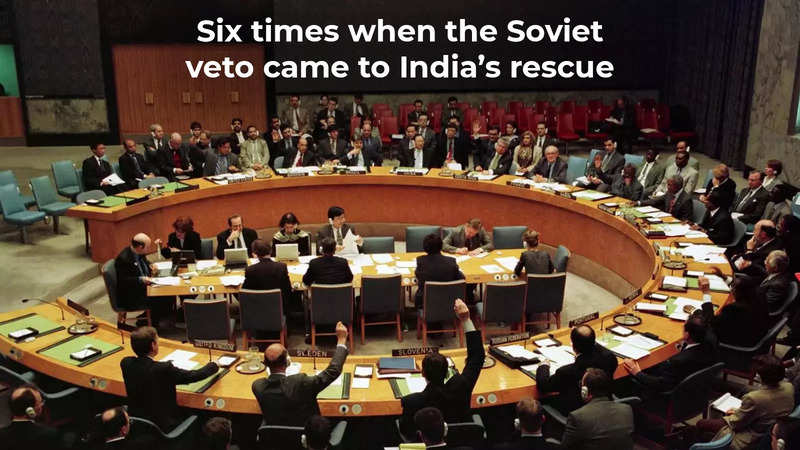
Over the years, Russia’s veto power has thwarted many UN Security Council resolutions targeting India on issues such as Goa and Kashmir 🙂

India’s abstention in the UN Security Council vote on a resolution condemning Russia for its attack on Ukraine may have come in for criticism, but is consistent with New Delhi’s steadfast support for its long-standing ally.

After all, Russia, and the erstwhile USSR, have always looked out for Indian interests in the UN Security Council, vetoing resolutions unfavourable to India starting from 1957. In all, there have been six instances when the Soviet Union blocked resolutions against India. 👍


.
=>
The Soviet Union used its veto power six times to protect India at the UN Security Council, primarily to block resolutions concerning Kashmir and once to block a resolution related to the Goa liberation. These vetoes occurred between 1957 and 1971, during the Cold War, and are a key part of the history of the close relationship between India and the former USSR/Russia.
  • Goa (1961): The USSR vetoed a UN Security Council resolution that would have condemned India's military action to liberate Goa from Portuguese rule.
  • Kashmir:The Soviet Union used its veto power three times in the UN Security Council to block resolutions regarding Kashmir:
    • In 1957
    • In 1962
    • In 1971, when it vetoed a U.S. resolution calling for a ceasefire and troop pull-back during the Indo-Pakistani war.
  • 1971 Indo-Pakistan War: The Soviet Union used its veto power three times in nine days during the war to block resolutions that would have called for a ceasefire and troop withdrawal. 👍

 
What are some examples of where the USSR used a veto for India?

The Soviet Union used its United Nations Security Council veto several times to protect or support India’s positions between 1948 and 1991. 👍

Key examples:
  1. 1950 — China seat and Kashmir-related proceedings
    - Context: After the first Indo-Pakistan war (1947–48) and repeated procedural moves at the UN over Kashmir, Soviet voting behavior in this early period often sided indirectly with India’s diplomatic posture by opposing measures perceived as biased toward Pakistan. While not a single famous “India veto” in 1950, Soviet abstentions and veto threats helped blunt actions unfavorable to India during early Kashmir debates. 🍵
  2. 1957 — Suez/Non-aligned diplomacy (indirect protection)
    - Context: During Cold War crises such as the Suez Crisis aftermath, the USSR used vetoes to oppose Western resolutions that might have set precedents detrimental to non‑aligned states’ positions, including India’s insistence on sovereignty and non-interference. These vetoes functioned as political protection for India’s non‑aligned diplomacy. 🍵
  3. 1962–1965 — Sino‑Indian border war aftermath and related council moves
    - Context: After the 1962 Sino-Indian war and during subsequent border tensions, the USSR blocked Security Council measures that could have internationalized the dispute in ways India opposed or that equated India and China despite the Soviet strategic tilt toward India at the time. The USSR’s vetoes and procedural blocking preserved India’s preference for bilateral handling or limited UN involvement. 🍵
  4. 1971 — Indo-Pakistan war and Bangladesh (most direct and well‑documented)
    - Specific vetoes:
  • 10 December 1971: The United States and China tabled a draft resolution calling for a ceasefire and withdrawal of Indian forces from East Pakistan (Bangladesh). The USSR vetoed the draft, shielding India’s military intervention and speedy creation of Bangladesh.
  • 16 December 1971: A second U.S.-backed draft urging a ceasefire and withdrawal was vetoed by the USSR.
  • 24 December 1971: Another Council resolution (U.S./China initiative) demanding ceasefire and withdrawal was vetoed by the USSR.
  • Effect: Soviet vetoes prevented UN Security Council censure or binding demands on India while Indian forces completed operations in East Pakistan, allowing rapid political consolidation of Bangladesh.
  1. 1972–1980s — Repeated procedural blocking and abstention patterns
    - Context: In disputes involving India and Pakistan or in draft resolutions seen as biased toward Pakistan (for example, Council moves to investigate refugee flows or to call for international commissions), the USSR frequently used vetoes, veto threats, or sustained procedural resistance to prevent actions that would constrain India. Many of these are recorded as refusals to adopt Western-drafted texts or to place certain items on the Council agenda. 🙂
  2. Late Cold War period — Strategic support on Kashmir and regional drafts
    - Context: The USSR continued to block or dilute resolutions it judged unhelpful to Indian interests — for example, opposing measures that would internationalize Kashmir or create UN mechanisms India rejected. These acts took the form of vetoes, negative votes, or diplomatic pressure to withdraw drafts.
Sources and historiography

  • The most explicit, well-documented USSR vetoes directly protecting India concern the 1971 Indo-Pakistan war and the immediate sequence of Security Council votes in December 1971. Diplomatic histories (Soviet foreign ministry records, Western archives, UN voting records) also document numerous instances in which the USSR used vetoes or procedural blocking to prevent Council actions adverse to India across the 1950s–1980s. For precise vote lists and draft texts, consult UN Security Council voting records (S/PV and S/RES series) and archival studies of Soviet–Indian relations covering 1947–1991. 🍵
Summary
  • Most direct examples: multiple Soviet vetoes in December 1971 protecting India during the Bangladesh war.
  • Broader pattern: repeated Soviet vetoes, abstentions and procedural blocks from the 1950s through the 1980s that prevented the UN Security Council from adopting measures India opposed (especially measures that would internationalize Kashmir or censure India in Indo‑Pak disputes). 🍵
.
🇮🇳
 
The veto refers to the power held exclusively by the five permanent members of the United Nations Security Council (UNSC)—the major Allied powers that won World War II—to unilaterally block any substantive resolution or decision, regardless of the level of support from other members.

The Veto Power Explained 🍵
  • Who has it? The five permanent members (P5) of the UNSC are the United States, the United Kingdom, the Russian Federation (succeeding the Soviet Union), China, and France. 🍵
  • How it works: For any substantive resolution to pass in the 15-member Security Council, it must have at least nine affirmative votes, including the concurring votes of all five permanent members. A single "no" vote (veto) from any of the P5 members defeats the entire resolution. 🍵
  • Purpose: The veto was established to ensure the ongoing involvement of the world's strongest military powers in maintaining global peace and security.🍵 The major powers at the time were hesitant to join an international organization where they could be outvoted on critical issues, a key failing of the predecessor League of Nations. The veto served as a compromise, a "bribe" to ensure their participation, with the understanding that no significant military action would proceed without great-power approval, thus preventing a direct conflict between them (which could lead to a third world war). 🍵

Impact and Controversy
While intended to prevent major power conflicts, the veto has often been a source of controversy and a major cause of the UN's inaction on various global crises, such as the conflicts in Syria and the Israel-Gaza war. It allows a permanent member to protect its national interests or allies from international censure or intervention, leading to geopolitical deadlock. The system is frequently criticized as undemocratic and a reflection of the 1945 power balance, with many countries calling for reform or the expansion of permanent membership. 🙂


Similar content Most view View more

Forum statistics

Threads
6,171
Messages
61,529
Members
4,515
Latest member
ramulal
Back
Top