- Views: 2K
- Replies: 3
India’s Advanced Medium Combat Aircraft (AMCA) initiative is taking strategic steps to ensure the fighter jet can seamlessly transition into a sixth-generation platform by the 2040s.
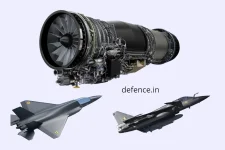
According to sources, the new indigenous engine—currently being jointly developed by France’s Safran and India’s Gas Turbine Research Establishment (GTRE)—is being built from the ground up with a modular architecture.
This forward-looking design is specifically intended to smoothly integrate variable cycle engine technology in the future.
Furthermore, open-source reports confirm that this 110–130 kN class turbofan will feature an entirely new core rather than relying on the M88 engine currently used in Rafale jets, with GTRE set to retain full intellectual property rights (IPR) and face no export restrictions.
This strategy marks a significant shift in India's approach to aerospace defence. In previous fighter development efforts, engine systems were treated as permanent installations that were strictly tied to a specific generation of the aircraft, leaving little room for major technological overhauls.
The propulsion roadmap for the AMCA focuses heavily on long-term adaptability. The stealth fighter's engine bay, structural framework, and mounting points are being meticulously crafted to support future upgrades.
As widely known, the initial batch of AMCA Mk1 prototypes will be powered by the American GE F414 engines, while the subsequent AMCA Mk2 will feature the newly developed Safran-GTRE turbofan.
However, the airframe itself is already being engineered to house a completely different engine core architecture further down the line.
The driving concept behind this long-term vision is known as a “Modular Core” engine design.
When the AMCA Mk2 takes to the skies in the mid-2030s, its initial Safran-GTRE engine will function as a highly advanced, fifth-generation turbofan tailored for stealth operations.
Yet, unlike older propulsion systems, this new engine will feature a robust, semi-permanent outer shell combined with internal components that can be easily swapped out as technology evolves.
Simply put, the physical interfaces, outer casing, and how the engine connects to the aircraft will stay the same over the jet's lifespan.
The true upgradeability will lie deep inside the engine, allowing technicians to replace the compressor, turbine, and air management systems without altering the jet's exterior geometry.
This modular setup paves the way for India to eventually swap the initial fifth-generation engine core for a highly sophisticated Variable Cycle Module in the 2040s. Crucially, this massive leap in capability will not require any expensive or time-consuming redesigns of the aircraft's rear fuselage or engine bay.
Such future-proofing is incredibly vital for the AMCA program. In the realm of modern aviation, variable cycle propulsion is widely recognised as the key technological boundary that separates current fifth-generation stealth fighters from true sixth-generation combat platforms.
Conventional jet engines operate with a relatively fixed airflow pattern. In contrast, a variable cycle engine can automatically adjust its internal airflow based on what the aircraft is doing at any given moment, effectively behaving like two distinct types of engines housed within a single unit.
During routine patrols or long-distance cruising, the engine can switch to a high-bypass mode, similar to the fuel-efficient engines seen on commercial airliners.
This capability drastically reduces fuel consumption, with experts estimating fuel savings of around 25 to 30 per cent when compared to standard fighter jet engines.
Conversely, when the aircraft enters combat, performs high-speed manoeuvres, or needs to intercept a target, the engine immediately shifts into a low-bypass, high-thrust mode.
This setting is optimised to deliver maximum power, rapid acceleration, and sustained supersonic flight without the use of fuel-heavy afterburners, a capability known as supercruise.
This dynamic shifting is achieved through an innovative “Third Stream” of airflow. This extra bypass channel can intelligently redirect air through various parts of the engine depending on the aircraft's speed and operational needs.
Beyond thrust and fuel efficiency, this third-stream technology offers a crucial solution to a growing problem in modern air combat: thermal management.
Future fighter jets will be packed with high-energy equipment such as airborne laser weapons, powerful electronic warfare (EW) systems, and advanced Active Electronically Scanned Array (AESA) radars.
All these systems generate enormous amounts of heat. The third stream of air in a variable cycle engine acts as a massive cooling system, absorbing and venting the intense heat produced by these electronics.
For the AMCA, having this built-in cooling capability means the aircraft will eventually be able to carry state-of-the-art directed energy weapons and massive sensor arrays without the risk of melting or overheating its own stealthy airframe.
Leading aerospace nations are already racing to perfect this technology, with the United States developing the GE XA100 and Pratt & Whitney XA101 engines for its Next-Generation Air Dominance (NGAD) and future F-35 upgrades.
By designing the AMCA to be compatible with variable cycle technology, India is securing its place alongside global superpowers in the future of aerial warfare.
Experts note, however, that upgrading to a variable cycle system in the future will be a highly complex undertaking, involving much more than just plugging in a new piece of hardware.
One of the biggest hurdles will be developing the advanced Full Authority Digital Engine Control (FADEC) software. This computer system will need to flawlessly manage the engine's shifting airflow, heat distribution, and thrust levels in real time as the aircraft performs intense manoeuvres.
Creating this software is a monumental task because a variable cycle engine functions as a living, breathing ecosystem that constantly adjusts itself, rather than a traditional machine running on a fixed mechanical loop.
Furthermore, the physical materials required to build such an engine present their own massive challenges.
Variable cycle engines generate far more internal heat and physical stress than current fighter engines.
To withstand these extreme conditions, the AMCA's future engine upgrades will need to be constructed using cutting-edge Ceramic Matrix Composites (CMC) for parts like turbine blades and high-temperature exhaust sections.
To prepare for this, India is actively engaging in joint research and development with France to master these advanced aerospace materials. Successfully developing CMC structures will be an essential foundational step for the country's future engine evolution.
Ultimately, the most profound advantage of this modular engine strategy is the incredible flexibility it offers over the aircraft's entire lifespan.
Throughout aviation history, many capable fighter jets have become obsolete because their airframes could not accommodate newer, larger, or more complex propulsion systems.
By embracing a modular engine bay from day one, India’s defence planners are ensuring that the AMCA will not be limited by the technology of its launch decade, allowing it to evolve and adapt to future threats for decades to come.