In a landmark military operation on 3 January 2026, United States forces successfully executed 'Operation Absolute Resolve', resulting in the capture of Venezuelan President Nicolás Maduro and his wife, Cilia Flores.
The three-hour mission, which involved a massive coordination of over 150 aircraft and special operations units, has drawn international attention not only for its political implications but for the total collapse of Venezuela’s air defence network.
Once touted as one of the most formidable in Latin America, Venezuela's air defence system—heavily reliant on Chinese and Russian technology—failed to detect or intercept the incoming US forces.
This failure has cast serious doubt on the reliability of Chinese military exports, particularly their "anti-stealth" radar systems, mirroring similar failures observed during the India-Pakistan conflict of 2025.
The "Stealth Hunter" That Stayed Blind
Central to Venezuela's defensive strategy was the JY-27, a VHF-band long-range surveillance radar manufactured by the China Electronics Technology Group Corporation (CETC).Beijing has aggressively marketed the JY-27 as a "stealth hunter," claiming its low-frequency waves can detect advanced stealth aircraft like the American F-35 and F-22 that typically evade standard radars.
Venezuela had purchased approximately nine of these units to serve as the backbone of its early warning system. However, during the raid, these radars proved completely ineffective.
According to defence analysts, US electronic warfare aircraft—likely the EA-18G Growlers—subjected the Venezuelan network to intense jamming and electronic suppression in the operation's opening minutes.
Despite the theoretical ability of VHF radars to detect stealth airframes, the JY-27 units were reportedly "blinded" by the sophisticated electronic noise and jamming tactics employed by the US.
Consequently, American stealth platforms and transport aircraft breached Venezuelan airspace without triggering any timely alerts, rendering the "anti-stealth" advantage null and void.
System-Wide Failure and Maintenance Issues
The failure extended beyond the anti-stealth units. Venezuela’s broader surveillance network, which includes the Chinese JYL-1 long-range 3D radar, also collapsed. The JYL-1 is designed to track multiple targets and guide missile batteries, but it failed to provide actionable data during the raid.Open-source intelligence suggests that operational readiness was already a critical issue before the attack. Reports indicate that nearly 50 per cent of Venezuela’s JYL-1 radars may have been non-operational due to a chronic shortage of spare parts and poor maintenance—a recurring problem for nations relying on Chinese defence logistics.
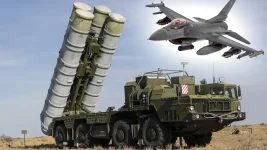
Furthermore, the paralysis of these radar systems left Venezuela’s kinetic interceptors useless. Russian-supplied S-300VM and Buk-M2E missile batteries, which rely on radar data to lock onto targets, were neutralized by US anti-radiation missiles and electronic countermeasures before they could fire a single shot.
Echoes of Operation Sindoor
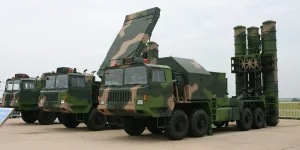
Military experts are drawing sharp parallels between this event and Operation Sindoor in May 2025, when Indian Armed Forces launched strikes against Pakistan.During that conflict, Pakistan’s air defence network—which similarly depended on Chinese-supplied radars like the YLC-8E and HQ-9 systems—struggled to counter Indian precision strikes.
In both instances, the "on-paper" capabilities of Chinese hardware failed to translate into real-world performance against a technologically superior adversary.
Just as Indian electronic warfare assets successfully jammed and dismantled Pakistani defences, US forces demonstrated that modern electronic warfare can overwhelm older or less sophisticated Chinese radar algorithms.
Marketing vs. Reality
The rapid dismantling of Venezuela’s defences, with US forces suffering only minor damage to a single helicopter, reinforces a growing consensus in global defence circles: while Chinese military hardware is often marketed as a cost-effective alternative to Western systems, it remains vulnerable in high-intensity combat.For President Maduro, who faces indictments in New York for narco-terrorism, the failure of his purchased protection has led to his extradition.
For the global arms market, the operation serves as a stark reminder that in the age of advanced electronic warfare, relying on unproven "anti-stealth" claims can prove to be a fatal strategic error.