- Views: 63
- Replies: 1
A major diplomatic breakthrough has reshaped the economic landscape between the United States and India, potentially altering the course of the Indian Air Force’s (IAF) future fighter jet procurement.
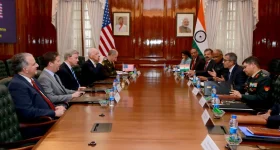
Following months of negotiations personally led by President Donald Trump and Prime Minister Narendra Modi, the two nations have announced a comprehensive trade agreement that reduces US tariffs on Indian goods from 25% (+25%) to 18%.
In return, India has committed to increasing energy imports from the US, signalling a deeper alignment between the world's two largest democracies.
This economic thaw has immediately reignited speculation regarding defence cooperation. While the trade deal focuses on tariffs and energy, military analysts believe the renewed goodwill may resurrect a dormant proposal from early 2025: the sale of the F-35 Lightning II to India.
The Return of the F-35 Option?
During a high-level meeting at the White House last year, President Trump informally proposed supplying India with the F-35, the premier American fifth-generation stealth fighter.At the time, New Delhi’s response was tepid. The government prioritised the "Make in India" initiative, favouring indigenous production over off-the-shelf imports.
Additionally, unresolved tariff disputes and India's historic defence reliance on Russia created a diplomatic cooling effect.
With trade tensions now eased, the F-35 is back in the conversation. The aircraft offers the IAF unmatched advantages in stealth, sensor fusion, and network-centric warfare—capabilities already proven by allied air forces globally.
Acquiring the F-35 would allow the IAF to seamlessly integrate with US and NATO forces, offering a technological leap for operations in contested airspace.
However, significant hurdles remain. The F-35 comes with a high price tag (estimated between $80 million and $110 million per unit) and strict US export controls.
Historically, Washington has been reluctant to share deep technical know-how or allow integration with non-NATO weaponry, a critical requirement for India’s diverse arsenal which includes French, Russian, and indigenous platforms.
The Su-57E: Strategic Sovereignty and Source Code
While the F-35 offers a "plug-and-play" solution, Russia’s Su-57E (the export variant of the Su-57 Felon) is reportedly leading the race due to its alignment with India’s strategic autonomy.Sources indicate that negotiations between New Delhi and Moscow have reached a "deep technical stage."
Unlike the US "black box" approach, Russia is reportedly offering extensive Transfer of Technology (ToT).
Key aspects of the proposed Su-57 deal include:
- Source Code Access: A critical differentiator allowing India to independently upgrade the aircraft’s software and integrate indigenous weapons without seeking foreign permission.
- Local Production: Mirroring the successful Su-30MKI model, the deal envisages initial imports followed by licensed manufacturing at Hindustan Aeronautics Limited (HAL).
- Cost Effectiveness: With a unit cost significantly lower than the F-35 (estimated around $40-$50 million), the Su-57 offers a more budget-friendly route to expanding squadron numbers.
However, critics point to Russia's slower production rates and the fact that the Su-57’s stealth features are generally considered less advanced than those of the F-35.
Bridging the Gap to AMCA
The urgency for these discussions stems from the IAF’s critical need to bridge a capability gap.India’s indigenous fifth-generation programme, the Advanced Medium Combat Aircraft (AMCA), is on track but not expected to mature until the mid-2030s.
To counter the rapidly modernising air power of regional rivals, the IAF requires 2-3 squadrons of fifth-generation fighters in the interim.
The choice now facing India is stark. The F-35 offers superior stealth and immediate access to a global ecosystem but comes with high costs and "technological lock-in."
The Su-57 offers sovereignty, deep industrial benefits, and lower costs, but ties India further to the Russian defence industrial base.
As high-level talks continue, the path forward will likely depend on whether the US is willing to sweeten the F-35 offer with genuine technology sharing, or if India decides that control over its own source code is the ultimate priority for national defence.