- Views: 3K
- Replies: 4
In a watershed moment for India’s aerospace sector, three private industrial heavyweights have been selected as the final contenders to develop the Advanced Medium Combat Aircraft (AMCA), India’s indigenous fifth-generation stealth fighter.
The Aeronautical Development Agency (ADA) has shortlisted Tata Advanced Systems Limited, a consortium led by Larsen & Toubro (L&T), and the Bharat Forge alliance to proceed to the next stage of this critical defence programme.
This development signals a profound structural shift in national defence production, most notably marked by the exclusion of the state-owned Hindustan Aeronautics Limited (HAL).
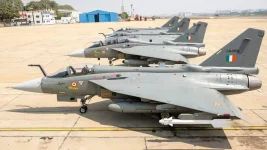
For decades, HAL has served as the monopoly integrator for Indian military aviation, including the ongoing Tejas Light Combat Aircraft programme.
Its absence from this shortlist follows a rigorous technical evaluation process, indicating the government’s firm resolve to cultivate a competitive, private-sector-led defence industrial base.
The Three Contenders
Following the issuance of an Expression of Interest (EoI) by the ADA, seven entities submitted proposals to demonstrate their capacity for complex systems integration, advanced avionics, and stealth manufacturing.The three finalists, who will receive a Request for Proposal (RFP) by April 2026, have adopted distinct strategies:
- Tata Advanced Systems Limited (TASL): Leveraging its extensive experience in global aerospace supply chains and partnerships, Tata has opted to bid independently. This move reflects significant confidence in its existing infrastructure and its ability to deliver a full-spectrum military platform without external consortium partners.
- Larsen & Toubro (L&T): L&T has formed a formidable partnership with Bharat Electronics Limited (BEL), the state-run electronics giant, and Dynamatic Technologies. This consortium combines L&T’s heavy engineering and marine platform heritage with BEL’s dominance in radar and electronic warfare systems, offering a "holistic" airframe-and-systems solution.
- Bharat Forge: This alliance features a strategic split of responsibilities, with Bharat Forge holding a 50% stake, BEML taking 30%, and Data Patterns holding 20%. This structure aims to integrate high-strength metallurgy and structural manufacturing with specialised defence electronics and digital systems.
HAL’s Exclusion: A Policy Shift
While HAL’s omission has generated significant debate, officials familiar with the selection process clarify that it was a procedural outcome rather than a strategic oversight.Reports indicate that HAL’s consortium failed to meet specific technical thresholds mandated by the evaluation committee.
The qualification criteria, which included strict ratios regarding order books and scalability, reportedly placed the public sector giant at a disadvantage compared to agile private entities.
This marks the first time in modern Indian history that a major fighter programme will proceed without HAL as the primary integrator.
The AMCA: India’s Stealth Ambition
The AMCA programme is designed to vault India into an elite group of nations—currently comprising the US, China, and Russia—capable of fielding fifth-generation stealth aircraft.The jet is envisioned as a 25-tonne, twin-engine fighter featuring a "serpentine" air intake for radar evasion, internal weapons bays to maintain stealth profiles, and super-cruise capabilities (sustained supersonic flight without afterburners).
Open-source data indicates the initial prototypes (Mk-1) will be powered by US-made GE F-414 engines, with a more powerful indigenous engine planned for the Mk-2 variant.
The project, backed by an estimated development budget of ₹15,000 crore, targets a maiden flight for the prototype around 2029, with induction into the Indian Air Force anticipated by the mid-2030s.
The Road Ahead
The shortlisted firms now face the daunting task of translating preliminary designs into commercially viable production plans.The winner, expected to be announced by late 2026, must establish a complete ecosystem for the jet—from supply chain management and quality control to final assembly and flight testing.
If successful, this programme will do more than just deliver a fighter jet; it will validate the Indian private sector’s ability to handle complex military aeronautics.
By moving away from a single-producer model, the government aims to de-risk future projects, potentially laying the groundwork for the ensuing sixth-generation fighter initiatives.
For now, the focus remains on who among Tata, L&T, or Bharat Forge will secure the contract to build the future backbone of Indian air power.