- Views: 2K
- Replies: 2
Rolls-Royce is poised to significantly widen its industrial footprint in India, unveiling a strategy that places the co-development of a next-generation combat aircraft engine at its heart.
Sashi Mukundan, Executive Vice President of Rolls-Royce India, has confirmed that the British aerospace major is planning a "big investment" to establish India as its third global "home market," following the UK and the US/Germany.
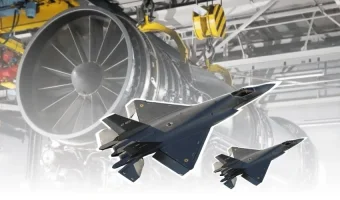
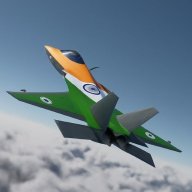
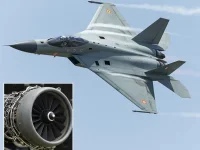
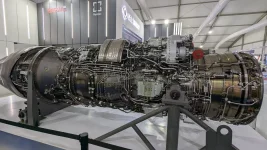
The primary focus of this strategic push is the indigenous development of a high-performance engine for the Advanced Medium Combat Aircraft (AMCA).
A Strategic Enabler for Air and Sea
Mr Mukundan stated that Rolls-Royce is eager to support India’s requirement for a powerful propulsion system for the AMCA, the fifth-generation fighter jet set to form the backbone of the Indian Air Force’s future combat fleet.He argued that this programme represents far more than a standalone aviation project; rather, it could serve as a critical catalyst for India’s broader ambitions in both aerospace and naval defence capabilities.
Highlighting a unique technical advantage, Mr Mukundan noted that Rolls-Royce is among a select group of global manufacturers with the proven expertise to "marinise" an aero engine.
This complex engineering process involves adapting the core of a fighter jet engine for use in marine gas turbines, which are the powerhouses of modern naval warships.
He explained that if New Delhi chooses to partner with Rolls-Royce for the AMCA, the same core technology could be leveraged to create indigenous propulsion solutions for the Indian Navy’s future platforms.
"Create in India": The Case for IP Ownership
"If India is thinking about next-generation engines, Rolls-Royce is probably the best partner," Mr Mukundan asserted, citing the company’s extensive history with Indian defence programmes.He emphasised that Rolls-Royce has consistently demonstrated its ability to execute complex development projects and transfer high-end engineering capabilities to partner nations.
A central pillar of this proposed collaboration is the transfer of critical technologies and the generation of new Intellectual Property (IP) within India.
Mr Mukundan affirmed that the entire design phase for the AMCA powerplant could be executed domestically, with all resulting IP jointly owned by India.
He stressed that owning the design IP is the key to true strategic autonomy, as it grants the nation the freedom to independently upgrade, adapt, and develop future variants of the engine without foreign restrictions.
"Once you own design IP, you have strategic control," Mr Mukundan explained. He added that establishing manufacturing capabilities is the subsequent, more intricate stage.
Building a robust engine manufacturing base requires a systematic, safety-first approach, particularly in the unforgiving domain of military aviation.
Economic Viability Through Dual-Use Technology
Beyond combat aviation, the Rolls-Royce executive pointed to the increasing importance of electric and hybrid propulsion systems for naval vessels. He clarified that these advanced systems are fundamentally based on marine gas turbines derived from aero engine cores.Rolls-Royce’s proficiency in adapting jet engines for maritime use offers a decisive advantage, especially for India, where the volume of naval engines alone might not justify the high cost of a completely independent supply chain.
According to Mr Mukundan, co-designing the aero engine core in India would facilitate a shared industrial ecosystem. This "overlapping supply chain" would serve both the aerospace and naval sectors, making domestic production economically viable and reinforcing India’s industrial base across multiple strategic domains.
Broadening the Defence Ecosystem
By linking the AMCA programme with future naval needs, Rolls-Royce is effectively presenting the fighter engine project as a cornerstone for long-term technological self-reliance.This proposal aligns with recent broader moves by the company to deepen its ties with Indian defence Public Sector Undertakings (PSUs).
Reports indicate that Rolls-Royce is also in the process of finalising Memorandums of Understanding (MoUs) to manufacture engines for the Arjun Main Battle Tank (MBT) and the Future Ready Combat Vehicle (FRCV) programme.
This follows a high-profile meeting in October 2025 between Rolls-Royce CEO Tufan Erginbilgic and Prime Minister Narendra Modi, where the company reiterated that India is pivotal to its future growth.
If realised, this multi-sector partnership could mark a decisive shift in India’s quest for sovereignty in high-performance engine design, manufacturing, and lifecycle support across air, sea, and land platforms.