- Views: 37
- Replies: 1
UK-based aerospace leader Rolls-Royce has presented its final offer to co-develop, design, and produce a new 120 kN-class jet engine with India.
This proposal is a major effort to secure a leading role in India's Advanced Medium Combat Aircraft (AMCA) initiative.
Backed by the UK government, the offer involves creating a clean-sheet engine design tailored specifically for the country's needs.
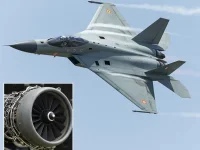
This development arrives at a vital moment in India's push to build a homegrown engine for later versions of the AMCA, which is the nation's premier fifth-generation stealth fighter project spearheaded by the DRDO and ADA.
With American firm General Electric and France's Safran also in the picture, the main competition for the future engine has narrowed down to Rolls-Royce and Safran.
The outcome of this contest will heavily influence India's aviation capabilities for years to come.
Central to the Rolls-Royce offer is a clear timeline for development. The company states that if an agreement is finalised by the end of 2026, testing for the engine's core components could begin by 2030.
This would pave the way for the engine's maiden flight in 2034 and full-scale production by 2036. These target dates match India's schedule for the advanced AMCA Mk2, which demands a stronger engine than the GE F414 chosen for the first batch of fighters.
Rolls-Royce is setting its bid apart by offering a true collaborative partnership, moving past traditional licensed manufacturing.
The firm is ready to build a complete aerospace engine ecosystem within India, covering everything from initial design and production to maintenance, repair, and future enhancements.
Most importantly, Rolls-Royce guarantees a 100% transfer of technology and full Indian ownership of all intellectual property (IP) created during the project.
This commitment directly solves a major issue India has historically faced in international defence agreements: gaining the fundamental design knowledge needed to upgrade systems independently.
Standard manufacturing licenses allow for local assembly but keep the core technology and IP in the hands of foreign suppliers, which restricts true self-reliance.
Sashi Mukundan, Rolls-Royce's executive vice president for India, highlighted the firm's proven track record in creating sophisticated military and commercial engines from scratch.
He noted that very few global companies hold complete end-to-end capabilities for fighter engine design, a statement seen as a direct challenge to Safran's competing bid.
The AMCA program is currently divided into two stages.
The Phase 1 (Mk1) fighters will fly using the American GE F414 engine, the same model selected for the Tejas Mk2.
However, the Phase 2 (Mk2) aircraft will require the much stronger 110-130 kN class indigenous engine to handle heavier weapon loads, longer ranges, advanced electronics, and strict stealth standards.
Experts in the defence sector believe that securing the right engine is just as critical as developing the aircraft itself.
India has achieved remarkable success in designing airframes, radars, and integrating weapons, but building a reliable, high-performance jet engine remains a significant hurdle.
Mastering this technology would be a massive step toward complete independence in military aviation.
Beyond the fighter jet, Rolls-Royce is pitching a grander industrial plan. The company envisions making India its fourth major global hub for propulsion technology, joining the UK, the US, and Germany.
This proposed hub would support military aviation as well as commercial flights, naval ships, and land-based power systems, fostering a massive domestic industry for advanced engines.
By combining its vast historical expertise with India's requirements, Rolls-Royce aims to guide Indian engineers in designing the new engine while ensuring all new IP stays locally owned.
This hands-on experience will give Indian scientists the crucial "know-how and know-why" required to manage future upgrades and create new engine models independently.
Making a swift decision is vital for the program's success. Furthermore, recent open-source reports suggest that negotiations for the GE F414 engines have faced hurdles due to unexpected price increases.
Delays in the homegrown 120 kN engine project could force India to rely even more on these imported options. While the existing agreement with GE includes local assembly, experts widely view it as a manufacturing deal rather than a means to learn core engine design.
As the government approaches a final decision on this essential aerospace initiative, the choice between Rolls-Royce and Safran will go beyond just cost and engine performance.
The final selection will heavily depend on which company offers the most transparent transfer of technology, full IP rights, and the best roadmap for helping India build a self-sustaining fighter engine industry.