- Views: 3K
- Replies: 2
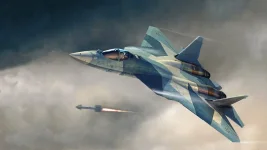
In a significant proposal aimed at securing a major deal with the Indian Air Force, Russia has offered its fifth-generation Su-57E stealth fighter with a guarantee of complete technological transparency.
Vadim Badekha, the Chief Executive Officer of Russia’s United Aircraft Corporation (UAC), has explicitly stated that Moscow is ready to provide India with the aircraft's source code, ensuring the software is free from "backdoors" or "Trojan" viruses that could compromise national security.
A Promise of Digital Sovereignty
The core of Russia’s new pitch is the assurance of "digital sovereignty." In modern aerial warfare, the software that controls a fighter jet’s radar, flight control, and weapons systems is just as critical as the airframe itself.By offering full access to the Su-57E’s source code, Russia is addressing a major concern for nations like India: the fear that foreign-supplied equipment could have hidden "kill switches" or surveillance tools embedded by the manufacturer.
This offer stands in stark contrast to the American F-35 Lightning II program. While the F-35 is widely considered the most advanced stealth fighter globally, the United States typically maintains strict control over its software.
Operator nations often cannot modify the F-35 code or integrate their own weapons without US permission, and the aircraft’s logistics system sends maintenance data back to American servers.
Russia’s proposal aims to exploit this hesitation by offering India full ownership of the technology.
Deep Technology Transfer and 'Make in India'
The Russian proposal extends beyond just selling aircraft; it is tailored to fit India’s "Atmanirbhar Bharat" initiative.UAC has expressed readiness to set up licensed production lines within India, replicating the successful model used for the Su-30MKI, which forms the backbone of the Indian Air Force.
Access to the source code would effectively allow Indian scientists and engineers to:
- Integrate Domestic Weapons: India could seamlessly equip the Su-57E with indigenous missiles like the Astra (air-to-air) and BrahMos (supersonic cruise missile) without needing Russian permission or paid integration projects.
- Modify Avionics: The Defence Research and Development Organisation (DRDO) could replace or upgrade radar and communication systems with Indian-made alternatives, ensuring secure communications that are interoperable with other Indian assets.
Technical Context and Strategic Gap
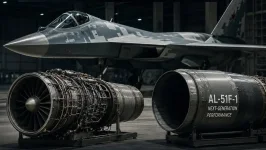
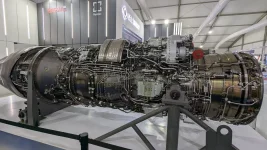
The Su-57 (NATO reporting name: Felon) is a twin-engine stealth multirole fighter designed for air superiority and attack operations. It features supercruise capabilities (flying at supersonic speeds without afterburners) and supermaneuverability.Recent open-source intelligence suggests that Russia is also testing the new "Stage 2" Izdeliye 30 engines, which would significantly improve the aircraft's thrust and stealth performance compared to earlier prototypes.
For India, this offer comes at a critical time. The Indian Air Force is facing a depleting squadron strength, and the indigenous fifth-generation Advanced Medium Combat Aircraft (AMCA) is still years away from production.
While the F-35 remains a contender in the global market, the high cost and strict operational restrictions make it a complex choice for New Delhi.
Russia’s "Trojan-free" guarantee positions the Su-57E as a bridge solution that offers both immediate stealth capability and long-term technological independence.