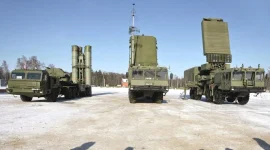
Russia has commenced a comprehensive modernisation programme for its flagship S-400 Triumf air defence system, integrating hard-won operational lessons from the ongoing conflict in Ukraine.
These critical upgrades, focused on countering modern aerial threats such as suicide drones, cruise missiles, and electronic warfare, are expected to feature prominently in the remaining two S-400 regiments scheduled for delivery to India.
Lessons from the Battlefield
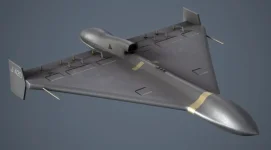
The conflict in Ukraine has served as a rigorous testing ground for Russian air defence architecture. While the S-400 remains a formidable long-range interceptor, the war exposed certain vulnerabilities in legacy configurations, particularly against low-cost, low-altitude threats.Specific incidents, such as the reported strike on Russian air defence assets in Crimea in September 2025, highlighted the dangers posed by saturation attacks involving drones and precision-guided munitions.
Ukrainian forces successfully utilised sophisticated jamming techniques and smaller unmanned aerial vehicles (UAVs) to exploit gaps in radar coverage.
In response, Russian engineers have initiated a rapid upgrade cycle designed to close these gaps, ensuring the system remains resilient in highly contested electromagnetic environments.
Technical Enhancements and New Capabilities
According to defence experts and sources close to the industry, the upgraded S-400 units will feature significant technological leaps aimed at survivability and lethality:- Counter-Drone & Anti-Jamming Tech: The updated radars are being fortified with advanced anti-jamming algorithms to filter out electronic noise. This will significantly improve the system's ability to detect and lock onto small, stealthy targets like plastic-bodied drones and low-flying cruise missiles that were previously difficult to track.
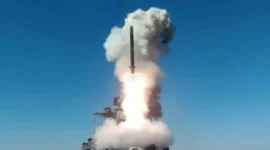
- The 40N6 Long-Range Interceptor: The upgraded systems will rely more heavily on the 40N6 missile. With a range exceeding 400 km and an active radar homing head, this missile allows the S-400 to engage high-value targets—such as AWACS (Airborne Warning and Control System) and aerial refuellers—that operate deep behind enemy lines, often beyond the reach of ground-based radar horizons.
- Network-Centric Warfare: New sensor fusion capabilities will allow the S-400 to integrate seamlessly with friendly AWACS and other ground units. This data sharing enables the battery to track and engage a higher volume of targets simultaneously, reducing reaction times during mass aerial attacks.
- ‘Shoot-and-Scoot’ Mobility: To counter the threat of enemy precision strikes, the new regiments are prioritising mobility. Enhancements are being made to facilitate rapid deployment and concealment, allowing batteries to fire and relocate quickly ("shoot-and-scoot") before enemy forces can pinpoint their location.
Strategic Advantage for India
For India, these developments are timely and strategically vital. The Indian Air Force (IAF), which has already inducted three S-400 regiments, is awaiting the final two.These remaining units are now expected to arrive with these combat-proven enhancements, effectively providing India with a more advanced version of the system than originally contracted.
The S-400 has already demonstrated its efficacy in the region. Reports indicate the system performed successfully during 'Operation Sindoor', where it was credited with neutralising hostile fighter aircraft and drones from Pakistan.
The addition of Ukraine-derived upgrades will further bolster India’s multi-layered air defence shield, particularly along volatile borders where drone incursions and electronic warfare are growing concerns.
Official Stance
Russian officials have expressed confidence in the adaptability of their defence technology. Yan Novikov, CEO of the Almaz-Antey Group, the manufacturer of the system, noted that the pace of modern technological development allows for real-time improvements.He emphasised that the S-400’s open architecture allows for continuous upgrades, ensuring it can neutralise emerging threats even as conflict dynamics evolve.
By offering these "battle-hardened" configurations to export partners, Russia aims to reinforce its position in the global arms market, assuring clients that the S-400 remains capable of countering the very latest in Western and asymmetric aerial warfare technology.