- Views: 3K
- Replies: 2
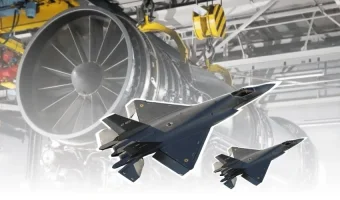
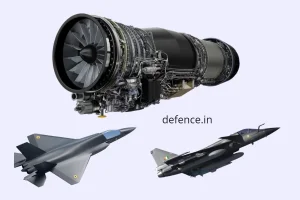
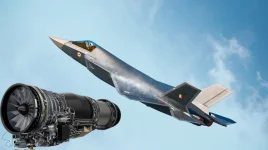
In a significant boost to India’s aspirations for a state-of-the-art indigenous fighter ecosystem, Safran CEO Olivier Andries has confirmed the capabilities of the new turbofan engine being co-developed with India’s Gas Turbine Research Establishment (GTRE).
Mr Andries revealed that the joint propulsion system will possess a scalable thrust envelope of 120–140 kN.
This crucial clarification not only solidifies the propulsion roadmap for the Advanced Medium Combat Aircraft (AMCA) programme but also strongly suggests that a heavier, more potent iteration of the stealth fighter is on the horizon.
Two Thrust Variants for Different Roles
According to high-level sources, the engine development roadmap includes two distinct thrust classes.The 120 kN version is intended to power the standard AMCA Mk2 configuration. In contrast, the higher-output 140 kN variant is being positioned to support a heavier derivative of the aircraft, which is currently a subject of active discussion within defence circles.
This development helps settle recent speculation regarding the AMCA’s weight specifications. Confusion had previously arisen following reports suggesting a design increase in the Maximum Take-Off Weight (MTOW) from 25 tonnes to 27 tonnes.
While the Aeronautical Development Agency (ADA) clarified at Aero India 2025 that the baseline AMCA remains a 25-tonne platform, new information indicates that the 27-tonne figure likely refers to this separate, future variant designed to utilise the 140 kN engine.
Why the Need for 140 kN?
The potential heavier variant of the AMCA would require significantly more power to manage increased payload and performance demands.Defence analysts note that a 140 kN engine would provide the necessary energy reserves for:
- Extended Range: Accommodating a larger internal fuel fraction.
- Enhanced Firepower: Expanding the volume of internal weapons bays for larger munitions.
- Next-Gen Systems: Supporting the cooling and power needs of advanced avionics and sensor suites.
As modern fighters evolve, thermal management (dissipating the immense heat generated by electronics) is becoming as critical as aerodynamic performance.
Bridging the Gap to 6th-Gen Tech
While the confirmed 140 kN thrust class is formidable, questions remain about its suitability for India’s future sixth-generation combat aircraft requirements.Experts point out that true 6th-generation platforms typically rely on Variable Cycle Engines (VCE) or Adaptive Cycle Engines (ACE).
These advanced engines, currently being pursued by the United States and the United Kingdom, can dynamically alter their bypass ratios to offer high thrust for combat and high fuel efficiency for cruising.
The Safran-GTRE engine will incorporate cutting-edge materials, advanced thermal coatings, and a high-pressure architecture, but it will not be a VCE initially. This makes it primarily an engine optimised for fifth-generation platforms like the AMCA.
A Modular Pathway to the Future
However, the design philosophy of the new engine is far-sighted. Sources indicate that the core architecture is being built with modularity in mind, allowing for substantial future upgrades.The long-term strategy mirrors the evolution of successful American engine families, such as the F110 and F119, which eventually paved the way for adaptive cycle technologies.
Under this "evolutionary ladder" approach:
- The 120–140 kN engine family will power the AMCA Mk2 and its heavier derivatives through the 2030s and 2040s.
- The core technology will serve as a foundation that can be upgraded with adaptive-cycle elements to power India's eventual sixth-generation fighter.
Timeline and Strategic Impact
With the engine programme set to launch formally in 2026, the immediate goal is to achieve the first successful core runs by 2032.This confirmation of a scalable engine family offers India unprecedented flexibility, ensuring the AMCA platform remains relevant for decades.
By securing a propulsion foundation that is both modular and aligned with global standards, India is doing more than just building a single fighter jet; it is establishing a sovereign industrial capability that can support an entire generation of future combat aircraft.