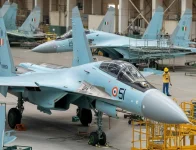
The Indian Air Force (IAF) is actively advancing its comprehensive 'Super-30' modernisation project, designed to overhaul the capabilities of its Su-30MKI fighter fleet.
Although the formal proposal to upgrade 84 of these aircraft is currently pending final approval from the Cabinet Committee on Security (CCS), the IAF has not paused its preparations.
The primary focus of this preliminary work is the creation of sophisticated indigenous software, which will serve as the bridge between existing legacy systems and modern, home-grown technologies, including advanced radars and avionics.
Leading the charge on this technological front is the IAF's Software Development Institute (SDI). This specialist unit is tasked with engineering the bespoke software architecture required for the upgrade.
The SDI is operating in tight coordination with major defence partners, such as Hindustan Aeronautics Limited (HAL), the Electronics and Radar Development Establishment (LRDE), and the wider Defence Research and Development Organisation (DRDO).
By commencing work on essential software modules ahead of the official government sanction, the team aims to prevent any logistical bottlenecks once the project receives the green light.
Defence sources indicate that a major software overhaul is now critical for the Su-30MKI to remain relevant in modern aerial warfare.
The planned upgrades extend well beyond simply swapping out old radars; they involve a total refreshment of the aircraft's core avionics to ensure new sensors can communicate effectively with advanced weaponry.
A key objective is to integrate the 'Virupaaksha' Active Electronically Scanned Array (AESA) radar, a powerful indigenous sensor, while enabling the jet to deploy both its original Russian armaments and next-generation Indian missiles, such as the Astra MkII and MkIII.
Furthermore, the initiative includes significant updates to the aircraft's flight control systems. The Digital Fly-by-Wire Control Computer (DFCC), originally a hybrid Indo-Russian system, is set to receive specific Indian-designed enhancements.
These updates are vital for managing the complex data flow from new subsystems and ensuring the fighter remains agile and lethal in contested environments.
The new software ecosystem will allow the Su-30MKI to fully utilise the capabilities of its modernized hardware, significantly boosting its operational performance.
Ultimately, the Super-30 programme is a strategic effort to extend the operational life of India's largest fighter fleet by decades.
By placing a premium on indigenously developed software and mission computers, the IAF is aligning itself with the national vision of self-reliance in defence.
This shift not only enhances combat readiness but also drastically reduces the country's long-term dependence on foreign manufacturers for critical technology updates and maintenance.