- Views: 3K
- Replies: 1
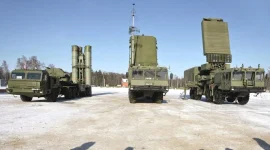
With the first regiment of the S-500 Prometheus now actively deployed for combat duty, Russia has achieved a major milestone in operationalising one of the world's most sophisticated air and missile defence systems.
Designed to neutralise the full spectrum of current and future aerospace threats, the S-500 is engineered to engage targets across all altitudes and speeds. It serves as a vital strategic bridge, connecting tactical air defence with strategic missile defence architectures.
Bridging the Gap: From S-400 to Prometheus
Developed to work in tandem with the S-400 Triumph—already in service with the Indian Air Force, the S-500 Prometheus is built to handle threats that surpass the capabilities of conventional surface-to-air missiles.Its operational mandate includes the interception of intercontinental ballistic missiles (ICBMs), hypersonic cruise missiles, and high-value aerial assets operating at the very edge of the earth's atmosphere.
By doing so, it effectively extends the air defence umbrella into the near-space domain.
India’s Strategic Interest
India has demonstrated a strong interest in the S-500 programme, viewing it as a decisive force multiplier in a region witnessing a rapid proliferation of advanced missile and air power.However, Moscow remains cautious regarding exports, prioritising its substantial domestic requirements to secure its own strategic airspace first.
According to sources privy to recent high-level developments, an Indian delegation has formally discussed the potential acquisition of the system with their Russian counterparts.
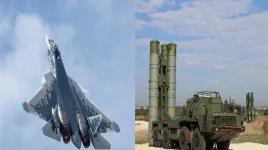
While these talks—reportedly occurring alongside discussions on the Su-57 fighter—signal serious intent, Moscow has yet to provide a firm commitment on an export timeline.
A Quantum Leap in Capability
An official from the Indian Air Force noted that the capabilities of the S-500 represent a generational leap over existing technology.The Prometheus is assessed to have a detection range of approximately 600 kilometres, with the ability to engage and destroy targets at ranges of up to 500–600 kilometres.
Unlike the S-400, which primarily targets aerodynamic threats and short-to-medium range missiles, the S-500 utilises specialised interceptors like the 77N6-N and 77N6-N1.
These missiles are capable of engaging targets travelling at hypersonic speeds of up to Mach 14 (approx. 7 km/s), including kinetic kill vehicles and warheads in their terminal phase.
The Space Domain and 'Sudarshan Chakra'
Of particular strategic relevance is the S-500’s capacity to engage targets in low-Earth orbit (LEO), including reconnaissance and communications satellites, at altitudes reaching 200 kilometres.This anti-satellite (ASAT) and near-space interception capability significantly enhances its deterrence value, offering a shield not just against air attacks but against space-enabled warfare assets.
For India, integrating such a system would be transformative. If acquired, the S-500 could become the upper-tier "shield" of the Sudarshan Chakra—the Indian Air Force's evolving integrated air defence network.
While the S-400 'Sudarshan' currently provides formidable long-range area denial, the S-500 would add a strategic ballistic missile defence (BMD) layer comparable to the American THAAD but with broader anti-air utility.
The Path Ahead
Sources indicate that while Russia has not ruled out exporting the S-500 to India, it is currently conducting a careful assessment of India's specific operational requirements and the potential for technology transfer.This is particularly pertinent if the system is to be integrated as a core pillar of India’s future security architecture.
If this acquisition is realised, it would mark a significant evolution in India’s defence posture, embedding near-space interception and strategic missile defence as central tenets of its national security strategy.
Key Capabilities of the S-500 Prometheus
| Feature | Specification |
|---|---|
| Max Engagement Range | Up to 600 km (Ballistic) / 500 km (Aerodynamic) |
| Max Altitude | Up to 200 km (Near-Space/LEO) |
| Response Time | 3–4 seconds (vs 9–10 seconds for S-400) |
| Primary Targets | ICBMs, Hypersonic Cruise Missiles, Satellites, AWACS |
| Interceptor Missiles | 77N6-N (Inert/Kinetic), 40N6M |