- Views: 2K
- Replies: 3
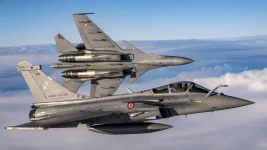
When the Indian government procured the Rafale fighter jets, policymakers were sold a vision of a potent combat platform that would seamlessly integrate with indigenous Indian weapons.
However, the operational reality has revealed a different picture. India has effectively walked into a tightly controlled ecosystem managed by Dassault Aviation, functioning much like a "walled garden" in consumer technology—impeccable in performance but completely locked down internally.
With no access to the source code, a proprietary radar system by Thales, and a mission architecture accessible only to the manufacturer, the Rafale has become a premium asset that India can fly but cannot truly own.
The Myth of Easy Integration
The initial promise of "easy integration" for Indian weapon systems appears, in retrospect, to have been overly optimistic.While the Rafale is marketed as a multirole fighter with an open architecture, the practical reality is far more restrictive. Every new sensor, weapon, or software modification requires certification through Dassault’s rigid pipeline.
Because Dassault retains exclusive control over the flight control laws, the mission computer, and the radar interface, India is unable to "plug and play" its own missiles.
Despite designing world-class indigenous weapons, Indian defence engineers cannot integrate them onto the Rafale without seeking Dassault’s permission, utilizing their engineering teams, and paying significant fees for the privilege.
The Case of Astra and Rudram
The friction is already evident in the integration of India's indigenous missiles.The Astra Mk1 (a Beyond Visual Range Air-to-Air Missile) and the Rudram-I (an anti-radiation missile) were classified as "India Specific Enhancements" (ISE) rather than standard baseline capabilities.
This classification is telling; it implies these are custom modifications requiring the Original Equipment Manufacturer (OEM) to rewrite software codes, modify interfaces, and conduct expensive flight trials to validate safety envelopes.
Consequently, the operational integration of the Astra missile on the Rafale fleet remains complex and drawn out, while the Rudram-I integration faces similar bureaucratic and technical hurdles.
These delays are not due to any technical deficit in Indian missile technology but are the inevitable result of a platform where the OEM holds the digital keys.
The Thales RBE2 Radar: A Closed Heart
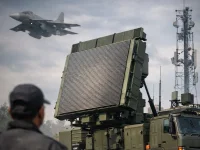
At the core of this dependency is the Thales RBE2 AA, the Active Electronically Scanned Array (AESA) radar that powers the Rafale.In modern air combat, the radar is not merely a sensor; it is the central nervous system responsible for targeting, data fusion, and weapon guidance.
Whoever controls the radar software effectively controls the "kill chain"—the sequence of events from target detection to destruction.
By opting for a proprietary French radar without securing the source code, New Delhi has surrendered the most critical gateway to sovereign weapon integration.
Without the ability to modify the radar’s source code, Indian engineers cannot independently update threat libraries or optimize the radar to work seamlessly with non-French weapons. This creates a permanent dependency on Dassault for every meaningful upgrade.
The "iPhone" of Fighter Jets
Defence analysts have drawn parallels between the Rafale ecosystem and consumer tech giants like Apple. The hardware is undeniably world-class, but the operating system is closed.Just as a user cannot modify an iPhone's core software or install unapproved apps without "jailbreaking" the device, the Indian Air Force cannot modify the Rafale’s core systems.
Any desire for new capabilities forces the user back to the "App Store"—in this case, Dassault—where every update comes with a high price tag.
The MICA NG Trap
This structural dependency creates a strategic risk for future procurement.As the French missile MICA NG (New Generation) enters production, it is expected to be aggressively marketed to India as a logical successor to the current inventory.
The sales pitch will likely highlight that MICA NG is "proven, certified, and available," offering a convenient stop-gap while India’s indigenous Astra Mk2 completes its development.
This scenario presents a classic vendor lock-in trap. The argument of "easy integration" will again be used to justify purchasing foreign missiles, undercutting India’s indigenous missile ecosystem.
The difficult question for policymakers will be: Why wait years for Dassault to certify the Indian Astra Mk2 at great cost, when the French MICA NG can be plugged straight into the existing architecture?
Strategic Lock-In vs. Sovereignty
Instead of fostering a sovereign fighter ecosystem where Indian radars, mission computers, and weapons share a common architecture across platforms like the Tejas Mk2, and the future AMCA, India has anchored its elite fleet within a foreign-controlled digital fortress.While future Rafales may be manufactured on Indian soil, the aircraft’s "brain"—its combat logic and source code—will remain French property. India will assemble the hardware, but Dassault will retain the intellectual property rights to the software.
This arrangement is not true technology transfer; it is, in effect, platform tenancy. Like any closed ecosystem, it ensures that the user remains a customer, not a commander, of their own destiny.