- Views: 356
- Replies: 2
With Hindustan Aeronautics Limited (HAL) having successfully secured a landmark agreement for the indigenous manufacture of the 98 kN F414 engine, strategic focus is now shifting toward how India can maximise the long-term value of this partnership.
Defence analysts and industry experts are increasingly arguing that HAL should actively explore the feasibility of developing the higher-thrust F414 Enhanced Performance Engine (EPE)—rated at approximately 116 kN—a powerful variant that GE Aerospace has historically been keen to advance.
Moving Beyond the Baseline
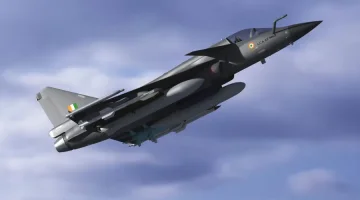
The current agreement between HAL and GE Aerospace primarily centers on the standard F414-GE-INS6 engine. This 98 kN-class engine is slated to power the upcoming LCA Tejas Mk2 and potentially other future Indian fighters.While this deal represents a monumental leap in establishing domestic aero-engine manufacturing capabilities, critics point out that the global standard for fighter jet development is evolving rapidly.
Modern combat aircraft now require significantly higher thrust-to-weight ratios, increased electrical power generation to run complex radars, and better thermal margins to support advanced avionics.
The EPE Advantage: Power and Performance
The F414 EPE concept was originally designed by GE as a "growth path" for the F414 family.It promises roughly 18 to 20 percent higher thrust—pushing output to the 116 kN class—without requiring a complete redesign of the engine's external dimensions.
This boost in performance is achieved through a sophisticated combination of improvements:
- Advanced Materials: The use of improved materials in the engine's "hot section" (the core where combustion happens) allows it to withstand higher temperatures.
- Enhanced Cooling: Superior cooling techniques prevent overheating despite the increased power.
- Refined Aerodynamics: A redesigned fan and compressor system improves airflow efficiency.
It would force Indian engineers to engage deeply with engine design, testing, and validation competencies—skills that are notoriously difficult to acquire.
Operational Gains for the Indian Air Force
From a purely operational standpoint, a 116 kN-class engine offers distinct advantages for the Indian Air Force (IAF). A higher thrust engine would directly translate to improved payload capabilities and longer range.Crucially, it would enhance performance in "hot-and-high" conditions—such as high-altitude operations in the Himalayan sectors—where thinner air reduces engine efficiency.
Furthermore, having an engine with a higher power reserve provides a safety margin for future upgrades.
As fighter jets age, they typically gain weight due to the addition of new sensors and weapons; a more powerful engine ensures the aircraft remains agile throughout its service life.
This variant could also serve as a robust interim solution for the Advanced Medium Combat Aircraft (AMCA) or the Twin Engine Deck Based Fighter (TEDBF) if indigenous engine programmes face delays.
A Strategic Leap in Technology
Strategically, co-developing or localising the EPE variant aligns perfectly with India’s long-term goal of mastering critical propulsion technologies.It would grant Indian scientists and engineers exposure to advanced metallurgy, thermal management, and life-cycle optimisation. These specific areas have historically proven to be the biggest hurdles in India's own attempts to develop jet engines.
Moreover, GE has previously indicated a strong interest in pursuing the EPE path but has lacked a committed "launch customer" to justify the full scale of investment required for mass production. India, with its diverse and expanding combat aviation roadmap, offers the necessary scale and continuity.
For HAL, pushing current discussions beyond the 98 kN baseline toward the 116 kN EPE variant would signal a definitive shift.
It would mark a transition from a relationship based on manufacturing-led indigenisation to a true capability-led partnership, securing India's place in the future of military aviation propulsion.