- Views: 3K
- Replies: 5
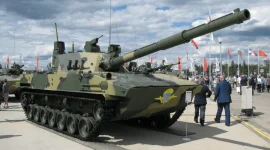
The Defence Research and Development Organisation (DRDO) has confirmed that the much-anticipated user trials of the indigenous 'Zorawar' light tank will commence this year.
Dr Samir V Kamat, the Chief of DRDO, stated that the Indian Army is prepared to begin operational evaluations of the tank, marking a pivotal shift from the development phase to induction-oriented testing.
Speaking on the Ministry of Defence’s official podcast, Raksha Sutra, Dr Kamat stated that the programme has matured sufficiently for the Army to start validating the platform against its stringent operational requirements.
This step is critical for ensuring the tank is battle-ready for the specific challenges of the Indian borders.
Formal Army Trials to Start in High Altitude
According to Dr Kamat, the upcoming evaluations will be formal user trials conducted by the Indian Army, distinct from the internal technical trials previously undertaken by the development agencies. Defence sources suggest that these trials are likely to begin as early as February 2026.The initial phase will focus on high-altitude performance, with the Ladakh region serving as the primary testing ground. This phase is designed to rigorously test the Zorawar’s mobility, engine performance, crew comfort, and system reliability in extreme cold and rarefied air.
These conditions were the primary drivers behind the Indian Army's requirement for a light tank, as heavier main battle tanks often face mobility constraints in such rugged terrain.
Summer Trials in Desert Conditions
Following the completion of the high-altitude winter phase, the prototype will be moved to the Pokhran field firing ranges in Rajasthan for summer trials. This second phase will assess the tank's endurance and cooling systems in scorching desert heat.Collectively, these two phases will validate the Zorawar as a true all-terrain solution capable of operating across the diverse extremes of India’s operational landscape.
A Joint Effort by DRDO and L&T
The Zorawar light tank has been co-developed by the DRDO and private sector major Larsen & Toubro (L&T).The platform underwent extensive internal trials throughout the previous year, which reportedly covered mobility, desert operations, and weapon firing. These internal tests have provided a baseline of confidence in the design before its handover to the Army.
The upcoming Army-led trials are categorized as "revalidation trials." Their primary objective is to confirm the performance claims made by the developers and to identify any necessary refinements from the perspective of the actual end-users—the soldiers who will operate them.
Strategic Context and Technical Capabilities
The Zorawar is a 25-tonne class light tank designed specifically to counter threats in mountainous regions, such as the deployment of Type 15 light tanks by adversaries along the northern borders.Unlike the heavier T-72 and T-90 tanks, which weigh between 45 and 46 tonnes, the Zorawar offers superior agility and a high power-to-weight ratio.
Open-source information indicates that the tank is equipped with a 105mm rifled gun, capable of firing anti-tank guided missiles.
It also features amphibious capabilities, allowing it to cross riverine obstacles, and integrates modern technologies such as artificial intelligence (AI), drone integration, and active protection systems.
Future Procurement Plans
Feedback gathered during these user trials will directly influence the final configuration of the initial production batch.The Indian Army plans to incorporate any requested upgrades into the first tranche of 59 Zorawar tanks.
These units are expected to be ordered immediately upon the successful conclusion of the trials, ensuring that the equipment entering service is closely aligned with current operational needs rather than older development standards.
Beyond this initial order, the Ministry of Defence has outlined plans for a larger tender involving approximately 350 additional light tanks in the future.
This phased induction strategy allows the Army to quickly deploy a limited number of tanks to priority sectors while gaining operational experience, which will then inform the specifications for the larger fleet