- Views: 2K
- Replies: 6
New Delhi's strategic calculus for its naval aviation is undergoing a massive transformation.
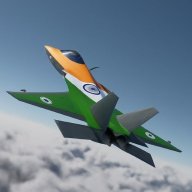
Rather than purchasing a large follow-on fleet of the combat-proven French Dassault Rafale-M fighters, the Indian Navy has opted to place its confidence in the home-grown Twin Engine Deck-Based Fighter (TEDBF) programme, spearheaded by the Aeronautical Development Agency (ADA) and Hindustan Aeronautics Limited (HAL).
This significant move highlights India's commitment to self-reliance in defence manufacturing, prioritising long-term technological independence over immediate, off-the-shelf solutions.
While this is a calculated risk, the rewards are immense. Successfully developing the TEDBF will elevate India into an elite group of nations—joining the United States, France, and China—capable of producing a complete indigenous carrier-based aviation ecosystem.
However, developmental delays could leave the Indian Navy vulnerable in the 2030s, operating its aircraft carriers with depleted air wings just as the geopolitical environment in the Indo-Pacific grows more volatile.
The pressing issue is the lifespan of the current fleet. Today, India's naval air power relies heavily on around 40 Russian-made MiG-29K and MiG-29KUB jets, deployed from INS Vikramaditya and the newly commissioned INS Vikrant.
While these aircraft quickly gave India a formidable carrier capability, they have been plagued by serviceability issues, engine reliability problems, and structural wear from the immense stress of arrested carrier landings.
By the early to mid-2030s, the MiG-29K fleet will likely reach the end of its viable service life. Continuous exposure to corrosive saltwater, demanding deck operations, and a heavy reliance on Russian spare parts have cast doubt on their long-term utility.
To bridge this looming gap, the Ministry of Defence finalized a deal for 26 Dassault Rafale-M fighters in 2025.
However, this roughly ₹63,000 crore acquisition was always meant to be a stopgap measure, not the permanent foundation of India's naval air wing.
The limited number of 26 jets is simply not enough to simultaneously equip both aircraft carriers while accounting for routine maintenance, training, and reserve requirements.
A robust carrier strike group demands significant rotational depth to maintain peak combat readiness, something a small Rafale-M fleet cannot guarantee during prolonged crises.
The primary concern revolves around the TEDBF's development schedule. The ADA has indicated that the intricate process of designing a carrier-grade fighter has shifted the expected operational induction to around 2038.
With the first prototype flight anticipated between 2029 and 2032, a potential capability gap of five to eight years emerges. During this critical window, India might have two multi-billion-dollar aircraft carriers lacking the adequate modern fighter squadrons needed to maximize their strategic potential.
This capability gap carries profound geopolitical weight. By the mid-2030s, the People's Liberation Army Navy (PLAN) is projected to establish a persistent and robust carrier strike presence in the Indian Ocean Region (IOR).
China is rapidly advancing its naval aviation, incorporating the stealthy J-35 deck-based fighters, advanced early warning aircraft, and long-range anti-ship missiles. This expansion threatens to severely disrupt the maritime balance of power in Asia.
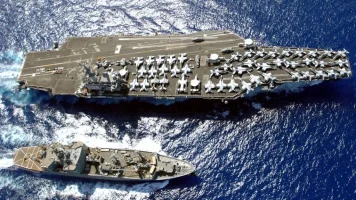
The Indian Ocean, once a region where India maintained a comfortable maritime edge, is quickly becoming a highly contested zone. Carrier aviation is vital for sea control, fleet defence, long-range strikes, and maritime surveillance.
Operating carriers with a weakened fighter complement diminishes their deterrence value, making them overly reliant on shore-based air cover and reducing flexibility during naval standoffs.
Delays in the TEDBF programme could force the Navy into urgent, high-cost foreign purchases just to keep its carriers operational.
Despite these hurdles, the Indian Navy's steadfast backing of the TEDBF underscores the platform's exceptional promise.
Unlike the Rafale-M, which was primarily built for catapult-assisted (CATOBAR) launches, the TEDBF is a clean-sheet design crafted specifically for India's STOBAR (Short Take-Off But Arrested Recovery) carriers.
Its canard-delta wing configuration is explicitly engineered for ski-jump takeoffs from INS Vikramaditya and INS Vikrant.
This tailored approach brings significant aerodynamic benefits. Ski-jump operations require specific capabilities, especially when launching at high weights and lower speeds.
The TEDBF is optimized for superior low-speed handling and high lift generation, meaning it will likely carry heavier payloads over longer distances from Indian decks compared to modified Western fighters.
In terms of specifications, the TEDBF will be a substantial upgrade over the MiG-29K.
Categorized as a 26-ton medium-weight fighter, it will be powered by two powerful General Electric F414 afterburning turbofan engines.
It is projected to carry a formidable payload of nearly 9,000 kilograms across 12 hardpoints, providing immense versatility for air defence, electronic warfare, and surface strikes.
Crucially, the TEDBF will natively integrate India's cutting-edge sovereign weapons systems.
Free from foreign export restrictions and software locks, it will be armed with indigenous munitions like the Astra beyond-visual-range air-to-air missiles, Rudram anti-radiation missiles, and Smart Anti-Airfield Weapons (SAAW).
Most notably, the fighter is expected to carry the BrahMos-NG supersonic anti-ship missile. A carrier-launched BrahMos-NG would revolutionize India's maritime strike capabilities, offering a lethal stand-off weapon against enemy warships deep in the Indian Ocean.
Ultimately, the TEDBF is more than just a fighter jet; it is a vital catalyst for India's aerospace industry.
Mastering complex naval aviation technologies—like folding wings, arrestor hooks, and reinforced airframes—builds the foundational knowledge required for the future.
The expertise gained here will be instrumental in eventually developing a fifth-generation naval fighter, an offshoot of the Advanced Medium Combat Aircraft (AMCA) programme, securing India's strategic autonomy in the skies for generations to come.