- Views: 2K
- Replies: 2
India’s forthcoming acquisition of fighter aircraft is set to fundamentally alter the way the Indian Air Force (IAF) configures its combat fleet.
According to defence sources, the IAF is on track to secure unprecedented operational flexibility to equip a prospective fleet of 114 new Dassault Rafale fighters with indigenous weaponry.
This move is expected to significantly reduce long-term reliance on foreign munitions while bolstering the nation’s domestic aerospace capabilities.
Although the agreement will not grant India full access to the aircraft’s source code — a closely guarded proprietary asset of the original manufacturer — the IAF is expected to receive access at the Application Programming Interface (API) level.
In practical terms, this provides Indian engineers with a controlled yet powerful gateway to integrate and validate domestic weapon systems without compromising the aircraft’s protected core flight software.
For modern combat aviation, this marks a substantial operational concession and serves as a robust endorsement of India’s growing weapons ecosystem.
A defining aspect of this programme is Dassault Aviation’s reported willingness to facilitate the integration of Indian systems from the very beginning, rather than as a retrofitted solution.
This initiative covers the Astra Beyond Visual Range Air-to-Air Missile (BVRAAM) family and the Rudram Anti-Radiation Missile series, both of which are central to India’s vision for self-reliant air combat.
By ensuring early integration, the new Rafales will enter service fully aligned with India’s domestic logistics, training, and mission planning infrastructure.
The strategic implications of this approach are profound. By embedding indigenous weapons into the aircraft’s operational baseline, the IAF can progressively taper its dependence on imported armaments as domestic production scales up.
Over time, this strategy promises to lower lifecycle costs, streamline supply chains, and enhance sovereign control over combat loadouts — a capability that is increasingly vital in high-tempo operational environments.
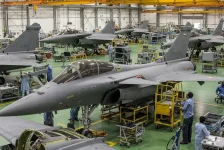
The procurement plan envisages a significant portion of the fleet being manufactured within India. Approximately 80% of the 114 aircraft are expected to be assembled domestically through an industrial partnership framework, with estimated deal values touching $36 billion.
This localisation effort is designed not only to expedite deliveries but also to deepen India’s aerospace manufacturing base, establishing a long-term ecosystem capable of supporting future upgrades and variants.
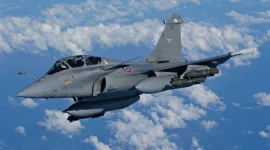
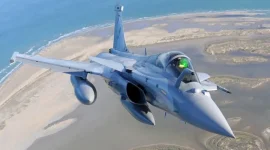
The new aircraft are slated to be delivered in a customised configuration derived from the Rafale F4 standard, informally dubbed the "F4 India" variant.
While the F4 baseline already introduces advanced connectivity, sensor fusion, and predictive maintenance architectures, the Indian adaptation will reportedly prioritise compatibility with indigenous weapons, mission systems, and future upgrade paths.
Looking further ahead, the deal may include a provision for a limited batch of approximately 24 aircraft in the more advanced F5 configuration.
This standard is expected to serve as a technological bridge toward next-generation networking and combat system evolution, including coordination with "loyal wingman" drones.
Such staggered upgrades reflect a broader strategy of maintaining technological superiority without disrupting fleet commonality.
The IAF’s existing fleet of 36 Rafales — currently operating to the F3R standard — is also expected to undergo phased upgrades to align with the newer F4 baseline post-2030.
Maintaining configuration commonality across squadrons will simplify logistics, training, and mission planning, ensuring that software-driven enhancements can be implemented fleet-wide.
From an operational perspective, this harmonisation minimises fragmentation and allows for incremental capability insertion without the need to ground large sections of the fleet. It effectively ensures that indigenous weapon integration efforts deliver benefits to both new and legacy aircraft over time.
Valued at an estimated $36 billion, this prospective acquisition represents far more than a simple purchase of fighters; it is a strategic industrial initiative.
By combining domestic manufacturing, controlled software access, and early indigenous weapons integration, the programme aims to strike a balance between immediate operational readiness and long-term self-reliance.
For the IAF, the outcome promises a multirole platform that retains the Rafale’s proven combat pedigree while increasingly reflecting Indian mission doctrine and weapons philosophy.
For the defence industry, it signals a decisive shift toward deeper participation in high-end aerospace integration, moving beyond simple licensed assembly.