- Views: 3K
- Replies: 13
The Aeronautical Development Agency (ADA), a premier nodal agency under India’s Defence Research and Development Organisation (DRDO), has initiated high-level internal research into a sixth-generation tailless fighter jet.
This ambitious undertaking aims to define the technological parameters for the future of India’s aerial warfare capabilities, focusing heavily on stealth, adaptability, and network-centric operations.
While currently classified as an in-house initiative, these preliminary studies are designed to assess the feasibility of advanced technologies and forecast future combat requirements.
Once this initial pre-research and development phase is concluded, the ADA intends to engage in extensive consultations with the Indian Air Force (IAF). This joint evaluation will help crystallise the operational requirements before the agency seeks official funding to formalise the research and establish a robust design framework.
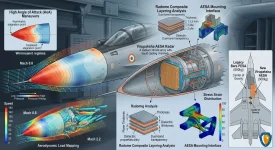
At the heart of this conceptual platform is a shift towards blended wing-body (BWB) and flying-wing configurations.
These designs are being prioritised to achieve superior aerodynamic efficiency and broadband stealth. By removing vertical stabilisers—the "tails" found on conventional jets—and reducing sharp edges that reflect radar waves, these configurations significantly lower the aircraft's radar cross-section.
Additionally, the BWB design offers increased internal volume, allowing for larger fuel tanks and internal weapons bays, which are critical for maintaining stealth during long-range missions.
A standout feature of this research is the development of "morphing wing" technology.
This innovation utilises smart materials, such as shape memory alloys (SMAs), to allow the aircraft's wings to change their curvature (camber) in real-time without the use of traditional mechanical flaps or slats.
Recent breakthroughs by DRDO scientists have demonstrated that these SMAs can actuate shape changes in mere milliseconds.
This seamless adaptation eliminates the gaps and hinges associated with conventional control surfaces, which are major sources of radar reflection, thereby optimising both stealth and agility across various flight regimes.
According to defence sources, the Indian Air Force envisions this sixth-generation platform as a heavy-class fighter, larger than the upcoming Advanced Medium Combat Aircraft (AMCA) and comparable in size to the Russian Sukhoi Su-57.
It is anticipated that this futuristic jet could eventually serve as the successor to the formidable Su-30MKI fleet, offering enhanced payload capacity, extended range, and the ability to execute deep penetration strikes and air dominance missions in highly contested environments.
Although the programme is in its nascent stages, it underscores India's strategic resolve to keep pace with global aerospace advancements. Major powers such as the United States, China, and European consortiums are actively pursuing similar adaptive, tailless designs for their next-generation systems.
By investing in these core technologies now, the ADA is laying the groundwork for a platform—potentially manned or optionally manned—that will integrate artificial intelligence, directed energy weapons, and drone swarm coordination to secure India's skies in the decades to come.