- Views: 2K
- Replies: 4
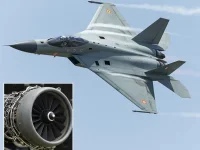
Following the critical green light from the Cabinet Committee on Security (CCS), India’s Advanced Medium Combat Aircraft (AMCA) project has progressed into the Systems Installation Detail Design (SIDD) stage.
This phase is widely considered the most grueling technical hurdle in the development of a fifth-generation fighter.
Over the next two years, engineers will focus on the intricate task of housing complex internal machinery within a stealthy frame, ensuring the aircraft remains nearly invisible to enemy radar.
The Challenge of "Stealth Architecture"
Designing a stealth fighter is far more restrictive than building a traditional combat jet.In standard aircraft, parts like wiring and fuel lines are placed where they are easiest to reach or install.
However, a stealth platform requires "low observable" geometry. Every internal component must be positioned precisely so it does not create "radar-reflective discontinuities" or thermal signatures that could give the aircraft's position away to heat-seeking sensors.
For the AMCA, the sheer volume of equipment makes this a high-stakes puzzle.
The jet will house approximately 15 kilometers of electrical wiring, alongside sophisticated fuel networks and internal weapons bays, all squeezed into a compact fuselage.
Even a minor error in how a wire is routed could cause electromagnetic "leakage" or unintended radar reflections, potentially compromising the aircraft's primary defence advantage: its stealth.
Virtual Engineering: The Digital Twin
To navigate this complexity, the Aeronautical Development Agency (ADA) is utilizing high-end Product Lifecycle Management (PLM) software and a "Digital Twin."This is a comprehensive virtual clone of the AMCA that allows engineers to simulate every physical and electromagnetic interaction in a digital environment before a single piece of metal is cut.
By using this digital-first approach, various engineering departments—covering electronics, mechanics, and stealth—can collaborate simultaneously.
They can test different layouts and fix potential clashes in the virtual world, which prevents the need for expensive and time-consuming changes to physical prototypes later in the cycle.
Simulating the Invisible
The digital twin is particularly vital for predicting how internal parts might behave like antennas.If not shielded correctly, internal wiring can emit signals that radar can detect. By running advanced electromagnetic simulations during the SIDD phase, the team can identify these "hotspots" early.
This ensures that when the aircraft finally takes to the skies, it meets the strict stealth benchmarks required for modern aerial warfare.
Roadmap to Production
The AMCA program is currently on track to begin metal cutting by 2027.For this to happen, the design must be finalized with extreme precision during this 24-month window.
By validating assembly sequences and maintenance access points virtually, the program aims to streamline the manufacturing process and reduce the risk of delays once production begins.
This SIDD phase represents a delicate balancing act between conflicting needs, such as weight, engine cooling, and stealth.
While many global stealth programs have struggled or stalled at this integration stage, India’s heavy reliance on digital simulation is intended to keep the AMCA on its ambitious timeline, securing the nation’s future in elite aerospace technology.