India’s pursuit of advanced autonomous warfare is getting a massive infrastructure boost.
The Aeronautical Development Agency (ADA), functioning under the Defence Research and Development Organisation (DRDO), is setting up a dedicated Core Integration and Flight Testing Centre in Puttaparthi, located in Andhra Pradesh’s Sri Satya Sai district.
Slated to be fully functional within a year, this cutting-edge complex will serve as the primary hub for assembling, integrating, and flight-testing the formidable Ghatak Unmanned Combat Aerial Vehicle (UCAV).
Poised to become a premier aerospace testing ground in India, the new Puttaparthi centre will drive the future of the Indian Air Force's unmanned aerial fleet.
Defence officials highlight that the facility will concentrate on seamlessly integrating various complex systems, testing mission-critical software, validating stealth technologies, and evaluating the drone's autonomous flight capabilities.
The Ghatak project—previously known in its conceptual stages as AURA (Autonomous Unmanned Research Aircraft)—is a joint venture between the Aeronautical Development Establishment (ADE) and ADA.
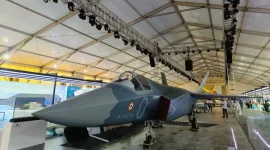
It stands as India’s premier homegrown stealth drone, engineered specifically for deep penetration strikes in heavily guarded enemy airspace.
The platform builds upon the success of the scaled-down SWiFT (Stealth Wing Flying Testbed), an earlier technology demonstrator that successfully proved the aerodynamic viability of the unique shape.
The ambitious programme reached a historic milestone in March 2026.
The Defence Acquisition Council (DAC) cleared a colossal ₹39,000 crore budget to acquire 60 Ghatak combat drones under the Remotely Piloted Strike Aircraft (RPSA) initiative.
This crucial green light signals India’s concrete leap from merely demonstrating technology to preparing for the active military deployment of autonomous stealth strikers.
To successfully evade enemy radar, the Ghatak utilises a highly advanced, tailless flying-wing design, a layout favoured by modern stealth platforms worldwide.
By removing vertical tail fins and seamlessly blending the wings into the main body, developers have drastically minimised the drone's radar cross-section. This profile allows the UCAV to slip through dense air defence networks almost undetected.
Further enhancing its invisibility, the drone's physical structure will heavily rely on carbon-fibre prepreg composites.
It is estimated that 80 to 90 percent of the entire airframe will be crafted from these advanced materials.
Beyond simply keeping the aircraft lightweight, these composite panels are vital for absorbing and deflecting incoming radar waves, thereby shrinking the platform's electronic footprint.
At the heart of the Ghatak will be a specially modified, domestically produced "dry" version of the Kaveri turbofan engine, capable of producing roughly 49 kN of thrust.
By omitting the afterburner found on traditional fighter jets, this specific engine design significantly masks the drone's heat signature while maximising fuel economy for extended, long-range strike missions.
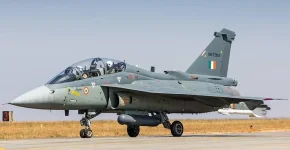
Weighing in at the 13 to 15-tonne range, the Ghatak shares a similar physical footprint with India's Light Combat Aircraft (LCA) Tejas.
Yet, it operates entirely differently; it is built strictly for autonomous or semi-autonomous missions, relying on highly sophisticated onboard computers to manage complex flight paths, process mission data, and engage targets without a human pilot in the cockpit.
In terms of performance, the stealth drone is projected to fly at altitudes reaching 30,000 feet, boasting an impressive endurance of five to eight hours based on its specific payload and mission requirements.
To maintain its low-observable stealth profile, the Ghatak will carry its arsenal entirely internally, featuring weapons bays designed to hold up to 1.5 tonnes of precision-guided bombs, missiles, and other smart munitions.
Ultimately, the new Puttaparthi Core Integration and Flight Testing Centre will streamline the Ghatak's journey from development to deployment by hosting all vital trials in one centralised, advanced location.
Furthermore, defence experts predict this facility will lay the essential groundwork for a wider array of future autonomous aerospace projects, including AI-driven "loyal wingman" drones and optionally manned combat aircraft.