- Views: 2K
- Replies: 2
As India continues to aggressively expand its regional and international aviation footprint, Moscow has formally presented its complete portfolio of civil aircraft as a strategic solution for the Indian market.
Moving beyond its initial offer of regional jets, Russia is now positioning its next-generation MS-21 narrowbody and the extended-range Tu-214 to meet India's demand for cost-effective trunk and intercontinental connectivity.
A Multi-Tiered Approach to Indian Skies
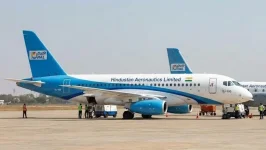
Russia’s proposal is structured to address every segment of India’s diverse aviation requirements. At the foundational level, Moscow has offered the SJ-100 (a 90–110 seat regional jet formerly known as the Superjet) and the Il-114, a rugged turboprop designed for short sectors.These smaller aircraft are specifically targeted at India’s UDAN (Ude Desh ka Aam Nagrik) regional connectivity scheme. The Il-114, optimised for routes between 500 km and 1,500 km, is seen as an ideal candidate for connecting Tier-2 and Tier-3 cities where high-frequency, low-cost operations are critical.
The Trunk Route Solution: MS-21
For high-density domestic and regional international routes, Russia is pitching the MS-21. This next-generation narrowbody aircraft is designed to compete directly with the Airbus A320 and Boeing 737 families.Capable of operating efficiently on hub-to-hub routes exceeding 3,000 km, the MS-21 is being marketed as a high-profit platform for Indian carriers.
Its primary role would be connecting India’s major metropolitan hubs with key destinations across Eastern Europe, the Middle East, and Asia.
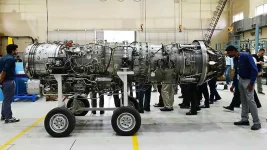
Notably, modern variants of the MS-21 (specifically the MS-21-310) are equipped with indigenous PD-14 engines and composite wings, showcasing Russia’s move towards technological self-reliance following Western sanctions.
Reviving a Long-Range Workhorse: The Tu-214
Perhaps the most significant element of the new proposal is the Tu-214, a long-range narrowbody originally built to rival the now-discontinued Boeing 757 and the popular Airbus A321.While the Boeing 757 ceased production in 2004, Russia is ramping up serial manufacturing of the Tu-214 to fill the niche for point-to-point long-haul operations.
Operational Capabilities
- Range: The Tu-214 boasts a standard operational range of 4,340 km to 6,500 km, depending on the payload.
- Reach from India: From Indian airports, this range enables nonstop flights to virtually all major destinations in Asia and the Middle East, including Thailand, Singapore, Indonesia, Saudi Arabia, Turkey, and Israel. It also brings cities in Japan, South Korea, and parts of the Horn of Africa (such as Ethiopia) within direct reach.
- Payload: With a maximum payload capacity of 25.2 tonnes, the aircraft supports high-density seating or mixed passenger-cargo configurations—a versatile feature for airlines looking to maximise revenue from cargo holds.
Modernisation for Export Viability
Recognising that operating economics are paramount for Indian carriers, Russia has initiated a major modernisation programme for the Tu-214. As of 2026, the aircraft is undergoing certification for a two-pilot cockpit configuration.Historically, the Tu-214 required a three-person crew (including a flight engineer), which increased operating costs compared to Western rivals.
The transition to a two-crew cockpit brings the aircraft in line with modern international standards, significantly enhancing its commercial attractiveness for export markets like India.
Strategic Implications and timelines
Despite the robust technical pitch, the delivery of these aircraft to international partners remains subject to Russia’s domestic priorities.The current production ramp-up is primarily driven by an "import substitution" policy to replace Western jets within Russia’s own state-owned airlines. Large-scale exports to friendly nations are expected to commence only after domestic fleet requirements stabilise and production lines achieve maturity.
For New Delhi, this offer presents a unique strategic option: the potential to diversify its civil aviation fleet with a non-Western lineage of aircraft that spans the entire operational spectrum—from short-haul turboprops to long-range intercontinental jets.