- Views: 48
- Replies: 1
In a major development for India's aerospace sector, the United States and India have crossed a critical threshold in their joint fighter jet engine production initiative.
General Electric (GE) Aerospace and Hindustan Aeronautics Limited (HAL) have successfully wrapped up the intricate technical negotiations required for manufacturing the F414 engine in India.
This achievement paves the way for a final contract expected later this year, promising a much-needed boost to the Indian Air Force (IAF) as it seeks to modernise its fleet and address depleting fighter squadron numbers.
On April 13, 2026, Rita Flaherty, Vice President at GE Aerospace, confirmed that the most challenging phase of the dialogue is now complete.
These initial talks focused heavily on the complex details of an 80% Transfer of Technology (ToT) arrangement, a historic provision that was formally notified to and cleared by the US Congress in late 2023.
With the technical blueprint and technology-sharing parameters firmly established, the two aerospace giants have moved on to commercial negotiations, where they will determine final pricing structures, production timelines, and comprehensive lifecycle support.
The formidable F414 turbofan engine, which operates in the powerful 98 kilonewton (kN) thrust class, is slated to be the driving force behind India’s future air combat power.
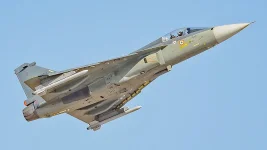
It is officially designated to power a fleet of over 120 upcoming Tejas Mk2 medium-weight fighters, a platform that is anticipated to make its maiden flight in the near future.
Furthermore, the F414 engine will propel the first two squadrons of the Advanced Medium Combat Aircraft (AMCA) Mk1, India’s highly anticipated fifth-generation stealth fighter. This versatile deployment highlights the engine's central role in sustaining India's current and future aerial deterrence.
This pact is far more than a standard military purchase; it represents a foundational shift towards deep industrial cooperation.
Under the agreed ToT parameters, HAL will be empowered to manufacture vital engine components on Indian soil.
This localised production will heavily insulate the IAF from global supply chain disruptions while reducing historical dependencies on imported hardware.
The collaboration stands as a cornerstone of India’s push for self-reliance, significantly upgrading domestic expertise in high-end defence manufacturing.
Currently, the final commercial hurdle involves navigating the realities of global inflation, which has recently driven up the costs of specialised aerospace materials and components worldwide.
Despite these economic pressures, both GE Aerospace and HAL remain focused on streamlining production economics.
Negotiators from both sides are actively working to balance these financial variables to secure an agreement that is both commercially viable and strategically transformative for India's defence ecosystem.