The Indian Air Force (IAF) and the Ministry of Defence (MoD) are at a crucial turning point in shaping India's future air combat capabilities. Officials are actively exploring various options to acquire sixth-generation fighter technologies.
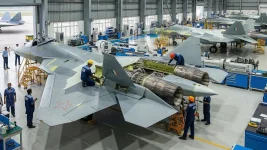
In response to this search, Russia has presented a unique proposal. Rather than designing a brand-new aircraft, Moscow has offered its fifth-generation Su-57 Felon and the single-engine Su-75 Checkmate tactical fighter as baseline platforms.
Through joint development, these jets would be gradually upgraded with advanced technologies to function as sixth-generation systems.
This Russian offer differs significantly from major multinational efforts like the Global Combat Air Programme (GCAP) or Europe’s Future Combat Air System (FCAS).
Russia is not asking India to join a rigid, multi-nation consortium. Instead, it is suggesting a flexible partnership focused on step-by-step improvements, allowing India to work alongside Russian engineers to transform current fifth-generation airframes into modern combat machines.
The foundation of Moscow's pitch is "co-evolution." This means taking the existing Su-57 and Su-75 designs and slowly integrating cutting-edge features.
These enhancements would include artificial intelligence systems acting as "digital pilots," improved radar and sensor fusion, and powerful electronic warfare capabilities.
The ultimate goal is to turn these fighters into highly independent, digitally connected aircraft that can survive and fight in heavily defended airspace.
Defence analysts suggest this could align with India's desire to integrate indigenous subsystems, such as the DRDO-developed Gallium Nitride (GaN) active electronically scanned array (AESA) radars, into future fleets.
Russian representatives highlight that this incremental path is much faster and less expensive than building a sixth-generation jet from scratch. By using airframes that have already been designed and tested, the IAF could introduce new capabilities much sooner.
Furthermore, this method would allow India to maintain a high level of technological independence by customizing the aircraft with domestic weapons and avionics.
At the same time, India is actively keeping its options open with European defence leaders. The MoD is seriously weighing the possibility of joining either the GCAP (spearheaded by the United Kingdom, Japan, and Italy) or the FCAS (driven by France, Germany, and Spain).
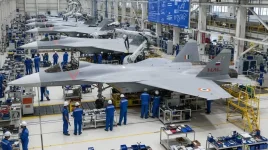
This interest is fueled by the pressing need to keep pace with regional rivals like China, which is rapidly expanding its fleet of J-20 stealth fighters.
A recent report to the Indian Parliament’s Standing Committee on Defence confirmed that the IAF is eager to ensure it does not fall behind in the global race for advanced combat aviation.
The European pathway is fundamentally different from the Russian upgrade model. Both GCAP and FCAS are being built from the ground up as a "system of systems."
This means the core fighter jet will be designed to fly alongside unmanned "loyal wingman" drones, connected by a high-speed combat data cloud.
These aircraft will be built with next-generation stealth, adaptive engines, and advanced AI to assist the pilot, aiming to deliver a fully realized sixth-generation experience from the very first flight. Both European programs are targeting operational readiness between 2035 and 2040.
Participating in a European consortium would grant India direct access to some of the world's most advanced aerospace technologies, research networks, and global supply chains.
Recent defence reports even suggest India might initially seek an "observer" status in programs like GCAP to study the technology without disrupting the project's strict development timelines.
However, full membership would demand an enormous financial investment. It would also require India to navigate complex work-share agreements, align its military requirements with multiple partner nations, and potentially make difficult compromises regarding intellectual property rights.
These two distinct paths present a major strategic decision for New Delhi. The Russian option provides a faster, more familiar route that could allow for greater local control over specific upgrades.
Conversely, joining a European project offers a gateway into a revolutionary combat architecture that will likely dominate aerial warfare for decades to come, moving well beyond the limitations of current platforms.
All of these international discussions are unfolding as India continues to fund and develop its own indigenous fifth-generation fighter, the Advanced Medium Combat Aircraft (AMCA).
The Indian government recently sanctioned a massive ₹15,000 crore for AMCA prototype development, aiming for a rollout and first flight by the end of this decade.
While the AMCA will serve as the backbone of the IAF's modernization for the near-to-mid-term, military planners recognize that an additional, heavier sixth-generation platform—whether upgraded with Russia or built with Europe—will be absolutely essential to maintain technological parity with global superpowers in the coming decades.