- Views: 2K
- Replies: 9
In a significant step towards boosting its aerial combat capabilities, Armenia has initiated preliminary talks with India to arm its Sukhoi Su-30SM fighter jets with the indigenously developed Astra Mk1A Beyond Visual Range Air-to-Air Missile (BVRAAM).
This move highlights a strategic shift for the Armenian Air Force as it seeks to address vulnerabilities in long-range aerial warfare.
It also builds upon the rapidly expanding defence partnership between New Delhi and Yerevan, which already encompasses the supply of Indian artillery, radar systems, and air defence equipment.
At present, the Armenian Air Force operates a limited fleet of four Russian-origin Su-30SM aircraft.
These fighters rely on older R-77 missiles, which have an effective engagement distance of approximately 80 kilometres.
This range has become a severe disadvantage in the region. Notably, Armenia's primary regional adversary, Azerbaijan, recently finalized a deal to acquire JF-17 Block III fighter jets from Pakistan.
These jets come equipped with the Chinese-made PL-15E missile, capable of striking targets up to 145 kilometres away.
To counter this severe imbalance in beyond-visual-range combat, Armenia urgently requires modernized aerial weaponry.
Developed by India's Defence Research and Development Organisation (DRDO), the upcoming Astra Mk1A offers a powerful solution.
Currently in its final testing phase, the new missile variant boasts an impressive strike range of nearly 160 kilometres, a significant improvement over the 110-kilometre range of the original Astra Mk1.
Integrating this missile would not only neutralize the threat posed by the PL-15E but also provide Armenian pilots with a distinct tactical edge in the skies.
Furthermore, it establishes the Astra missile family as a highly attractive export option for other nations flying Russian-built fighter jets.
The ongoing dialogue between the two nations is primarily focused on the technical challenges of mounting the Indian weapon onto the Russian-designed aircraft.
Linking a foreign missile to the Su-30SM's internal software, radar systems, and fire-control mechanisms is a highly complex engineering task.
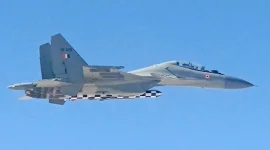
Fortunately, India holds a unique advantage. Having successfully integrated the Astra missile system into its own large fleet of customized Su-30MKI fighters, Indian engineers possess the vital technical experience required to modify Armenia's jets efficiently.
Meanwhile, India's domestic missile programme continues to advance at a rapid pace.
The Indian Air Force (IAF) already utilizes the base Astra Mk1 on its frontline Su-30MKI squadrons.
The upgraded Mk1A version is scheduled for formal induction once the final validation trials conclude later this year, with manufacturing by Bharat Dynamics Limited (BDL) expected to begin shortly thereafter.
Looking ahead, Indian scientists are also developing the next-generation Astra Mk2.
Projected to hit targets at an astonishing 220 kilometres, the Mk2 underscores India's commitment to achieving complete self-reliance in cutting-edge, long-range aerial defence systems.