- Views: 2K
- Replies: 13
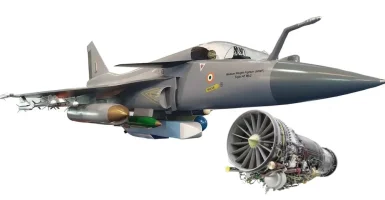
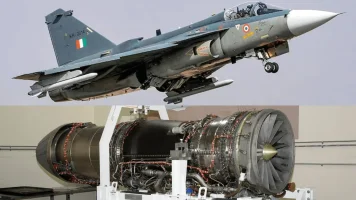
With the cost of American jet engines escalating rapidly, India's defence planners face a crucial question: Should they stick with the General Electric (GE) F414 for the Tejas Mk2 and Advanced Medium Combat Aircraft (AMCA) Mk1, or shift toward the Eurojet EJ200 family as part of a larger collaboration with Britain's Rolls-Royce?
Recent reports indicate that the price of the GE F414 has surged from initial estimates of ₹70–80 crore to over ₹200 crore per unit, while GE is also seeking upwards of $800 million for a dedicated assembly line in India. This unprecedented price hike has intensified the debate over India's propulsion future.
Initially, sticking with GE seems obvious. The F414 has already been chosen to power both the Tejas Mk2 and the first batch of AMCA stealth fighters. Years of testing, design integration, and airframe engineering have been completed around this specific powerplant.
Changing engines now would trigger severe timeline setbacks, extra design expenses, and certification hurdles. However, those advocating for the EJ200 suggest that India must look at the bigger strategic picture and avoid being tied down to an ecosystem that might restrict its own future engine-building aspirations.
The Case for the EJ200
The Eurojet EJ200, which currently powers the Eurofighter Typhoon, was built from the start to accommodate significant upgrades. Its development roadmap outlined two main growth phases.The first phase aimed to boost thrust by 20 percent, achieving approximately 103 kilonewtons (kN) with afterburner. A more ambitious second phase projected a 30 percent increase, potentially generating up to 120 kN of afterburning thrust.
If these performance benchmarks are met, the upgraded EJ200 would enter a completely new thrust class. A 120 kN variant of the EJ200 would directly align with the power requirements India needs for its future AMCA models.
This could serve as a logical stepping stone between the fighter jets being built today and the next-generation propulsion systems planned for tomorrow.
Backers of the European engine argue that selecting the EJ200 would establish strong commonality if Rolls-Royce eventually wins the contract for India's 120 kN AMCA Mk2 engine.
By integrating a European engine family now, India could streamline its supply chains, workforce training, and industrial operations.
This would simplify the transfer of technology (ToT) under a comprehensive partnership. Furthermore, the EJ200 is already respected globally for its fuel efficiency, excellent thrust-to-weight ratio, and long-term reliability.
Strategic diversification is another key factor. India is currently dealing with substantial delays from GE in receiving the F404 engines meant for the Tejas Mk1A—a bottleneck that has pushed aircraft deliveries back by more than two years.
Observers argue that bringing in a European alternative would reduce the risks of relying entirely on a single foreign supplier for crucial defence hardware, while also giving New Delhi better bargaining power for future industrial deals.
The Practical Realities
Despite these arguments, practical engineering heavily favours keeping the F414 for the Tejas Mk2 and AMCA Mk1.Integrating a jet engine is an incredibly complex process. Critical components like air intakes, cooling mechanisms, flight control software, fuel systems, and overall aerodynamics have already been specifically tailored to the GE F414.
Defence sources note that the AMCA's design is largely "frozen" around the American engine. Switching to the EJ200 would demand a massive redesign, potentially pushing both vital fighter programs back by several years.
The factor of time cannot be ignored. The Indian Air Force is currently struggling with a dropping number of fighter squadrons and urgently needs new aircraft.
The Tejas Mk2 is poised to be the backbone of the fleet, while the AMCA represents India's leap into fifth-generation stealth technology. Any decision that significantly delays these jets in favour of a new engine would likely face severe pushback from military leadership.
Another major hurdle is that the high-thrust versions of the EJ200 are still mostly theoretical.
While the base engine has growth potential, neither the 103 kN nor the 120 kN variants have seen active, widespread service. In contrast, the GE F414 is a highly mature, heavily tested powerplant with a vast operational history and a secure manufacturing base.
A Balanced Strategic Path
For the AMCA Mk1 in particular, the F414 stands as the safest choice. The development timeline of the stealth fighter—which requires 15 engines just for its initial five prototypes—is deeply intertwined with this engine.Changing direction now would endanger a project critical to India's aerospace future.
Even if Rolls-Royce is eventually chosen to co-develop the next-generation 120 kN indigenous engine, the most sensible approach is likely to power the first block of AMCA fighters with the F414 and introduce the new engine in later production blocks.
The deeper issue is not just about replacing the GE engine today, but whether India can use Rolls-Royce's growing interest to establish a complete engine roadmap beyond just the AMCA.
If a future 120 kN engine is built with the ability to scale up to 140 kN, and if India secures full intellectual property (IP) rights, the long-term rewards of that separate partnership will far outweigh the short-term benefits of swapping the F414 for the EJ200 right now.
In the end, this debate underscores a larger mission for India's defence establishment: the ultimate objective is not just buying engines, but establishing a self-reliant domestic industry for advanced propulsion.
From a practical standpoint, the F414's proven reliability and lower integration risks make it the right immediate fit for the Tejas Mk2 and AMCA Mk1.
The true strategic victory will be ensuring that India's future fighter engines are designed and built on Indian soil, whether the chosen international partner is Rolls-Royce or Safran.