A former high-ranking official from the Pakistan Air Force (PAF) has openly admitted that the severe limitations of their F-16 fighter jets' beyond-visual-range (BVR) missiles caused the entire fleet to remain grounded during the May 2025 conflict known as Operation Sindoor.
Retired Air Commodore Khalid Chishti revealed that the American-made F-16s were equipped with AIM-120 AMRAAM missiles capable of reaching only about 100 kilometres.
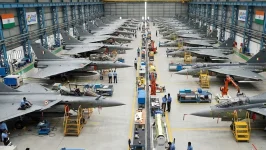
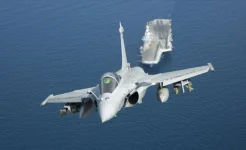
This fell drastically short of the 120 to 200-kilometre operational range of the Meteor missiles equipped on the Indian Air Force's Rafale jets.
Because of this severe disadvantage, Pakistani commanders determined it was far too dangerous to deploy their F-16s in the heavily contested skies.
Operation Sindoor was initiated by India following a large-scale terrorist attack, leading to intense aerial battles and highly accurate strikes on Pakistani military infrastructure.
During the operation, Indian forces successfully targeted Pakistani airbases, such as the facility in Jacobabad, destroying grounded F-16s and severely crippling the opponent's radar and communication networks.
In such a high-stakes combat environment, the difference in missile technology proved to be a game-changer.
Open-source data shows that the European-made Meteor missile, powered by a unique ramjet engine capable of Mach 4 speeds, features a "No Escape Zone" of over 60 kilometres—reportedly three times larger than that of the AIM-120 AMRAAM used by Pakistan.
This advanced propulsion system allowed Indian Rafale pilots to easily lock onto and eliminate threats while remaining safely out of reach of retaliatory fire.
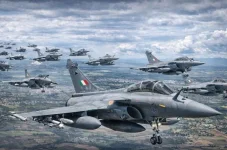
According to Chishti's analysis, the PAF had no choice but to shelter its highly valued F-16 inventory rather than risk them in lopsided aerial duels against Indian Rafale formations.
Although the F-16 has historically been the agile backbone of Pakistan’s air defence forces, it was fundamentally outmatched by the Rafale's cutting-edge active electronically scanned array (AESA) radar and superior data integration.
This candid admission demonstrates that even highly manoeuvrable legacy aircraft can be rendered useless if the enemy possesses a distinct "first-look, first-shoot" advantage.
Ultimately, the PAF leadership decided to protect their expensive jets from guaranteed combat losses rather than send them into an unwinnable situation.
Defence analysts view this public confession as a bitter pill for Pakistan, a nation that has spent decades and significant funds maintaining its American-supplied F-16 squadrons.
Even though Pakistan recently acquired Chinese-made J-10CE jets armed with longer-reaching PL-15 missiles, the absolute grounding of the F-16s starkly exposed the limitations of older Western hardware against India’s modern European fighters.
Indian military officials attribute their overwhelming dominance not just to the Rafale's BVR capabilities, but also to a cohesive strategy that combined the formidable S-400 air defence umbrella with long-range stand-off weapons, effectively suffocating Pakistan's ability to mount airborne operations during the short-lived but violent conflict.
The events of Operation Sindoor have sparked a comprehensive review of the shifting balance of air power across South Asia. Moving forward, both nations are acutely aware that modern warfare is dictated by missile range, resistance to electronic jamming, and shared real-time battlefield data.
The remarks from the retired PAF officer officially confirm the gaping capability holes that forced Pakistan to drastically alter its defence strategies under immense pressure.
Conversely, for India, the outcome firmly validates its strategic financial investments in advanced aviation technology. As military planners on both sides study the lessons of the 2025 clashes, the future arms race in the region will undoubtedly focus on either mitigating or maximizing these technological gaps.